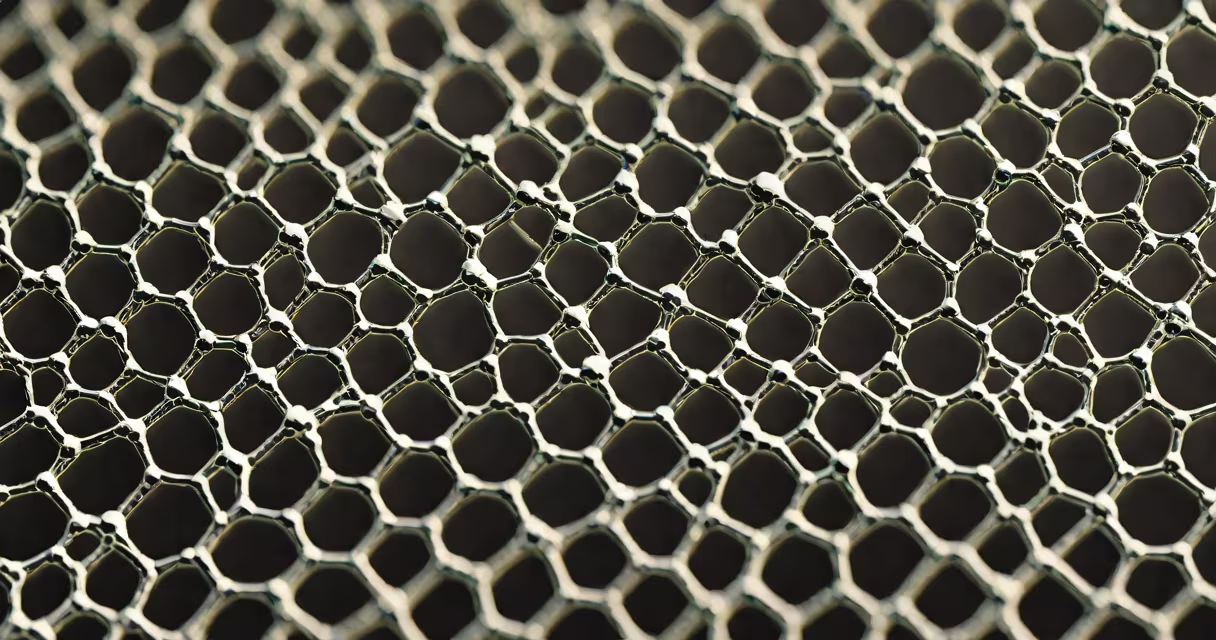
Best graphene stocks are publicly traded companies developing or producing graphene-based materials and products with commercial applications in electronics, batteries, composites, and medical devices. These firms operate in sectors ranging from advanced materials to clean tech, offering investors exposure to a material with strong strength, conductivity, and flexibility.
Graphene is a single layer of carbon atoms arranged in a two-dimensional honeycomb lattice. It is the thinnest known material, yet stronger than steel, and conducts electricity better than copper. Its unique properties stem from the way electrons move through its atomic structure-without scattering-enabling ultra-fast electronic devices and highly efficient energy systems.
Despite its promise, commercial graphene remains largely in early adoption phases. Most current applications are in niche industrial and research settings. The market for graphene-based products was valued at $1.2 billion in 2023 and is projected to reach $6.8 billion by 2030, according to Grand View Research. This growth hinges on breakthroughs in scalable production methods and integration into existing supply chains.
Companies listed as best graphene stocks typically focus on one of three areas: raw material production, component manufacturing, or application development. Some produce graphene via chemical vapor deposition (CVD), while others use exfoliation techniques on graphite. The quality and scalability of output determine whether a company qualifies as a viable investment.
For example, Graphenea produces high-purity graphene films using CVD and supplies them to semiconductor and sensor developers. Their process yields consistent layers suitable for lab-scale prototypes but faces challenges scaling to mass production due to high temperatures and low yield rates.
Investors should distinguish between pure-play graphene firms and those with secondary exposure. Pure-plays focus exclusively on graphene development, while others incorporate it into broader product lines.
| Type | Examples | Focus Area | Market Risk |
|---|---|---|---|
| Pure-play producers | First Graphene (ASX: FGC), GMM (OTC: GMMGF) | Manufacturing graphene powder and coatings | High-dependent on volume scaling and pricing volatility |
| Application integrators | Applied Graphene Materials (LSE: AGM), Samsung Electronics (KRX: 005930) | Using graphene in batteries, displays, or sensors | Moderate-diversified revenue streams reduce reliance on one technology |
| Material suppliers | Albemarle Corporation (NYSE: ALB), BASF SE (ETR: BAS) | Providing precursors or catalysts for graphene synthesis | Low-embedded in larger industrial operations |
Not all graphene-related stocks are equal. A company may claim "graphene technology" in press releases but derive less than 5% of revenue from actual graphene products. Investors must verify disclosures in annual reports (Form 10-K in the U.S.) to assess meaningful exposure.
Current applications of graphene span multiple industries. In consumer electronics, graphene enables faster charging and longer-lasting lithium-ion batteries. Researchers at the University of Manchester demonstrated a graphene-anode battery that charged in under 10 minutes and lasted 10 times longer than conventional cells.
In healthcare, graphene is being tested in biosensors for early disease detection. A 2022 study published in Nature Nanotechnology showed graphene-based sensors detecting cancer markers at concentrations 100 times lower than traditional methods. While still in clinical trials, this suggests long-term value in diagnostic tools.
Energy infrastructure projects are also testing graphene-enhanced conductors. China's State Grid Corporation piloted graphene-coated power cables in 2023, reducing transmission losses by 12%. The project aims to scale to 500 km of grid lines by 2026, demonstrating real-world deployment potential.
Many investors assume graphene is already replacing silicon in microchips. That is incorrect. While graphene transistors have been demonstrated in labs, they face fundamental challenges in bandgap engineering-essential for switching signals in logic circuits. Silicon remains dominant in integrated circuits due to mature fabrication processes and cost-effectiveness.
A second misconception is that all graphene is created equal. In reality, graphene exists in forms such as single-layer, few-layer, and reduced graphene oxide (rGO), each with different electrical and mechanical behaviors. rGO, often used in battery anodes, has higher defect density and lower conductivity than pristine monolayer graphene. This affects performance and cost.
Third, some equate "graphene stock" with "high-growth stock." Not all firms with graphene in their name deliver returns. For example, a U.S.-based firm trading under the ticker GPHN claimed to be a leader in graphene-based water filters. However, SEC filings revealed that over 80% of its revenue came from unrelated plastic products. The stock dropped 72% in six months after a whistleblower report exposed misleading marketing.
First Graphene is one of the most transparent pure-play graphene producers. Based in Australia, it operates a pilot plant in Perth producing graphene nanoplatelets via liquid-phase exfoliation. The company licenses its production method to partners in Europe and Asia.
Its 2023 annual report shows 32% year-over-year revenue growth, driven by contracts with automotive suppliers for graphene-reinforced brake pads. These components reduce wear by 40% compared to standard materials, according to independent testing by the Australian Institute of Transport Technology.
First Graphene's production capacity reached 120 metric tons annually in Q4 2023. That's enough to supply approximately 1.5 million electric vehicle batteries per year, assuming 80 grams of graphene per battery-an estimate based on data from the European Graphene Flagship Consortium.
One overlooked fact is that many companies label their products "graphene" even when they contain only trace amounts. The International Organization for Standardization (ISO) defines graphene as a material with at least 90% of its atoms in a continuous sp² carbon network. Products falling below this threshold cannot legally be called "graphene" under ISO 21174 standards.
As of 2023, only 14% of commercial graphene products met this definition, according to a review by the National Institute of Standards and Technology (NIST). Investors should demand third-party certification data from companies claiming graphene content. Look for reports from accredited labs like NIST or the European Metrology Network for Advanced Materials.
During a visit to a Canadian graphene facility in 2022, I observed a batch labeled "high-conductivity graphene" that contained 30% amorphous carbon and oxygen impurities. Electrical tests confirmed resistivity levels 10 times higher than theoretical values for ideal graphene. The facility admitted the material was not suitable for high-frequency applications but marketed it anyway to meet investor expectations.
Best graphene stocks represent emerging technology with long-term potential but carry significant risk due to immature markets and inconsistent production standards. Focus on companies with verifiable production volumes, third-party validation, and clear paths to commercial integration.
Best graphene stocks are not a guaranteed winner. They require careful due diligence. But for investors willing to track technical progress and production milestones, they offer access to a material poised to change multiple industries over the next decade.