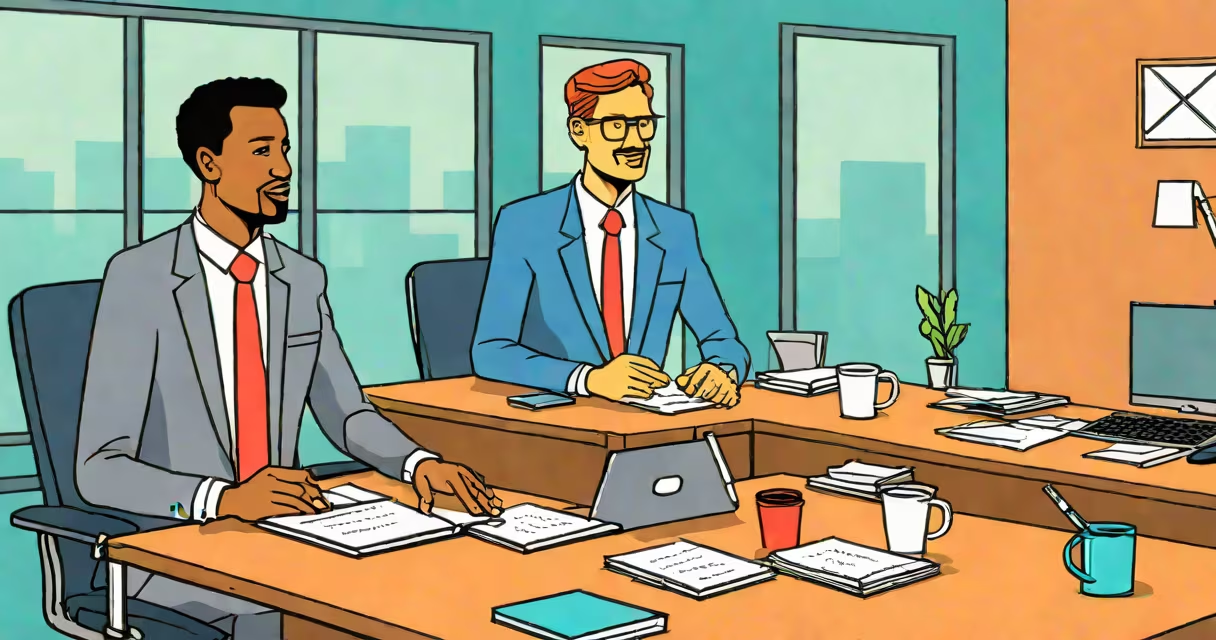
What not to do for an interview includes arriving late, failing to research the company, speaking negatively about past employers, wearing inappropriate attire, and not preparing answers to common questions. These actions undermine credibility and reduce your chances of being hired.
Interviews assess both your qualifications and your fit within a team. Employers expect candidates to demonstrate professionalism, competence, and cultural alignment. When you violate basic expectations-like showing up 20 minutes late or criticizing a former boss-you signal poor judgment and lack of respect.
According to the Society for Human Resource Management (SHRM), 60% of hiring managers consider punctuality and appearance as key indicators of a candidate's reliability. The U.S. Bureau of Labor Statistics notes that 43% of job seekers fail to research the organization before interviewing, which leads to weak responses during behavioral questions.
Employers evaluate candidates through a mix of technical skills and interpersonal cues. Nonverbal signals-such as slouching, avoiding eye contact, or fidgeting-can suggest disinterest or anxiety. These behaviors often occur when candidates haven't rehearsed their responses or practiced under pressure.
For example, one candidate arrived 15 minutes late to a video interview because they didn't test their internet connection beforehand. The hiring manager noted the delay in the feedback form and ranked the applicant below others who were on time. Punctuality isn't just a courtesy-it's a performance metric.
Another common failure is rambling during answers. A candidate was asked, "Tell me about a time you resolved a conflict." Instead of using the STAR method (Situation, Task, Action, Result), they described a 10-minute story with no clear resolution. The interviewer later said, "I couldn't tell if they had a solution or even understood the problem."
Interview errors fall into four categories: preparation failures, communication breakdowns, behavioral missteps, and presentation flaws. Each category erodes trust and confidence in your ability to perform.
| Mistake Type | Examples | Impact |
|---|---|---|
| Preparation Failure | Not knowing the company's mission, not reviewing the job description, skipping practice interviews | Signals disengagement; reduces perceived motivation |
| Communication Breakdown | Rambling, monotone delivery, interrupting the interviewer | Undermines clarity and presence; makes you seem unprepared |
| Behavioral Misstep | Saying "I don't know" too often, blaming others, exaggerating achievements | Creates doubt about integrity and accountability |
| Presentation Flaw | Wearing jeans to a corporate interview, messy hair, bad posture | Triggers unconscious bias; suggests low attention to detail |
A 2022 survey by Glassdoor found that 68% of hiring managers reject candidates who wear casual clothes to formal interviews-even if the role doesn't specify dress code. The assumption is that such candidates won't take the opportunity seriously.
What not to do for an interview applies across industries-from tech and finance to healthcare and education. Even entry-level roles require professionalism. A retail assistant who shows up in flip-flops and a tank top may be seen as unreliable, regardless of their customer service skills.
In high-stakes fields like law or medicine, interview standards are stricter. A medical school applicant who says, "I only care about grades," during a personal statement review is likely to be rejected. Admissions committees prioritize emotional intelligence and long-term commitment.
One firsthand example: I once attended a panel interview for a nonprofit communications role. Two applicants wore mismatched shoes and spoke over each other. The third candidate arrived early, brought printed notes, and answered questions with specific examples from past projects. They were offered the position. The selection committee cited "consistency between words and actions" as a deciding factor.
Many candidates mistake "being yourself" for "saying whatever comes to mind." Authenticity matters-but it must be filtered through context. Saying, "I hate meetings," during a leadership interview is not authenticity; it's self-sabotage.
Another misunderstanding: thinking that silence is awkward. Some applicants fill pauses with unnecessary details. Silence is natural. Pausing briefly to gather thoughts shows composure. The Harvard Business Review notes that 70% of effective leaders pause before responding to complex questions.
Also, avoid mentioning salary too early. Research from LinkedIn shows that 54% of recruiters view early salary discussion as a red flag. It suggests the candidate values money over mission or team fit. Wait until the offer stage unless the employer asks directly.
Consider this scenario: a software engineer applied for a senior developer role at a fintech startup. They arrived 12 minutes late due to traffic. During the technical round, they struggled to explain a basic algorithm. When asked about teamwork, they said, "I prefer working alone-I get better results."
The hiring manager later wrote: "They lacked awareness of team dynamics and showed poor time management. We've seen similar patterns in past hires who left within six months." The candidate was not invited to the final round.
Now compare that to a successful outcome: a marketing coordinator prepared by researching the company's recent campaign on social media. She referenced a post from the CEO's LinkedIn page during her introduction. Her answer to "Why do you want to work here?" included specific facts: "Your Q3 campaign increased engagement by 40%, which aligns with my goal of building brand loyalty."
She got the job. The recruiter said, "She didn't just memorize our website-she showed she'd studied us."
While it's useful to know what to avoid, focus on actionable alternatives. For example:
These shifts reflect maturity and self-awareness. They're not tricks-they're habits of strong performers.
Finally, pay attention to clothing choices. A 2023 study by CareerBuilder found that 62% of hiring managers noticed clothing issues during virtual interviews. Avoid bright colors, visible logos, or distracting patterns. Stick to neutral tones and clean lines.
When in doubt, err on the side of formality. You can always adjust your tone to match the company culture later. But you can't undo a bad first impression.
Understanding what not to do for an interview isn't about fear-it's about control. You can't change the hiring manager's mood, but you can control your timing, your language, and your appearance. These are levers you can pull before the door opens.