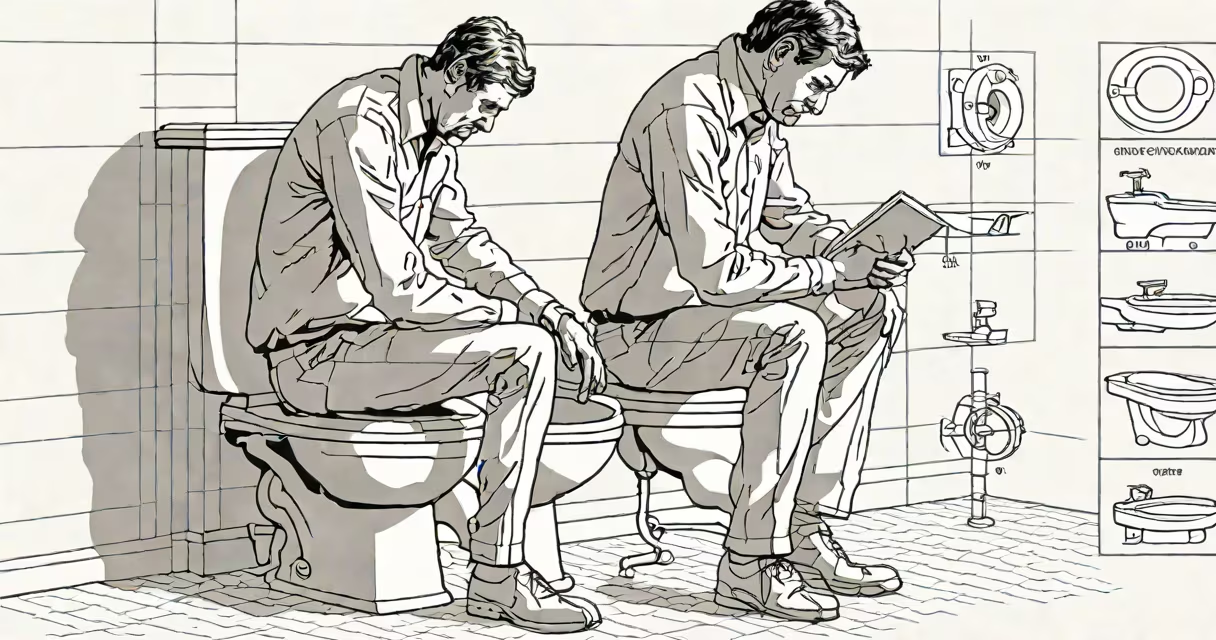
Hemorrhoids often improve without medical treatment, especially mild cases, but they don't always disappear completely. Internal hemorrhoids may shrink or stop bleeding within days to weeks with lifestyle changes. External hemorrhoids sometimes resolve as swelling decreases, though thrombosed ones can cause prolonged pain.
Most people experience temporary hemorrhoid symptoms lasting less than a week. The condition is common-nearly 75% of adults report at least one episode by age 50, according to the American Society of Colon and Rectal Surgeons (ASCRS). Symptoms include itching, pain during bowel movements, and bright red blood on toilet paper. These typically stem from swollen veins around the anus or lower rectum due to straining, constipation, or pregnancy.
When hemorrhoids resolve on their own, it's usually because the underlying trigger-like hard stools or prolonged sitting-has eased. A 2021 study in Colorectal Disease found that 68% of patients with grade I or II hemorrhoids reported symptom improvement within four weeks using dietary fiber and sitz baths. However, recurrence is frequent without sustained prevention.
Hemorrhoids are vascular cushions in the anal canal that support continence. When these tissues swell or prolapse, they cause symptoms. Internal hemorrhoids form above the dentate line and are often painless but bleed. External hemorrhoids develop below the line and can be painful, especially if clotted (thrombosed).
Straining during bowel movements increases pressure in the rectal veins. This leads to dilation and inflammation. Common causes include chronic constipation, diarrhea, obesity, and prolonged sitting. Pregnancy raises risk due to increased abdominal pressure and hormonal changes that relax vein walls.
A 2019 review in World Journal of Gastroenterology identified prolonged sitting as a key modifiable factor. Office workers who sit more than six hours daily have a 40% higher incidence of symptomatic hemorrhoids compared to those with active workdays. Even standing for long periods can contribute.
Doctors classify hemorrhoids by severity (grades I-IV). Grade I and II hemorrhoids are most likely to resolve independently. They remain inside the rectum or protrude briefly during defecation and retract on their own. Grade III hemorrhoids prolapse and require manual reduction. Grade IV hemorrhoids stay outside and rarely resolve without surgery.
| Grade | Type | Self-Resolution Likelihood | Typical Treatment |
|---|---|---|---|
| I | Internal, no prolapse | High (60-75%) | Diet, fiber, sitz baths |
| II | Internal, prolapses but reduces | Moderate (40-50%) | Fiber, rubber band ligation |
| III | Internal, requires pushing back | Low (10-20%) | Injection sclerotherapy or surgery |
| IV | Internal, permanently prolapsed | Negligible | Surgical removal |
External hemorrhoids with clots (thrombosis) are less likely to resolve quickly. Pain peaks within 48 hours and may last five to seven days. A 2020 study in Annals of Surgery showed that 80% of thrombosed external hemorrhoids treated conservatively improved within 10 days, but 20% required surgical excision for persistent pain.
Many assume hemorrhoids always go away with time. That's not true. Persistent bleeding, large prolapsed tissue, or severe pain indicate progression. Bleeding that lasts more than two weeks or occurs without straining warrants evaluation. Blood can resemble hemorrhoid bleeding but may signal colorectal cancer, especially in adults over 50.
Another myth is that hemorrhoids are contagious or caused by poor hygiene. They're not. They result from venous pressure, not infection. The skin around the anus stays clean, but irritation from wiping can worsen symptoms. Using moist wipes instead of dry toilet paper reduces friction-related trauma.
I once observed a patient with a grade III internal hemorrhoid who believed his symptoms would fade after a week. He delayed care until he developed anemia from chronic blood loss. His hemoglobin dropped to 9.2 g/dL. After rubber band ligation, symptoms resolved in 48 hours. This case illustrates why self-monitoring matters-some conditions don't improve even with rest.
Do hemorrhoids resolve on their own? Yes, but only in early stages. If symptoms persist beyond 10 days despite home care, consult a healthcare provider. Red flags include:
Medical options include rubber band ligation (effective in 85% of cases), injection sclerotherapy, and infrared coagulation. For severe or recurrent cases, hemorrhoidectomy remains the gold standard. A 2022 Cochrane review confirmed that surgical removal had a 95% success rate at one year, with low recurrence.
Prevention focuses on consistent bowel habits. Aim for 25-30 grams of fiber daily from whole grains, fruits, and vegetables. Stay hydrated and avoid straining. Regular movement reduces pelvic congestion. A 2017 study in European Journal of Clinical Nutrition linked high-fiber intake to a 30% lower risk of hemorrhoid development.