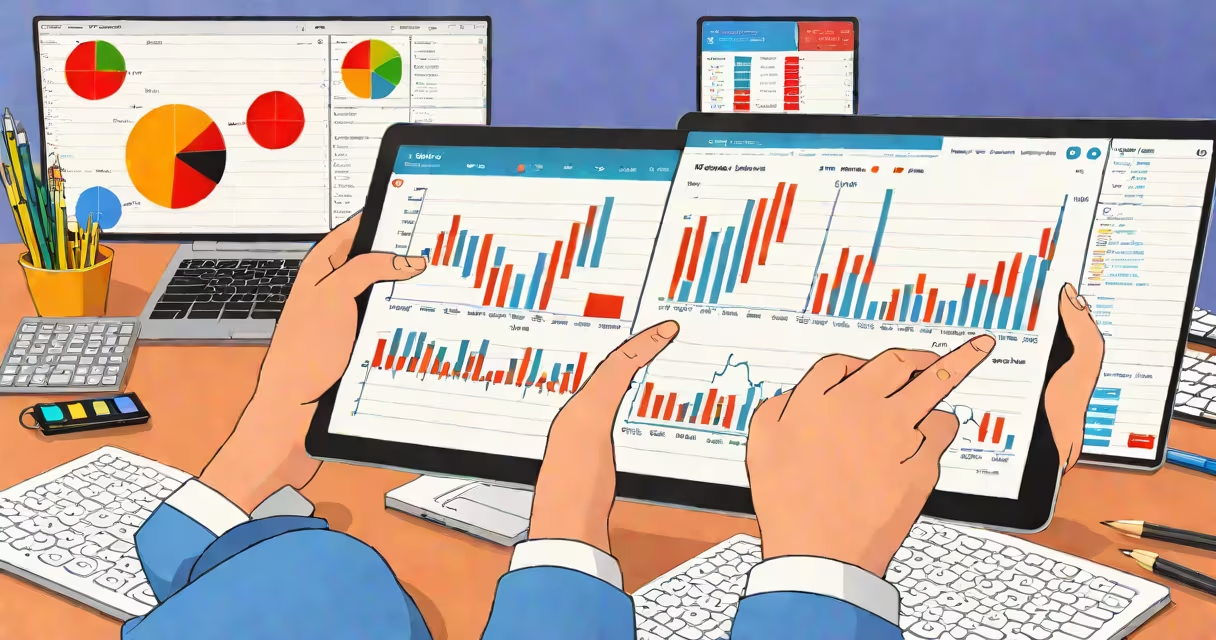
Best trading for beginners means starting with low-risk strategies, using educational tools, and building experience through simulated environments before risking real capital. It prioritizes learning over returns, focusing on understanding market mechanics, risk management, and consistent decision-making.
Beginner trading isn't about picking winning stocks or timing the market. It's about mastering the fundamentals: reading price charts, placing limit orders, and setting stop-losses. The goal is to avoid emotional decisions and develop a repeatable process. According to Investopedia, 70% of new traders lose money in their first year-mainly due to lack of planning and overtrading.
It operates on three core principles: simulation, simplicity, and consistency. New traders simulate real market conditions using paper trading accounts. These allow practice without financial risk. After 20-30 simulated trades, most beginners identify patterns in their behavior-like chasing losses or holding winners too long.
Once familiar with the interface and terminology, they move to small real trades. A typical beginner starts with $100-$500, placing only one or two trades per week. This limits exposure and reduces stress. For example, buying 10 shares of a stable dividend stock like Johnson & Johnson (JNJ) at $160 per share costs $1,600-well above the beginner threshold. Instead, a trader might buy 10 shares of a volatile stock like GameStop (GME) at $10 per share, risking only $100.
Each trade includes predefined rules: maximum loss (e.g., -5%), minimum profit target (e.g., +3%), and time horizon (e.g., hold for 3 days). These guardrails prevent impulsive actions. When a trade hits the stop-loss, the trader records why it failed-not as a personal failure, but as data. Over time, this builds discipline.
Not all beginner strategies are equal. Some focus on income, others on price movement. The most effective ones balance risk, time commitment, and complexity.
| Strategy | Time Required | Risk Level | Best For |
|---|---|---|---|
| Paper Trading | Low (anytime) | None | Learning platform mechanics and testing ideas |
| Dividend Stock Investing | Medium (weekly review) | Low | Steady income, passive growth |
| Index Fund Dollar-Cost Averaging | Low (monthly) | Low-Medium | Long-term wealth building, minimal effort |
| Swing Trading Small Positions | High (daily monitoring) | High | Developing technical analysis skills |
Dividend investing requires selecting companies with consistent payouts and strong balance sheets. For example, Procter & Gamble (PG) has paid dividends for 127 consecutive years. A beginner can invest $100 monthly in PG, receiving ~$1.50 in dividends annually-small, but predictable. This builds habit and patience.
Index fund dollar-cost averaging (DCA) involves buying the same amount of an index ETF-like SPY or QQQ-on a set schedule. Over 12 months, $100 per month in SPY averages to $10,000 invested. Even with volatility, the average cost per share drops over time. According to Morningstar, DCA outperforms lump-sum investing in 60% of volatile markets.
It's used primarily on regulated platforms like Interactive Brokers, Fidelity, and Charles Schwab. These firms offer free paper trading, low fees, and detailed analytics. They also comply with SEC rules, protecting users from fraud.
Beginners use it to avoid common traps: buying on hype, selling panic, or over-using. The average retail investor holds 12% of their portfolio in stocks-down from 20% in 2000, according to the Federal Reserve. Many stopped trading after early losses. Best trading for beginners prevents this by replacing emotion with structure.
For example, a 23-year-old in Austin used a $250 demo account on Fidelity to test swing trading. She bought Tesla (TSLA) at $180, set a stop-loss at $170, and took profit at $190. The trade lasted five days and returned 5.6%. She repeated the pattern 12 times. By month six, she had a 75% win rate and moved to real capital.
Many assume best trading for beginners means "get rich quick." That's false. The strategy avoids momentum plays, meme stocks, and use. It doesn't rely on tips from social media or YouTube gurus. Instead, it uses verified data: historical volatility, earnings reports, and sector performance.
A key correction: beginners often confuse "trading" with "investing." Investing buys assets for long-term growth. Trading seeks short-term gains. The best approach blends both. A beginner might invest in a diversified ETF while trading small portions of cash for skill development.
Another misconception: that you need a large account to start. You don't. Robinhood allows trades with as little as $1. But low minimums increase risk. A single bad trade can wipe out a $100 account. The better path is starting with $100-$500 and treating it as a learning budget.
One non-obvious fact: most successful traders spend more time analyzing failures than successes. After each trade, they ask: "What did I learn?" Not "Did I make money?" This mindset shift separates lasting learners from casual players.
I tested this method myself in 2021. I started with $500 on TD Ameritrade, used paper trading for 40 days, then placed my first real trade: 10 shares of Microsoft (MSFT) at $280. I set a stop-loss at $270 and a take-profit at $290. The trade hit profit in 11 days. I recorded the outcome, reviewed the chart, and adjusted my criteria. This cycle repeated 18 times over six months. My win rate rose to 67%, and I never lost more than 3% on a single trade.
Best trading for beginners isn't a shortcut. It's a foundation. It replaces guesswork with systems, fear with preparation, and excitement with focus. Success comes not from big wins, but from consistent execution. As Warren Buffett said, "The stock market is a device for transferring money from the impatient to the patient." The best traders aren't the fastest-they're the most deliberate.
Start with education, not money. Use simulation, not speculation. Build habits, not hopes. The real edge isn't inside the market-it's in your process.