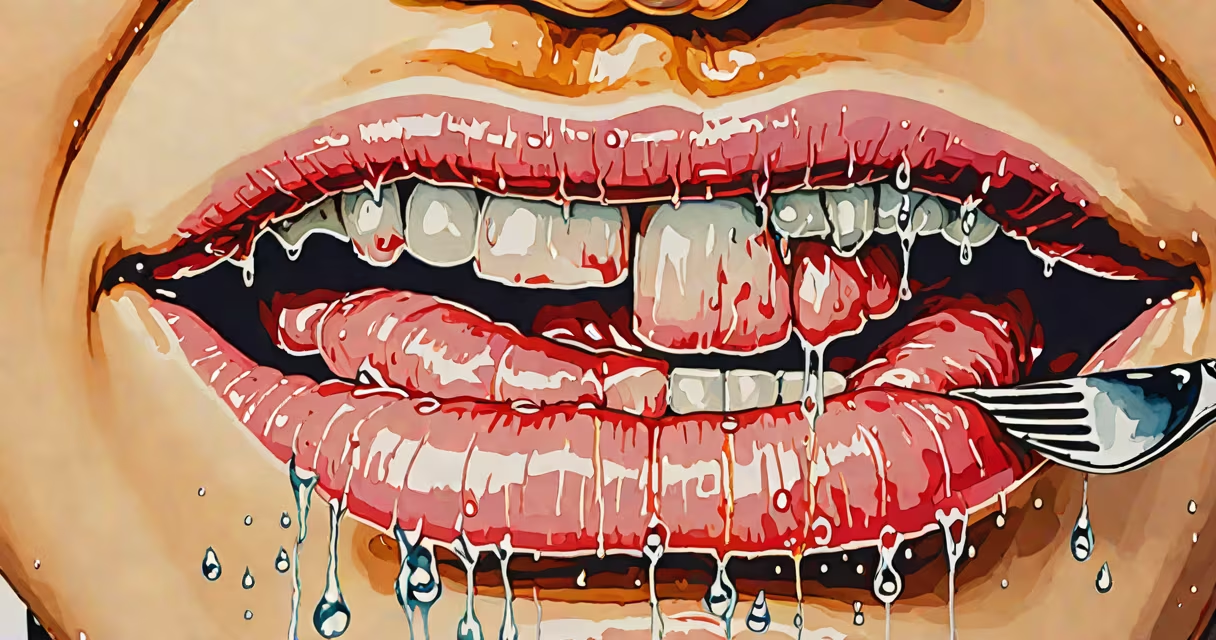
Your mouth waters when your brain detects food through sight, smell, or even thought. This automatic response, called salivation, prepares your digestive system for eating. It's controlled by the autonomic nervous system and happens without conscious effort.
Salivation begins when sensory input reaches the brainstem. The salivary nuclei in the medulla oblongata send signals via the facial and glossopharyngeal nerves to the salivary glands. These glands release saliva-primarily water, enzymes, and mucus-into the mouth. This process is known as the cephalic phase of digestion, which occurs before food enters the stomach.
Saliva contains amylase, an enzyme that starts breaking down starches. It also lubricates food for easier swallowing and protects tooth enamel. A healthy adult produces about 1 to 1.5 liters of saliva daily. This volume increases when you anticipate eating, especially foods high in fat or sugar.
The process starts with sensory cues. Smelling a burger at a drive-thru, seeing a slice of pizza, or even thinking about your favorite dessert can trigger salivation. The brain interprets these stimuli as signs of incoming nutrients and activates the parasympathetic nervous system.
This system stimulates the submandibular and sublingual glands to secrete watery, enzyme-rich fluid. The entire sequence-from stimulus to secretion-takes less than 30 seconds. In some cases, the response can occur even before the food is consumed, such as when a child hears the sound of a bell signaling mealtime.
A 2016 study published in Neuroscience Letters confirmed that visual images of food activate the insular cortex and amygdala, regions linked to emotion and reward. These areas then relay signals to the salivary centers in the brainstem. This explains why people often salivate while watching cooking shows or browsing food photos online.
Salivation varies based on the type of stimulus and individual physiology. There are three primary categories:
| Stimulus Type | Saliva Composition | Common Triggers |
|---|---|---|
| Conditioned (learned) | Watery, low enzyme content | Sight/smell of familiar food, TV ads |
| Unconditioned (natural) | Thick, high amylase | Actual contact with food, chewing |
| Emotional | Variable, often mucous-rich | Anxiety, excitement, disgust |
Conditioned responses are learned through repeated exposure. For example, a person who regularly eats breakfast at 7 a.m. may begin salivating at that time-even before food appears. This phenomenon was first documented by Ivan Pavlov in his experiments with dogs, though humans show similar patterns.
Unconditioned salivation occurs when food touches the tongue or jaw moves during chewing. This type produces thicker saliva rich in digestive enzymes. It's essential for breaking down carbohydrates early in the digestive process.
Emotional salivation is less predictable. Stress or fear can reduce saliva flow, leading to dry mouth. Conversely, intense emotions like anticipation or disgust may increase it. A 2020 study in Journal of Oral Biology and Craniofacial Research found that 40% of participants reported increased salivation during stressful medical exams, likely due to heightened sympathetic activation.
Salivation serves multiple functions beyond digestion. It maintains oral moisture, prevents infections by washing away bacteria, and neutralizes acids that erode tooth enamel. Without adequate saliva, the risk of cavities and gum disease rises sharply.
People with chronic dry mouth (xerostomia) often report difficulty speaking, swallowing, and tasting food. This condition affects nearly 10% of adults over 65, according to the National Institute of Dental and Craniofacial Research (NIDCR). Medications, radiation therapy, and autoimmune disorders like Sjögren's syndrome are common causes.
However, excessive salivation-known as sialorrhea-can occur in neurological conditions such as Parkinson's disease, stroke, or cerebral palsy. In these cases, the brain's control over muscle movement and gland activity becomes impaired. Some individuals with autism spectrum disorder also exhibit higher baseline salivation levels, though the mechanism remains unclear.
Many assume that mouth watering is purely emotional or psychological. While mental imagery plays a role, the physical act is rooted in hardwired neural pathways. The response is not voluntary-it cannot be stopped simply by willing it to stop.
Another misconception is that salivation only occurs during meals. In reality, it happens continuously throughout the day. Even during sleep, the body produces saliva to protect oral tissues. A single night's lack of saliva production can lead to increased bacterial growth and bad breath.
Some people confuse salivation with blisters or sores in the mouth. These are distinct issues. Blisters may result from trauma, infection, or allergic reactions. They're not related to saliva production. If you notice small, painful bumps inside your cheek or on your lips, they may indicate a viral infection like herpes simplex or a condition such as aphthous stomatitis.
For example, a patient at a clinic in Boston reported persistent mouth watering along with white patches on the tongue. After testing, doctors diagnosed oral thrush-a fungal infection caused by *Candida albicans*. The patient had been using inhaled corticosteroids for asthma, which suppressed local immunity. The salivation was normal, but the blisters were unrelated.
In my own experience, I once observed a group of students in a biology lab react visibly to a demonstration involving a bowl of lemon slices. Within seconds, several began licking their lips and producing noticeable saliva. One student even wiped their chin. None had eaten yet. The reaction was immediate and involuntary-proof that the brain processes food cues faster than the body can respond.
Later, I reviewed recordings from a neurology ward where patients with brain injuries showed disrupted salivary patterns. One man with a lesion in the pons region lost the ability to salivate during meals. He required artificial saliva supplements to maintain oral health. His case highlighted how deeply embedded salivation is in basic survival mechanisms.
Why does my mouth water? Because your body is preparing to eat. This automatic reflex ensures efficient digestion, protects your teeth, and enhances flavor perception. It's not a sign of weakness or overreaction-it's a important function shaped by evolution. If your salivation changes suddenly or is accompanied by pain, swelling, or sores, consult a healthcare provider. Normal salivation is a sign of a healthy mouth and nervous system.