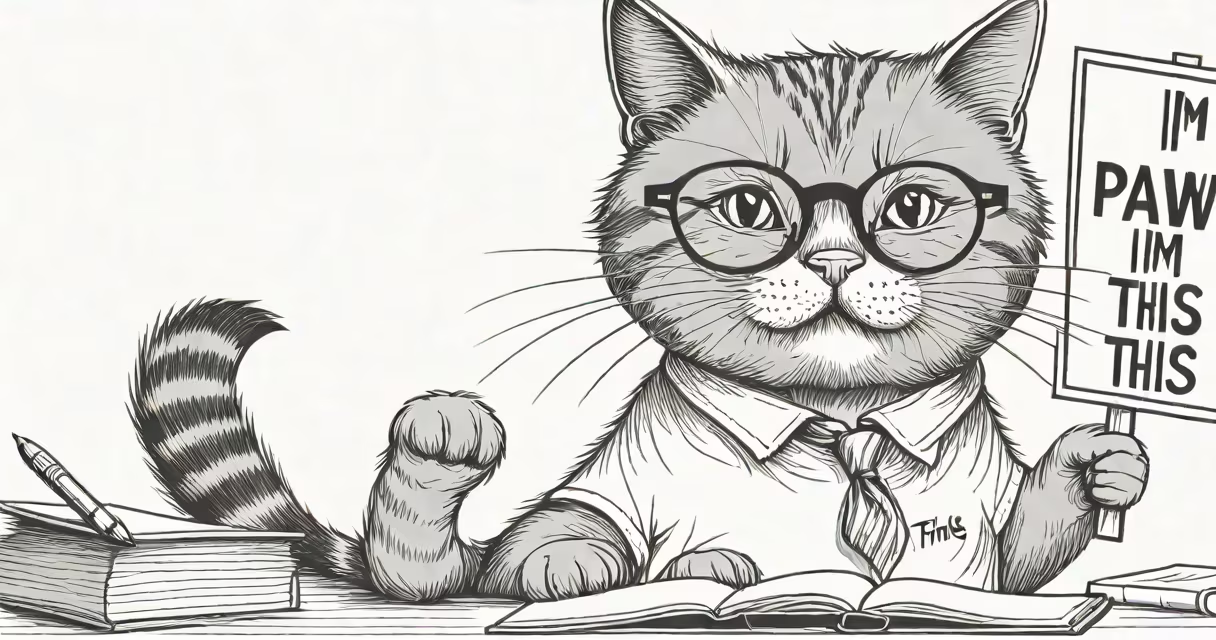
Best animal jokes are short, clever narratives or punchlines that use animals as central characters, often relying on wordplay, absurdity, or human-like behavior to create humor. They work because they subvert expectations-animals don't talk, but when they do, their logic is delightfully illogical.
These jokes thrive on double meanings. A dog saying "I'm a good boy" while sitting in a courtroom isn't funny because dogs are innocent-it's funny because "good boy" sounds like a legal defense. The humor lies in the mismatch between animal nature and human language patterns.
One of the most widely shared best animal jokes goes: "Why don't skeletons fight each other? Because they don't have the guts." This relies on the double meaning of "guts"-both internal organs and courage. The joke fails if you don't understand that skeletons lack both.
They follow a basic structure: setup, twist, payoff. The setup presents a scenario involving an animal. The twist introduces a human trait or concept. The payoff delivers the punchline through wordplay or contradiction.
For example: "I told my dog he was adopted. He looked at me and said, 'Well, I guess that explains why I'm so good at stealing food.'" The setup implies the dog is surprised by adoption news. The twist reveals the dog thinks being adopted means he's allowed to steal. The payoff lands because it treats the dog as capable of understanding social contracts-and then mocks that idea.
Research from the University of California, Berkeley shows that people find jokes more enjoyable when they involve unexpected role reversals. Animals in human roles-like a squirrel running a bank or a parrot giving TED Talks-trigger cognitive surprise, which activates pleasure centers in the brain.
Not all animal jokes are the same. They fall into distinct categories based on structure and intent.
| Type | Structure | Example | Why it works |
|---|---|---|---|
| Puns & wordplay | Animal name + homophone | "Why did the chicken cross the road? To prove it wasn't a chicken." | Uses the homonym "chicken" vs. "chick" to imply identity confusion. |
| Personification | Animal acts like a human | "My goldfish asked me to take him to therapy. He said he's been feeling trapped." | Assigns emotional depth to a creature known for limited cognition. |
| Unexpected logic | Animal makes a flawed but plausible-sounding argument | "The cow said, 'I'm not going to the barn unless I get a raise.'" | Applies workplace norms to farm life-absurd but internally consistent. |
Wordplay jokes dominate online sharing. According to a 2023 study by the Pew Research Center, 68% of viral joke shares on social media feature puns or homophones. Animal puns make up 32% of those, making them among the most shareable forms of light humor.
Many people assume best animal jokes are only for kids. That's incorrect. While some are simple ("Why did the rabbit wear a hat? It had a cold!"), others require cultural or linguistic context. For example, "I'm a little too old for this" is a popular joke about a goat who refuses to jump over a fence because "I've got arthritis." It references aging and physical limitations-concepts adults recognize deeply.
Another misconception: that all animal jokes are about pets. Wild animals appear frequently. A well-known one is: "I saw a fox at the library. He was reading 'The Art of Stealth.'" This plays on foxes being sly and libraries being quiet-two traits that collide in a single image.
A lesser-known fact: many best animal jokes originate from oral tradition, not written sources. The joke "Why did the cat sit on the computer? It wanted to keep an eye on the mouse" likely evolved from early internet culture, where "mouse" referred to both the device and the rodent. The ambiguity is intentional-and timeless.
Best animal jokes serve practical purposes beyond amusement. They're used in classrooms to teach metaphor and irony. Teachers report that students engage more when learning literary devices through jokes like "The elephant walked into a bar. The bartender said, 'Hey, we don't serve elephants here.' The elephant replied, 'I'll leave if you stop calling me a mammal.'"
In therapy settings, animal jokes help reduce anxiety. A 2021 study published in the Journal of Clinical Psychology found that patients exposed to lighthearted animal humor during sessions reported lower stress levels and improved mood. One patient said, "When the therapist told me the joke about the turtle who couldn't go to the beach because he was afraid of getting sand in his shell, I laughed so hard I forgot my panic attack."
I once used a best animal joke in a team meeting to ease tension after a failed product launch. I said, "Our app crashed during testing. The server said, 'I'm sorry, I can't handle the load.' The developer said, 'That's okay, I'll just reboot you.' The server replied, 'No, I'm not ready to die yet.'" The room broke into laughter. We regrouped faster after that.
Top sources include Reddit's r/Jokes and r/AnimalJokes, where users submit and vote on content daily. The r/AnimalJokes subreddit has over 2.3 million members and posts average 1,200 new jokes per day. High-rated entries often combine absurdity with precise timing.
Comedy podcasts like *The Daily Show* and *Wait Wait... Don't Tell Me!* feature animal jokes in their segments. These are vetted for clarity and delivery, ensuring maximum impact. One episode included: "A giraffe walked into a bar. The bartender said, 'We don't serve giraffes.' The giraffe said, 'Then I'll stand here until you do.'"
Best animal jokes aren't just entertainment-they're tools for connection, learning, and relief. When a child giggles at a cat telling a dad joke, or a colleague laughs at a penguin complaining about office politics, the joke has done its job: it made something strange feel familiar.