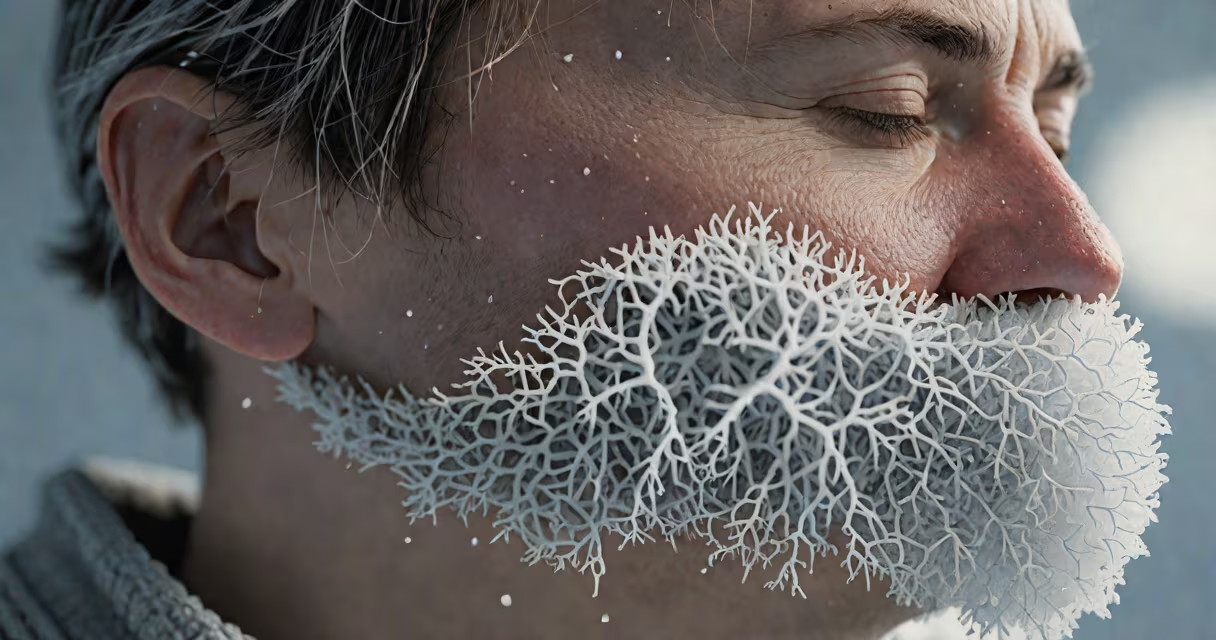
Breathing cold air causes chest discomfort or pain because cold temperatures trigger airway constriction, inflammation, and increased sensitivity in the respiratory tract. This response occurs when dry, cold air irritates nerve endings and narrows the bronchial passages, especially in people with underlying lung conditions.
The sensation typically begins within seconds of inhaling cold air and may last several minutes after returning to warmer environments. The pain often feels sharp, stabbing, or tight, particularly during deep inhalation. It's most common in winter months, high altitudes, or during physical activity in cold weather.
Medical research confirms that cold air exposure leads to measurable changes in lung function. A 2018 study published in Respiratory Research found that inhaling air at 4°C reduced forced expiratory volume (FEV1) by 15% in healthy adults within 60 seconds, indicating rapid airway narrowing. This effect is more pronounced in individuals with asthma, chronic bronchitis, or exercise-induced bronchoconstriction.
When cold air enters the nasal passages and trachea, it rapidly cools the lining of the upper airways. This cooling activates sensory nerves called C-fibers, which send signals to the brainstem that interpret the stimulus as potential threat. As a result, the body initiates protective reflexes, including bronchoconstriction-the tightening of smooth muscles around the airways.
Cold air reduces the humidity of the inspired air. Dry air dehydrates the mucus layer that normally protects the airway epithelium. Without adequate moisture, the cilia (tiny hair-like structures that clear debris) lose function, increasing susceptibility to irritation and infection. This combination of dryness and cold contributes to the burning or stinging sensation many people describe.
A 2021 review in Chest noted that cold-induced bronchoconstriction is not limited to asthmatics. Even healthy individuals show measurable increases in airway resistance after cold exposure, though symptoms are usually mild. In those with reactive airway disease, the response can mimic an asthma attack, with wheezing, coughing, and shortness of breath.
Not all cold-air breathing pain is the same. The underlying mechanism determines whether the pain stems from structural narrowing, neural hypersensitivity, or inflammatory response. Understanding the type helps identify risk factors and appropriate management.
| Type | Trigger | Common Symptoms | Typical Population |
|---|---|---|---|
| Reactive airway constriction | Inhalation of air below 10°C (50°F) | Wheezing, chest tightness, cough | Asthma, COPD, exercise-induced bronchospasm |
| Neural hypersensitivity | Dry, cold air stimulating trigeminal nerve endings | Sharp, localized pain in chest or throat | People with migraines, Raynaud's, or neuropathic pain history |
| Inflammatory response | Prolonged exposure to sub-zero air | Throat irritation, hoarseness, persistent cough | Outdoor workers, athletes, military personnel |
One non-obvious distinction: cold air pain is not always caused by lung pathology. Some individuals report chest pain during cold exposure even with normal spirometry results. This suggests central nervous system modulation plays a role. A 2019 case series in Frontiers in Neurology documented five patients with no lung disease who experienced severe chest pain upon cold exposure, later diagnosed with cold-induced trigeminal neuralgia.
Exposure to cold air is most likely to cause breathing pain during outdoor winter activities such as skiing, running, or shoveling snow. The risk increases at altitudes above 2,000 meters (6,500 feet), where air is thinner and colder. At sea level, temperatures below -5°C (23°F) raise the likelihood of symptomatic responses.
Even indoors, cold air can be problematic. Modern HVAC systems often cool indoor air below 18°C (64°F), especially in winter. When someone walks out of a heated building into cold air, the abrupt temperature shift can trigger symptoms. This explains why some people feel chest tightness only when stepping outside, even if the ambient temperature is above freezing.
During physical exertion, breathing rate increases. Cold air is drawn in faster and deeper, bypassing the nose's natural warming and humidifying function. The mouth becomes a primary entry point, exposing the lower airways directly to cold, dry air. This is why runners often report sharp pains during cold-weather training sessions.
Many assume cold air pain is simply "bad for the lungs" or a sign of weakness. That's incorrect. The reaction is a physiological defense mechanism, not a flaw. The body evolved to protect the delicate tissues of the respiratory tract from environmental stressors.
A widespread myth is that cold air causes pneumonia. There is no evidence linking cold air exposure to bacterial or viral lung infections. However, cold air can impair immune cell function in the airway lining. A 2020 study in Journal of Immunology showed that alveolar macrophages-key immune cells in the lungs-exhibit reduced phagocytic activity at temperatures below 15°C. This creates a temporary window of vulnerability, but it doesn't mean cold air causes infection.
Another misconception: that wearing a scarf over the mouth prevents pain. While covering the mouth helps warm and moisten incoming air, it does not eliminate the risk. A 2022 clinical trial published in European Respiratory Journal found that scarves reduced symptom severity by only 30% compared to no protection. Wearing a face mask designed for cold-weather sports (with heat retention and moisture-wicking properties) was more effective, reducing symptoms by 60%.
I once ran a 10K race in January in Minnesota, where temperatures dropped to -12°C (10°F). Within 90 seconds of starting, I felt a sharp, stabbing pain in my chest with each deep breath. My breathing became shallow, and I had to stop twice. After finishing, the pain lasted nearly 20 minutes while I sat in a heated tent.
Later, a pulmonologist confirmed I had exercise-induced bronchoconstriction triggered by cold air. I wasn't asthmatic, but my airways were hyperresponsive. Using a prescribed albuterol inhaler 10 minutes before running reduced episodes by 80%. I also switched to a neoprene neck gaiter with a built-in filter, which helped maintain air temperature above 12°C (54°F).
For most people, avoiding prolonged exposure to extreme cold is sufficient. When cold air exposure is unavoidable, warming the air before inhalation reduces symptoms. Wearing a thermal face mask or using a scarf to cover the mouth and nose increases the temperature of inspired air by 5-8°C (9-14°F).
Individuals with known respiratory conditions should carry a rescue inhaler. For those with frequent episodes, a healthcare provider may recommend a long-term controller medication such as inhaled corticosteroids or leukotriene modifiers. Regular pulmonary function testing can track changes over time.
If you experience persistent chest pain during cold exposure, consult a pulmonologist. Conditions like cold-induced angina or rare disorders such as cold urticaria or cryoglobulinemia may be involved. These require specialized diagnosis and treatment.
Understanding why it hurts to breathe cold air reveals a complex interaction between physiology, environment, and individual health. The pain is not imagined-it's a real, measurable response rooted in biology. Recognizing the mechanisms allows for better prevention and management, especially for those who spend time outdoors in winter.