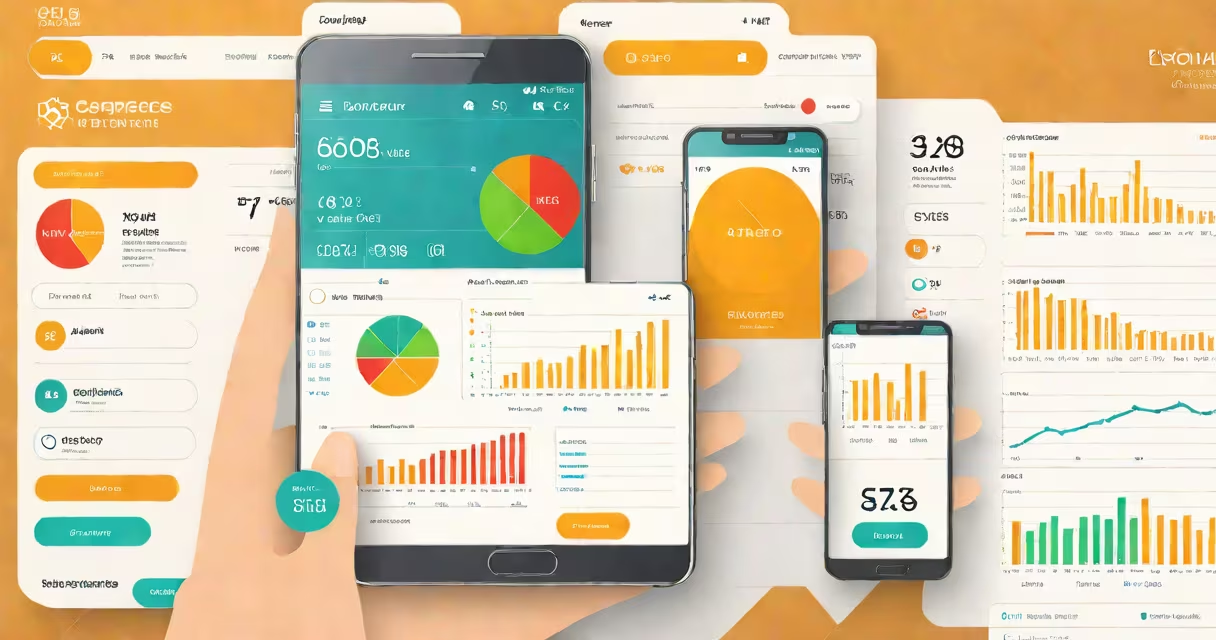
An ecommerce growth strategy is a structured plan to increase online sales by improving customer acquisition, retention, and conversion rates through data-driven tactics such as targeted marketing, personalized experiences, and platform optimization. It focuses on measurable outcomes like revenue growth, customer lifetime value, and market share expansion.
Successful ecommerce growth strategies begin with clear objectives. A business might aim to grow revenue by 30% within 12 months, increase average order value by 15%, or reduce cart abandonment by 20%. These goals guide decisions on which channels to prioritize, which customer segments to target, and what tools to deploy. Without defined targets, efforts risk becoming reactive rather than strategic.
Major platforms like Shopify and Magento offer built-in analytics and integrations with advertising tools, email platforms, and CRM systems. These features allow businesses to track user behavior, segment audiences, and automate campaigns. For example, a brand using Shopify's native reporting tools identified that 68% of its traffic came from mobile devices. By optimizing checkout flow for mobile users, it reduced drop-offs by 27% in three months.
Every effective ecommerce growth strategy includes four interlocking elements: audience targeting, conversion optimization, retention mechanics, and scalability planning. Each component reinforces the others to create compounding results.
Audience targeting identifies high-potential customer groups based on demographics, purchase history, and behavioral patterns. Tools like Google Analytics 4 and Facebook Pixel collect data on user journeys. A fitness apparel brand used this data to discover that visitors who viewed product comparison pages were 3.4 times more likely to convert. They redesigned their site to surface comparison tools earlier in the funnel, increasing conversions by 19% over six weeks.
Conversion optimization improves the likelihood that a visitor becomes a buyer. This involves A/B testing headlines, button colors, form lengths, and product page layouts. Amazon's continuous testing of checkout steps has led to incremental gains in completion rates-each small change contributing to billions in annual revenue. Even minor adjustments, like changing "Buy Now" to "Add to Cart - Free Shipping," can lift conversion by 5-8% in controlled tests.
Retention mechanisms focus on turning one-time buyers into repeat customers. Subscription models, loyalty programs, and post-purchase email sequences drive long-term value. Sephora's Beauty Insider program generates 35% of its annual revenue from members who spend 2.7 times more than non-members. The program uses tiered rewards, birthday gifts, and early access to new products to sustain engagement.
Scalability planning ensures the strategy can handle increased volume without performance degradation. This includes choosing cloud infrastructure, load-balancing servers, and automating inventory updates. During Black Friday 2023, a home goods retailer using AWS Auto Scaling handled 4.2 million page views per hour-up from 1.1 million during regular traffic-without downtime.
Not all ecommerce growth strategies pursue the same goal. Businesses choose approaches based on stage, market conditions, and available resources. The most common types are acquisition-led, retention-focused, and hybrid models.
| Strategy Type | Primary Goal | Best For | Key Tools |
|---|---|---|---|
| Acquisition-Led | Attract new customers quickly | New brands, seasonal spikes | Google Ads, social media ads, influencer partnerships |
| Retention-Focused | Maximize customer lifetime value | Established brands with loyal base | Loyalty programs, email automation, personalized recommendations |
| Hybrid | Balanced growth across acquisition and retention | Scaling businesses with stable margins | CRM integration, lifecycle marketing, referral programs |
Many brands start with acquisition-led strategies to build visibility. As they gather customer data, they shift toward retention-focused models. A skincare startup launched with $15,000 in monthly ad spend across Instagram and TikTok, driving 12,000 new signups in three months. After collecting purchase data, it introduced a referral program offering $10 off for both parties. Within four months, referrals accounted for 22% of new customers and 14% of total revenue.
One common mistake is treating acquisition and retention as separate functions. Research from McKinsey & Company shows that companies with integrated growth teams see 2.3x higher year-over-year revenue growth than those with siloed departments. When marketing, product, and customer service teams align around shared KPIs, campaigns perform better and customer feedback informs product development faster.
Many brands assume that growth equals more traffic. But traffic without intent leads to wasted ad spend and poor conversion rates. A study by HubSpot found that 76% of websites with high traffic but low conversion had unclear value propositions or confusing navigation. Simply adding more ads doesn't fix broken funnels.
Another error is over-relying on viral tactics. While word-of-mouth can accelerate growth, it's unpredictable. A fashion brand gained 50,000 followers in one week after a celebrity wore its dress on a red carpet. But when the trend faded, daily sales dropped 60%. The company lacked a sustainable strategy beyond the moment of exposure.
There's also confusion between growth and scaling. Growth refers to increasing revenue or users. Scaling means doing so efficiently-without proportional increases in cost or effort. A business can grow rapidly while burning cash. True scalability requires systems that handle volume without degrading performance or increasing support overhead.
I once worked with a SaaS-based ecommerce platform that doubled its user base in nine months through aggressive referral incentives. But support tickets spiked 400% due to untrained users struggling with complex settings. The team had focused solely on acquisition, ignoring onboarding and education. After introducing guided setup flows and video tutorials, churn dropped by 31% in two quarters.
Success in an ecommerce growth strategy is measured through key performance indicators (KPIs) aligned with business goals. Common metrics include customer acquisition cost (CAC), customer lifetime value (CLV), conversion rate, average order value (AOV), and return on ad spend (ROAS).
For example, a pet supply store set a target ROAS of 4:1. It ran five ad variations across Meta and Google, testing different images, copy, and landing pages. The winning variation-featuring a video of a dog playing with a toy-achieved a ROAS of 5.2. The team then replicated the format across other product lines, increasing campaign efficiency by 38%.
Regular review cycles are essential. Monthly audits assess which channels deliver the highest ROI, which customer segments contribute most to profit, and whether retention efforts are effective. Data from these reviews inform the next iteration of the strategy.
When a brand's growth stalls, it often signals a need to reassess assumptions. A bookstore chain saw declining sales despite consistent ad spending. Analysis revealed that 60% of traffic came from search terms related to "free books." The team adjusted its SEO strategy to target "best fantasy novels 2024" and "gift books for readers." Within three months, organic conversion rates rose 24%.
Understanding what drives growth requires continuous experimentation. Testing one variable at a time-such as changing the color of a CTA button-can reveal insights that larger changes overlook. Small improvements compound over time. A 1% improvement in conversion rate across 100,000 transactions adds $12,000 in annual revenue for a $120 average order.