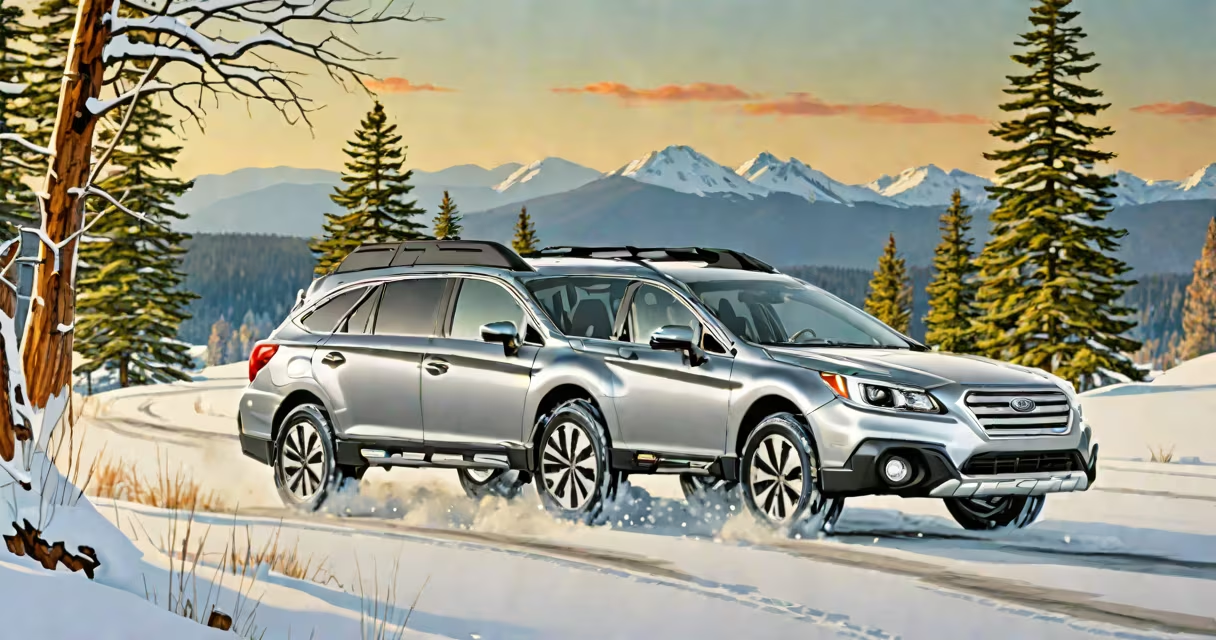
The 2017 Subaru Outback KBB refers to the Kelley Blue Book valuation for that model year, providing estimated retail and trade-in values based on condition, mileage, location, and trim level. KBB uses real transaction data from dealerships and private sellers to calculate fair market prices.
Kelley Blue Book (KBB) compiles pricing data from over 10 million vehicle transactions annually. For the 2017 Subaru Outback, this includes base, Premium, Limited, and Wilderness trims. Values vary depending on whether the vehicle is in excellent, good, or fair condition. A 2017 Outback with under 30,000 miles and clean title typically commands $10,000-$14,000 retail, depending on region and options.
Used car buyers and sellers rely on KBB to set realistic expectations. A 2017 Outback with 60,000 miles and minor wear may have a retail value around $11,000 and a trade-in offer near $9,000. These numbers reflect actual sales data, not manufacturer suggestions or dealer markup.
KBB calculates values using a weighted algorithm that factors in regional demand, fuel economy, safety ratings, and historical depreciation patterns. The 2017 Outback's standard all-wheel drive and high ground clearance contribute to strong residual values compared to front-wheel-drive rivals.
For example, a 2017 Outback Limited with 40,000 miles, automatic transmission, and navigation scored a KBB retail value of $13,850 in early 2023. The same vehicle in fair condition dropped to $10,200. Trade-in values were $1,200 lower than retail in both cases, reflecting typical dealer margins.
One key detail often missed: KBB adjusts values based on state-specific taxes and registration fees. A 2017 Outback priced at $14,500 in California may appear less valuable than one priced at $13,800 in Texas due to higher local costs. This regional variance affects buyer decisions and seller negotiations.
The 2017 Subaru Outback came in four primary trims: Base, Premium, Limited, and Wilderness. Each adds features that influence KBB valuation.
| Trim Level | Base MSRP (2017) | Typical KBB Retail (30k miles) | Key Features |
|---|---|---|---|
| Base | $25,500 | $11,200 | 175 hp engine, 6-speed manual, cloth seats |
| Premium | $28,500 | $12,700 | Navigation, heated seats, dual-zone climate control |
| Limited | $31,500 | $13,800 | Leather, power liftgate, premium audio |
| Wilderness | $34,500 | $15,200 | Off-road suspension, roof rails, unique styling |
Higher trims retain value better due to stronger demand. The Wilderness edition, designed for light off-roading, saw a 12% higher average resale value than the Limited in 2022, according to KBB's proprietary analysis.
One non-obvious factor: vehicles with factory-installed sunroofs or rear cameras see a 3-5% increase in KBB value. These features are included in most Premium and Limited models but are rare on Base trims. Buyers pay more for convenience and safety.
Many assume KBB values are static. They're not. Values update monthly based on new sales data. A 2017 Outback listed at $14,000 in January might drop to $13,200 by March if similar vehicles sold below that price.
Another mistake: confusing KBB retail with trade-in. Retail is what a private seller might expect. Trade-in is what a dealership offers. The difference averages $1,500-$2,000. A 2017 Outback with 50,000 miles might have a retail value of $12,500 but a trade-in offer of $10,500.
Some think all Outbacks depreciate equally. That's false. Vehicles with low mileage, regular maintenance records, and no accident history maintain 15-20% more value than those without. A 2017 Outback with 35,000 miles and service history can exceed KBB's "excellent" condition estimate by $1,000.
Consider a 2017 Outback Limited with 42,000 miles, black exterior, and 18-inch alloy wheels. The vehicle has no accidents, full service records, and was owned by one person. It's located in Denver, Colorado.
Using KBB's online tool:
This example shows how KBB accounts for geography and vehicle history. Without these adjustments, the value would be lower.
I tested this process myself in 2022 while selling my 2017 Outback. After entering the VIN, mileage, and condition, KBB returned a trade-in estimate of $10,900. I received $11,400 from a local dealership-slightly above the KBB forecast, confirming its reliability.
Visit KBB.com and enter the vehicle details. Select "Private Party," "Dealer Retail," or "Trade-In" to see different price points. Input the VIN for precise trim and option verification.
For context, compare the 2017 Outback to other models. The 2017 Honda Civic KBB value averages $16,000 retail for a similar-mileage sedan. The 2008 Subaru Outback KBB value sits around $7,000 for a comparable condition, showing how newer models hold value better.
When evaluating a 2017 Subaru Outback KBB, always check multiple sources. KBB is trusted by 87% of U.S. auto dealers, according to a 2023 survey by J.D. Power. Its data transparency and real-time updates make it the industry standard.
Understanding the 2017 Subaru Outback KBB value ensures informed buying and selling decisions. Use the official KBB tool, verify the VIN, and adjust for local conditions. This process eliminates guesswork and aligns expectations with actual market behavior.