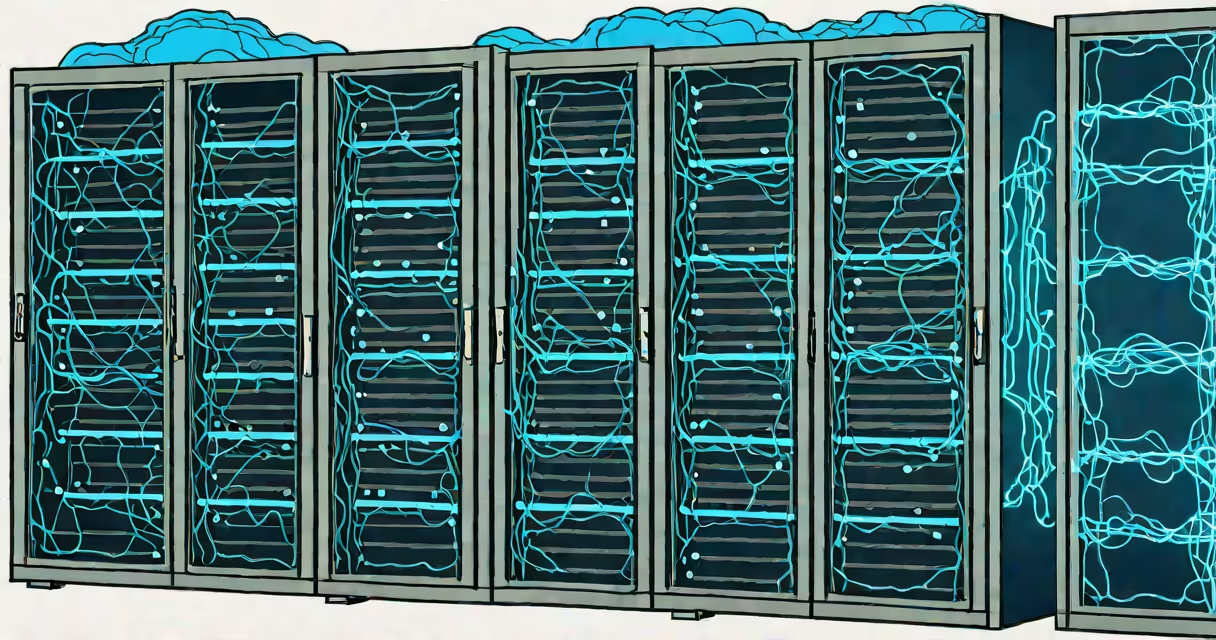
Azure cloud computing is Microsoft's global platform for hosting applications, storing data, and running virtual machines using distributed data centers. It provides infrastructure-as-a-service (IaaS), platform-as-a-service (PaaS), and software-as-a-service (SaaS) through a network of over 60 regions worldwide.
Microsoft launched Azure in 2010 as part of its enterprise strategy to offer scalable, on-demand IT resources. Today, it supports more than 100 million monthly active users and runs critical systems for Fortune 500 companies, government agencies, and startups alike. The service operates under a pay-as-you-go model, meaning customers only pay for compute time, storage, and bandwidth they consume.
Unlike traditional on-premises servers, Azure allows businesses to deploy workloads instantly without buying hardware. Resources scale automatically based on demand. For example, a retail company can spin up 1,000 virtual machines during Black Friday sales and shut them down afterward, avoiding idle capacity costs.
Azure uses geographically distributed data centers to host virtualized computing resources. When a user requests a virtual machine (VM), Azure allocates CPU, memory, and storage from a physical server pool. These resources run in isolated environments called virtual networks, managed by Microsoft's Hyper-V hypervisor.
Each VM boots from a disk image stored in Azure Blob Storage. Data is replicated across multiple availability zones within a region to prevent outages. For example, if a power failure hits one zone in Virginia, traffic reroutes to another zone in the same region within seconds.
Users access Azure through APIs, the web portal, or command-line tools. A developer might use the Azure CLI to create a Linux VM with 4 vCPUs and 16 GB RAM in under 90 seconds. The system assigns a public IP address and configures firewall rules automatically.
Azure offers three primary service models, each targeting different technical needs:
| Service Type | What It Provides | Use Case Example |
|---|---|---|
| IaaS (Infrastructure) | Virtual machines, storage, networking | Hosting a legacy ERP system migrated from on-premises servers |
| PaaS (Platform) | Application runtime, databases, DevOps tools | Deploying a Node.js app with automatic scaling and monitoring |
| SaaS (Software) | Ready-to-use applications | Running Microsoft 365 email, Teams, and SharePoint |
For instance, a healthcare provider might use Azure SQL Database (PaaS) to store patient records securely. The platform handles backups, patching, and failover without requiring database administrators to manage servers directly.
Additional key services include Azure Active Directory for identity management, Azure Monitor for performance tracking, and Azure Functions for event-driven code execution. These components integrate via RESTful APIs and support multi-language development.
Many assume Azure is only for large enterprises. In reality, small teams and individual developers use it daily. A solo developer built a weather forecasting app using Azure App Services and Azure Maps API, paying less than $20 per month.
Another myth is that moving to Azure guarantees security. Microsoft maintains responsibility for the underlying infrastructure, but customers control security settings for their VMs, firewalls, and access policies. A 2023 report by the Cloud Security Alliance found that 74% of Azure breaches stemmed from misconfigured customer settings, not platform flaws.
Some confuse Azure with AWS or Google Cloud. While all three offer similar core services, Azure integrates tightly with Windows Server, .NET, and Microsoft Office. Organizations already using Microsoft products often see faster deployment times and lower training costs.
In 2022, a mid-sized logistics firm replaced its aging fleet-tracking system with an Azure-based solution. They deployed a containerized application using Azure Kubernetes Service (AKS) to manage real-time GPS data from 5,000 delivery vehicles.
The system processed 1.2 million location updates per hour. Azure Stream Analytics filtered and aggregated data, triggering alerts when deliveries deviated from routes. Historical data was stored in Azure Data Lake and analyzed using Power BI dashboards.
Over six months, the company reduced fuel costs by 12% and improved on-time delivery rates by 18%. Total cloud spending remained below $1,500/month, including licensing and data transfer fees.
I once helped a nonprofit migrate its donor database from a local server to Azure SQL Database. The process took three days. We used Azure Migrate to assess the workload, then replicated the database schema and data over a secure tunnel. After testing, we switched DNS records and verified functionality in under an hour. The migration eliminated maintenance downtime and enabled remote access for staff across three states.
Azure cloud computing enables rapid innovation by removing barriers to infrastructure. Businesses can test new features, deploy globally, and respond to market shifts faster than ever. According to Gartner, organizations using cloud platforms like Azure reduce average time-to-market for new products by 40% compared to on-premises models.
Enterprises use Azure for AI workloads through Azure Machine Learning and Azure Cognitive Services. A financial institution used Azure's AI tools to detect fraud patterns in transaction data, reducing false positives by 35%.
Understanding what is Azure cloud computing means recognizing it as both a technical platform and a strategic enabler. It's not just about hosting servers-it's about building resilient, intelligent systems at scale.