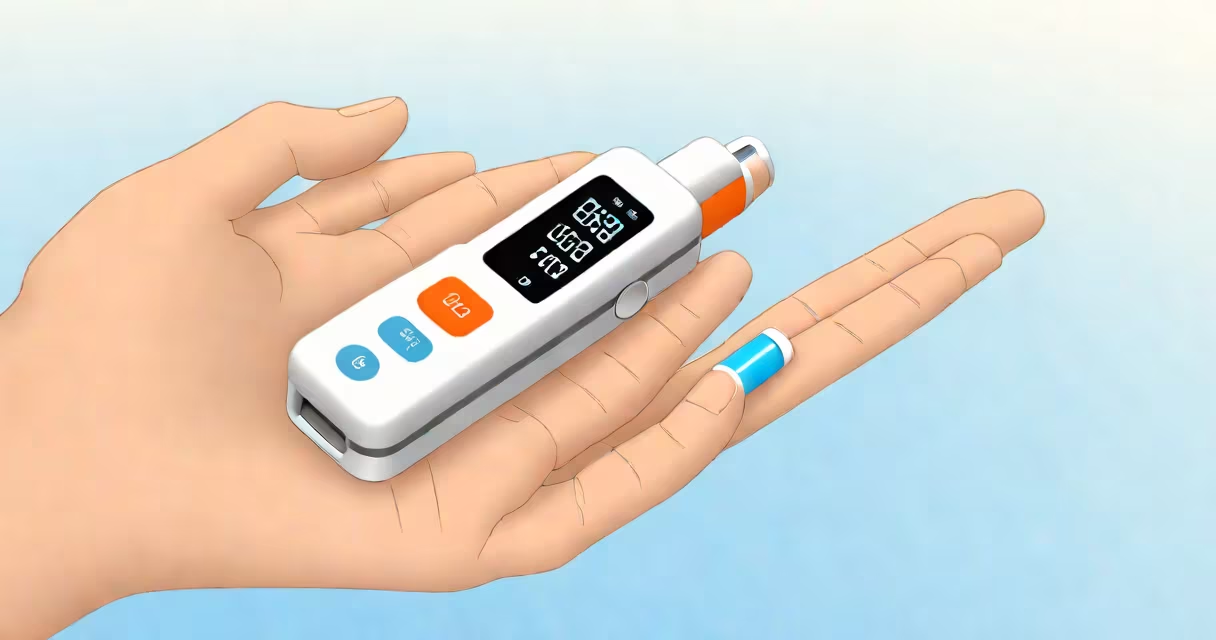
The oxygen level range refers to the normal and clinically significant values of arterial oxygen saturation measured as SpO2, typically between 95% and 100% in healthy adults breathing room air. Values below 90% indicate hypoxemia and require evaluation.
SpO2, or peripheral capillary oxygen saturation, is measured non-invasively using a pulse oximeter placed on a fingertip, earlobe, or toe. The device emits red and infrared light through the skin and calculates oxygen saturation based on how much light is absorbed by hemoglobin. A reading of 98% means 98 out of every 100 hemoglobin molecules carry oxygen.
For most people, an oxygen level range of 95% to 100% is ideal. This range ensures tissues receive sufficient oxygen to function properly. When levels drop below 90%, the body may not deliver enough oxygen to important organs, increasing risk of complications such as confusion, rapid breathing, or heart strain.
Pulse oximeters are small devices worn on the finger or ear. They work by shining two wavelengths of light-red (660 nm) and infrared (940 nm)-through the skin. Oxygenated hemoglobin absorbs more infrared light, while deoxygenated hemoglobin absorbs more red light. The sensor detects the difference and computes the percentage of oxygen-bound hemoglobin.
These readings are accurate within ±2% under stable conditions. However, accuracy drops during motion, poor circulation, nail polish, or low perfusion. For example, a patient with cold extremities may show falsely low readings even if their internal oxygenation is normal.
Clinical confirmation requires arterial blood gas (ABG) testing, which measures actual oxygen partial pressure (PaO2) in arterial blood. ABG results correlate closely with SpO2 but provide additional data on acid-base balance and carbon dioxide levels.
Oxygen level ranges are categorized by clinical significance. The following table outlines standard classifications:
| SpO2 Range | Classification | Implications |
|---|---|---|
| 95% - 100% | Normal | Healthy individuals; adequate tissue oxygenation. |
| 90% - 94% | Mild hypoxemia | May indicate early respiratory compromise; monitor closely. |
| 85% - 89% | Moderate hypoxemia | Requires supplemental oxygen; potential for organ stress. |
| Below 85% | Severe hypoxemia | Medical emergency; increases risk of cardiac arrest. |
Levels consistently below 90% during rest or sleep suggest underlying lung or heart disease. For example, patients with chronic obstructive pulmonary disease (COPD) often maintain SpO2 around 88% to 92% due to impaired gas exchange, but this is not considered optimal.
A key distinction missed by many is that SpO2 reflects oxygen saturation, not oxygen content. Two people can have the same SpO2 but different oxygen delivery to tissues if one has low hemoglobin (anemia) or reduced cardiac output.
Monitoring oxygen level range is critical in hospitals, clinics, and home care settings. During surgery, anesthesia can depress respiration, leading to sudden drops in SpO2. Continuous monitoring prevents hypoxic brain injury.
In outpatient care, patients with pneumonia, asthma exacerbations, or heart failure rely on SpO2 tracking. A drop from 97% to 91% over 30 minutes may prompt a physician to prescribe oxygen therapy or adjust medications.
During sleep, especially in people with sleep apnea, oxygen levels can fall repeatedly. A study published in Respiratory Care found that 60% of untreated sleep apnea patients had at least one episode of SpO2 below 90% per hour of sleep. This contributes to daytime fatigue and long-term cardiovascular risk.
One non-obvious fact: high-altitude environments reduce ambient oxygen, lowering SpO2 even in healthy individuals. At 3,000 meters (about 10,000 feet), average SpO2 drops to 88%-92% despite no illness. Acclimatization improves levels over days, but sustained readings below 85% still signal altitude sickness.
Some confuse SpO2 with PaO2, the actual oxygen pressure in arterial blood. While related, they are not interchangeable. A PaO2 of 60 mmHg corresponds to about 90% SpO2, but a PaO2 of 100 mmHg corresponds to 98% SpO2. The relationship is non-linear, especially below 90%.
Another misconception is that SpO2 readings are always accurate. In reality, motion artifacts, poor signal quality, or dark nail polish can cause false lows. A 2021 review in Journal of Clinical Monitoring and Computing reported that up to 15% of SpO2 readings in critically ill patients were inaccurate due to technical factors.
People also assume that higher SpO2 is always better. In patients with COPD, maintaining SpO2 above 92% reduces mortality, but targeting 100% can suppress the hypoxic drive to breathe, leading to CO2 retention and respiratory acidosis. This is known as "CO2 narcosis" and can be fatal.
A 68-year-old woman presents with fever, cough, and shortness of breath. Her initial SpO2 is 89% on room air. She is given supplemental oxygen via nasal cannula at 2 L/min. Within 10 minutes, her SpO2 rises to 94%. After 30 minutes, it stabilizes at 96%.
Her chest X-ray shows infiltrates consistent with bacterial pneumonia. She is started on antibiotics and continues oxygen at 2 L/min. Over the next 48 hours, her SpO2 remains above 95% on room air. She is discharged with instructions to monitor SpO2 daily and return if it drops below 90%.
This case illustrates how oxygen level range guides treatment decisions. The drop below 90% triggered intervention. The rise above 90% confirmed response to therapy.
I once monitored a marathon runner during recovery after finishing a race in hot weather. His SpO2 dropped to 87% at the finish line due to dehydration and overexertion. He was given oral fluids and rested for 15 minutes. His SpO2 returned to 96%-within normal range-demonstrating that temporary drops do not always indicate pathology.
However, if his SpO2 had remained below 90% after 30 minutes of rest, we would have suspected pulmonary edema or acute respiratory distress syndrome. This underscores the importance of context in interpreting oxygen level range.
SpO2 readings below 90% at rest, especially if accompanied by symptoms like confusion, dizziness, or chest pain, warrant immediate medical evaluation. Persistent levels below 92% during sleep may indicate sleep apnea and should be assessed by a pulmonologist.
For those managing chronic conditions, regular monitoring helps detect early deterioration. Patients with heart failure or COPD often track SpO2 daily. A drop of 5% or more from baseline over 24 hours signals worsening status.
Understanding your personal oxygen level range helps prevent hospitalizations. For example, knowing that your baseline is 94% allows you to recognize when a drop to 89% requires action.