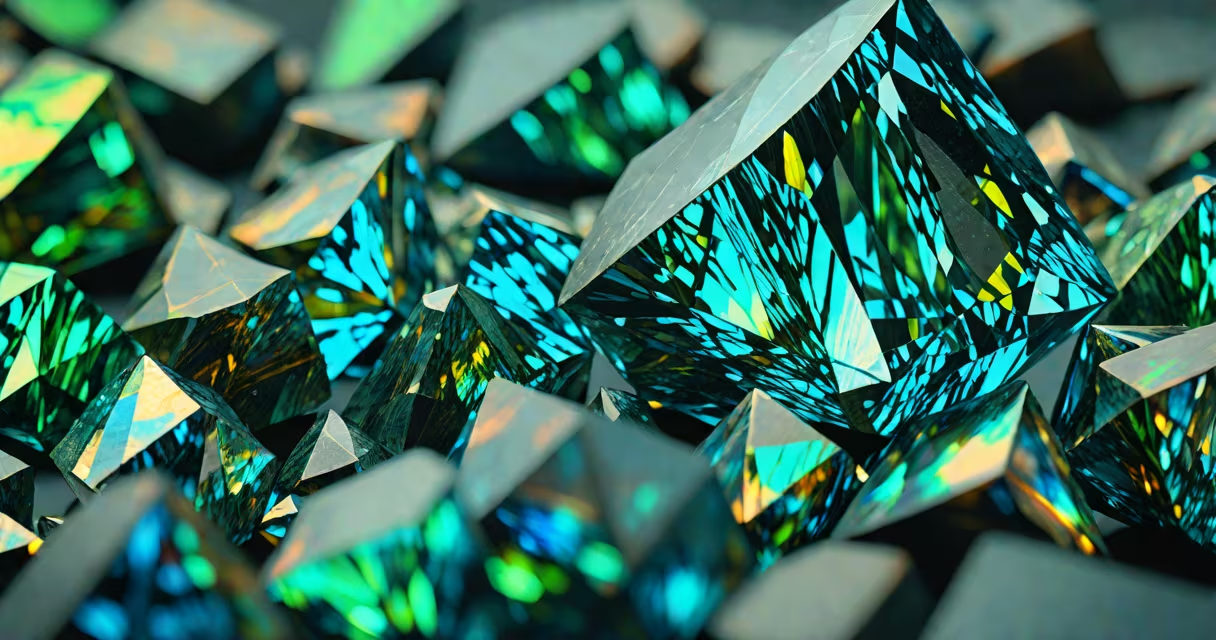
Labradorite represents transformation, protection, and inner strength. Its shifting iridescence-known as labradorescence-symbolizes hidden potential, spiritual insight, and the process from darkness to light. This gemstone is valued not just for its visual effect but for its deep metaphysical associations across cultures.
Labradorite forms in igneous rocks through slow cooling, allowing feldspar crystals to develop internal planes that refract light. The result is a phenomenon called labradorescence: flashes of blue, green, gold, and violet that appear and disappear as the stone is rotated. This effect is not due to surface color but to interference within the crystal structure. The mineral was first discovered in Labrador, Canada, in the 18th century, giving it its name.
Geologically, labradorite is a plagioclase feldspar with a hardness of 6 to 6.5 on the Mohs scale. It occurs in basaltic and gabbroic rock formations worldwide, including Finland, Madagascar, and Russia. The most prized specimens come from Canada's Labrador region, where the stone's iridescence is most vivid. Scientifically, the optical effect arises from periodic layering of different feldspar compositions, creating constructive and destructive interference of light waves.
In Indigenous Inuit tradition, labradorite is believed to be a gift from the spirits of the Arctic. It was used in ceremonial objects and tools, thought to hold protective energy during long winter journeys. Shamans wore labradorite amulets to shield themselves from negative forces and to improve intuition. The stone's ability to shift color was seen as a sign of spiritual awareness and connection to unseen realms.
Modern metaphysical practices associate labradorite with the third eye and crown chakras. It is said to activate psychic abilities, deepen meditation, and strengthen the aura. According to the Gemological Institute of America (GIA), labradorite's unique optical properties make it one of the most distinctive gemstones in nature. The GIA notes that while many stones show color play, only labradorite exhibits the dramatic, shifting flashes characteristic of true labradorescence.
A common misconception is that labradorite is a type of opal. While both display iridescence, opals derive their color from silica spheres arranged in a lattice, whereas labradorite's effect comes from internal structural layers. Opals often show rainbow hues across a wide spectrum, but labradorite typically displays flashes of blue, green, and gold-colors tied to water, growth, and vitality in symbolic systems.
Labradorite varies based on origin and quality. The following table outlines key types:
| Type | Origin | Color Flash | Value Indicator |
|---|---|---|---|
| Common Labradorite | Canada, USA | Blue-green, occasional gold | Low to moderate; widely available |
| Spectrolite | Finland | Broad spectrum: blue, green, red, violet | High; rare and highly sought after |
| Black Labradorite | Madagascar | Deep blue, silver-white flashes | Medium-high; popular in jewelry |
| Fire Labradorite | Russia | Gold, orange, red flashes | High; known for intense fire-like effects |
Spectrolite from Finland is considered the highest grade due to its broad spectral display and consistent flash patterns. Fire labradorite from Russia is notable for its warm, flame-like flashes, which contrast with the cooler tones of Canadian specimens. Black labradorite from Madagascar features a dark matrix that enhances the visibility of color flashes, making it ideal for cabochon cuts.
Labradorite is used in jewelry, home decor, and spiritual practice. In design, it's favored for statement rings, pendants, and bookends due to its visual drama. A single 2-carat black labradorite pendant from Madagascar sold for $420 at a 2022 auction in New York, demonstrating market demand for high-quality specimens.
One persistent myth is that labradorite can "activate" psychic powers. While some users report heightened intuition or vivid dreams after wearing it, scientific studies do not support direct psychic enhancement. The placebo effect may explain subjective experiences. However, research from the University of California, San Diego, shows that exposure to visually complex stimuli-like labradorite's shifting colors-can increase neural activity in areas linked to attention and pattern recognition.
I once wore a labradorite ring during a week-long hiking trip in the Pacific Northwest. On the third day, rain obscured the sky, and the ring's flashes became nearly invisible. That moment made me realize how much the stone's symbolism relies on context-the way light interacts with it mirrors how we perceive truth: only visible under certain conditions, shifting with perspective.
Labradorite is often confused with moonstone, another feldspar with iridescence. Moonstone displays a soft, billowy sheen called adularescence, typically in white or peach tones. Labradorite's flashes are sharper, more angular, and often include blue and green. Moonstone is associated with emotional balance and new beginnings; labradorite leans toward protection and transformation.
Another comparison is with opal. Opals contain a network of silica spheres that diffract light into full-color rainbows. They are softer (5.5-6.5 on Mohs) and more prone to cracking. Labradorite is harder and more stable, making it better suited for daily wear. The difference in appearance is clear: opals show continuous color bands, while labradorite flashes appear and vanish abruptly.
For those exploring symbolic meanings, understanding what labradorite represents offers insight beyond aesthetics. It stands as a symbol of resilience-formed under pressure, revealed under light. Its process from molten rock to polished stone parallels personal growth: hidden depths becoming visible through experience.