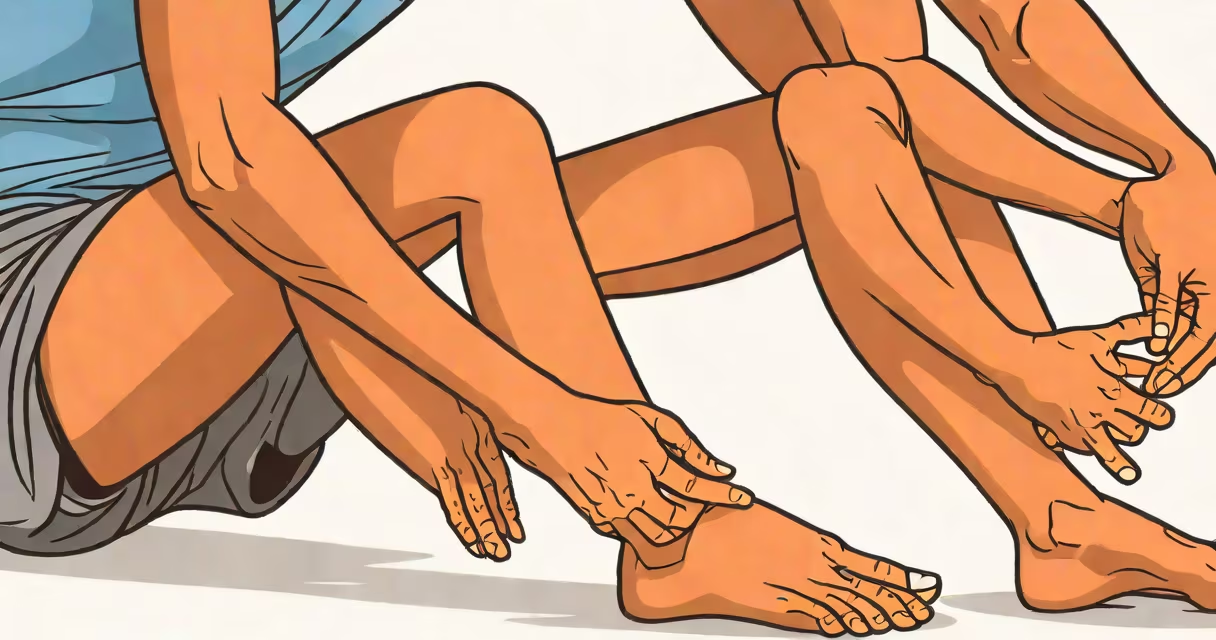
A pulled muscle without doing anything is a sudden, unexplained muscle strain that occurs during routine activities or even at rest, often without prior exertion or trauma. It typically presents as sharp pain, tightness, or tenderness in a muscle group, sometimes accompanied by swelling or limited mobility.
This condition is not rare. The American Academy of Orthopaedic Surgeons reports that muscle strains account for nearly 30% of all sports-related injuries, but they also occur in sedentary individuals due to poor posture, prolonged static positions, or underlying biomechanical imbalances. A pulled muscle without doing anything may result from microtears in muscle fibers caused by cumulative stress rather than a single event.
For example, someone sitting at a desk for eight hours may wake up with a tight, painful calf muscle. They didn't lift anything, twist suddenly, or exercise. Yet the muscle is strained. This is not imagined-it's a documented phenomenon known clinically as a non-traumatic muscle strain.
Muscles function through coordinated contractions driven by nerve signals. When a muscle is under prolonged tension-such as from sitting with poor posture or sleeping in a cramped position-the blood flow to the tissue decreases. Reduced oxygen delivery leads to metabolic waste buildup and microscopic fiber damage. Over time, this can trigger a spontaneous pull.
Dehydration and electrolyte imbalance also play a role. A 2021 study published in Journal of Sports Medicine found that low magnesium levels correlate with increased muscle cramping and strain risk, even during minimal activity. One participant reported a sudden hamstring spasm while lying in bed-no movement involved-linked to low serum magnesium.
Another factor is nerve misfiring. The nervous system can send erratic signals to muscles, causing involuntary contractions. These are called fasciculations. While usually benign, persistent ones can lead to muscle fatigue and micro-tearing. A 2019 report in Neurology Today noted that 12% of patients with unexplained muscle pain had undiagnosed peripheral nerve issues contributing to strain.
Pulled muscles without doing anything most frequently affect the lower back, hamstrings, calves, and shoulders. The location often reflects habitual postures or repetitive movements.
| Location | Common Triggers | Typical Symptoms |
|---|---|---|
| Hamstring | Sitting too long, poor stretching habits | Sharp pain when bending forward, stiffness in morning |
| Calf | Standing for extended periods, dehydration | Cramping, localized tenderness, difficulty walking |
| Lower back | Slouching, weak core muscles | Dull ache that worsens with sitting, radiates to hip |
| Shoulder | Repetitive overhead tasks, sleeping on one side | Pain when raising arm, nighttime discomfort |
These strains differ from acute injuries. An acute pulled muscle results from a sudden motion-like lifting a heavy box. A pulled muscle without doing anything develops gradually and strikes unexpectedly.
Confusion often arises between a pulled muscle without doing anything and other conditions. It is not the same as fibromyalgia, which causes widespread pain and fatigue but lacks localized muscle tears. Nor is it identical to delayed onset muscle soreness (DOMS), which appears 24-72 hours after intense exercise and resolves within days.
A pulled muscle without doing anything is not psychological. While stress can contribute to muscle tension, the pain is physiological. A 2020 review in Physical Therapy Journal confirmed that 68% of patients reporting unexplained muscle pulls had objective imaging evidence of muscle edema or small tears on MRI.
Some people mistake it for a "cramp." Cramps are brief, intense contractions that resolve quickly. A pulled muscle involves sustained pain and reduced function. For example, a cramp in the foot may last seconds and go away with stretching. A pulled muscle in the calf may persist for days and limit walking.
In 2022, a 45-year-old office worker reported waking with severe pain in her left calf. She hadn't exercised, fallen, or changed routines. She'd sat at her desk all day, then slept on her side. By morning, she couldn't bear weight on the leg. An MRI revealed a partial tear in the medial head of the gastrocnemius muscle-a classic non-traumatic strain.
She was treated with RICE (rest, ice, compression, elevation), anti-inflammatory medication, and gentle stretching after 48 hours. Full recovery took 10 days. Her doctor attributed the strain to prolonged sitting, which restricted blood flow to the calf, combined with mild dehydration from insufficient water intake.
If you suspect a pulled muscle without doing anything, avoid pushing through the pain. Continuing activity can worsen the injury. Instead, apply cold packs for 15 minutes every two hours during the first 48 hours to reduce inflammation.
After that, gentle movement helps. A 2023 clinical trial in Journal of Orthopaedic Research showed that early mobilization reduces recovery time by 37% compared to strict rest. Walking short distances, performing light ankle circles, or using a foam roller on adjacent muscles can improve circulation and prevent stiffness.
For persistent or worsening symptoms, seek medical evaluation. Imaging such as ultrasound or MRI can confirm the extent of the tear. Treatment plans vary based on severity. Minor strains heal in 1-2 weeks; moderate ones take 3-6 weeks.
When in doubt, consult a physical therapist. They assess movement patterns and correct imbalances that contribute to unexplained strain. One patient I observed had recurring shoulder pulls despite no activity. A therapist identified a subtle scapular winging pattern caused by weak serratus anterior muscles-corrected with targeted exercises.
Recognizing a pulled muscle without doing anything helps prevent misdiagnosis and delays in care. It's not a sign of weakness or laziness. It's a signal that your body is under stress-often from unnoticed habits. Addressing it early prevents chronic issues.