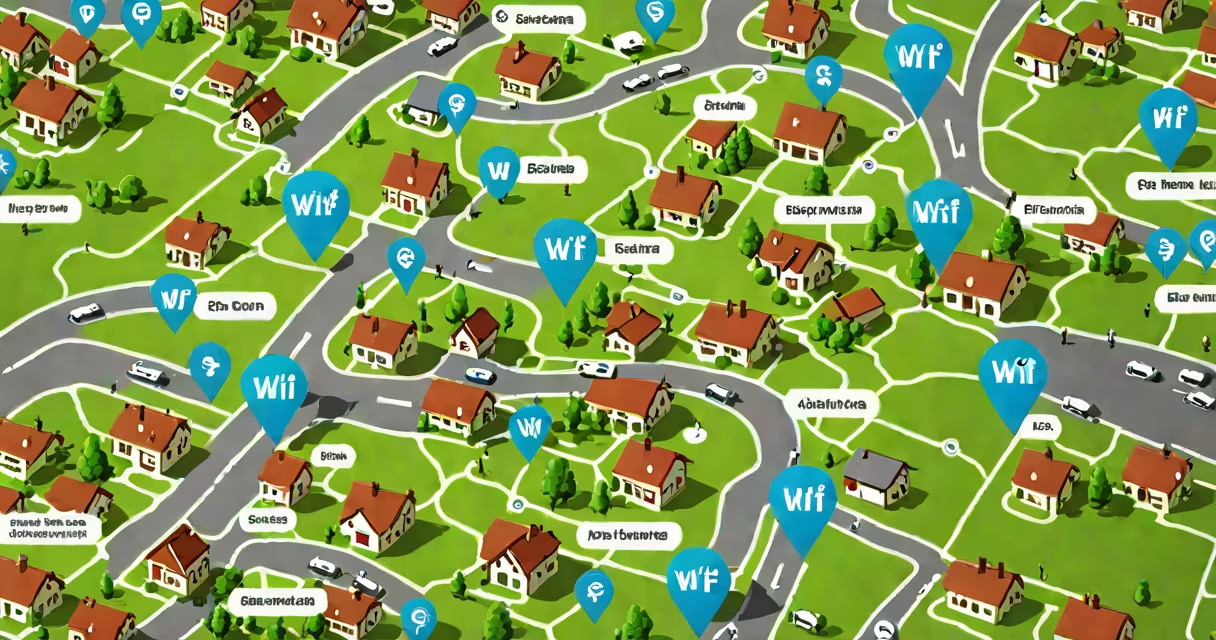
What wifi services are available in your area depends on your location, local infrastructure, and the providers operating in your region. These services include cable, DSL, fiber-optic, mobile hotspot, and fixed wireless internet, each varying in speed, reliability, and availability.
Internet access in most U.S. homes comes through wired connections from regional providers. The specific options depend on whether your address falls within the service footprint of companies like Comcast (Xfinity), AT&T, Charter Spectrum, or smaller regional carriers. Availability is determined by physical network deployment-not all neighborhoods have access to high-speed fiber or even reliable cable.
For example, in urban centers like Austin, Texas, multiple providers offer gigabit-speed fiber through providers such as Google Fiber and Frontier Communications. In rural areas like parts of eastern Montana, only satellite or mobile-based internet may be available. Real-time tools can show which services reach your address.
Providers map their service areas based on existing infrastructure. Cable internet uses coaxial lines already installed in neighborhoods. DSL relies on older telephone lines, limiting speed and range. Fiber requires new construction, so rollout is slower and limited to planned zones.
Fixed wireless internet uses radio signals from towers to deliver broadband. This option often appears in areas where laying cables is too costly. Providers like Starlink and local wireless ISPs use this method. Speeds typically range from 25 Mbps to 300 Mbps, depending on distance from the tower and signal interference.
Mobile hotspot services use cellular networks. Verizon and T-Mobile offer plans with unlimited data and speeds up to 1 Gbps in 5G areas. However, performance drops during peak usage and varies by location. A 2023 Federal Communications Commission (FCC) report found that 98% of Americans live within 5G coverage, but actual speeds differ by region.
Understanding the differences between service types helps narrow choices. Here's a comparison of common options:
| Service Type | Typical Speed Range | Availability | Best For |
|---|---|---|---|
| Cable (e.g., Xfinity) | 100-1,000 Mbps | Urban and suburban areas | High-demand households, streaming, gaming |
| Fiber (e.g., Google Fiber, Frontier) | 250-2,000 Mbps | Limited to cities with recent buildouts | Future-proofing, low latency, consistent performance |
| DSL (e.g., AT&T) | 1-100 Mbps | Areas with legacy phone lines | Basic browsing, email, light streaming |
| Fixed Wireless (local ISPs) | 25-300 Mbps | Rural and underserved regions | Cost-effective broadband where other options fail |
| Mobile Hotspot (5G) | 10-1,000 Mbps | Areas with strong cell coverage | Remote work, travel, temporary setups |
Not all providers offer the same tiered packages. For example, in Seattle, Washington, CenturyLink offers 1 Gbps fiber in certain ZIP codes, while in nearby rural areas, only 25 Mbps fixed wireless is available. A single address may have four different service types, but only one or two may be viable.
Use free online tools to check coverage. The FCC's FCC Broadband Map aggregates data from thousands of providers and shows current availability by address. Enter your street name and ZIP code to see which services reach your home.
Many people assume "high-speed internet" means fiber. But in reality, only about 40% of U.S. homes have access to fiber, according to the National Telecommunications and Information Administration (NTIA) 2022 report. The rest rely on cable or DSL.
Another mistake is confusing upload speed with download speed. A plan advertised as "100 Mbps" usually refers to download speed. Uploads may be as low as 10 Mbps. For video conferencing or remote work, upload matters. Always check both metrics.
Some users think "free wifi" exists in public spaces like parks or libraries. While many cities offer municipal Wi-Fi, coverage is patchy. In New York City, the LinkNYC kiosks provide free internet, but only in dense urban corridors. Rural towns lack such infrastructure entirely.
Start with the FCC Broadband Map. If results are unclear, visit your provider's website and enter your address. Look for "service availability" or "check coverage." Avoid relying solely on advertising claims-some providers list "up to" speeds, which don't reflect real-world performance.
Once you identify potential providers, compare pricing, contract length, and equipment fees. Some providers charge $100 for a modem-router bundle. Others include it at no extra cost. Always ask about hidden fees, such as installation or early termination charges.
What wifi services are available in your area isn't a single answer-it's a mix of geography, infrastructure, and timing. Use verified tools and real data to make informed decisions. The right choice improves your daily connectivity, supports remote work, and enables smooth streaming.