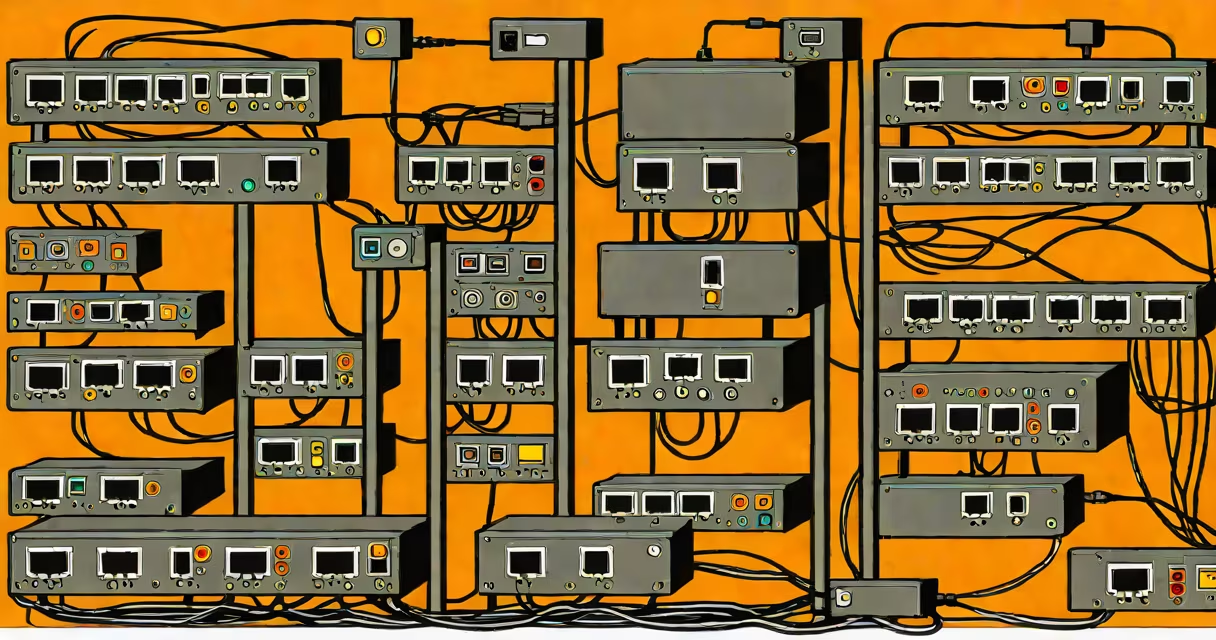
Power over Ethernet (PoE) is a technology that transmits electrical power along with data over standard twisted-pair Ethernet cabling. It enables devices like IP cameras, VoIP phones, and wireless access points to receive both power and data through a single cable.
PoE eliminates the need for separate power outlets and reduces installation complexity. The IEEE standardized PoE under 802.3af and later expanded it with 802.3at and 802.3bt. These standards define voltage levels, power budgets, and negotiation protocols between powered devices and power sourcing equipment.
For example, a security camera mounted on a wall can draw 15 watts from a PoE-enabled switch using Cat 5e cable. No additional wiring or outlet access is required. This capability supports rapid deployment in offices, schools, and industrial sites.
When a PoE-compatible device connects to a switch, the switch performs a detection phase. It applies a low-voltage test (typically 2.5V to 10V) across the cable pairs to determine if the connected device supports PoE. Only after confirmation does the switch deliver full power.
Data transmission occurs over twisted pairs (pairs 2 and 3 in standard Ethernet wiring). Power is delivered over the same pairs or on spare pairs, depending on the PoE variant. In 4-pair PoE (like 802.3bt), all four pairs carry power, allowing higher wattage delivery.
A real-world deployment at a university campus used PoE to install 60 outdoor IP cameras. All devices were powered via a single PoE switch located in a central server room. Cabling ran 120 meters through conduit with no intermediate power sources. The system operated reliably for over five years with minimal maintenance.
Three primary PoE standards exist, each supporting different power levels and use cases:
| Standard | Max Power | Use Cases | IEEE Specification |
|---|---|---|---|
| PoE (802.3af) | 15.4W | Basic VoIP phones, entry-level IP cameras | 802.3af-2003 |
| PoE+ (802.3at) | 30W | High-end surveillance cameras, dual-band Wi-Fi access points | 802.3at-2009 |
| PoE++ (802.3bt) | 60W (Type 3), 90W (Type 4) | PTZ cameras, high-power access points, digital signage | 802.3bt-2018 |
Not all switches support all standards. A switch labeled "PoE+" may not deliver 30W to every port. Always check the manufacturer's specification sheet. Some devices require specific PoE profiles to function properly.
One common mistake is assuming that Cat 5 cable can handle 60W. While Cat 5e supports 802.3bt Type 3, resistance increases with distance and current. Over 100 meters, voltage drop can prevent proper operation. For long runs, use Cat 6 or higher and ensure the switch supports adequate power budgeting.
Many assume PoE is interchangeable with USB power delivery. They are not. PoE operates at 48V DC, while USB delivers 5V. Using a USB adapter to power a PoE device risks damage due to voltage mismatch.
Another misconception is that any Ethernet cable works with PoE. While Cat 5e is sufficient for most applications, older Cat 5 or unshielded cables degrade signal integrity under high current. In environments with electromagnetic interference-such as near motors or elevators-shielded twisted pair (STP) cables improve reliability.
Some users believe PoE requires special switches. While legacy switches lack PoE, modern managed and unmanaged switches often include PoE support. A consumer-grade gigabit switch with 8 PoE ports can cost under $150 and power multiple devices simultaneously.
I once installed a PoE-powered smart lighting system in a retail store. The vendor claimed their LED fixtures were "PoE-ready." After connecting them, the lights flickered intermittently. Troubleshooting revealed the fixtures drew 25W during startup-exceeding the switch's per-port limit. Replacing the switch with one rated for 30W per port resolved the issue. This showed that even compliant devices can fail if power demands exceed specifications.
Enterprises use PoE to reduce cabling costs and simplify infrastructure. A hospital deployed PoE to power 200 bedside monitors and nurse call stations. All devices connected to a single rack-mounted switch. Maintenance teams accessed device status remotely and replaced faulty units without rewiring.
Smart buildings integrate PoE into HVAC controls, occupancy sensors, and digital signage. A hotel chain used PoE to power lobby displays and environmental sensors. Centralized management allowed energy savings of 18% over six months by adjusting lighting based on real-time occupancy data.
Industrial settings benefit from PoE's durability. Factories use PoE to power ruggedized IP cameras and RFID readers. The absence of exposed AC wiring reduces fire risk and improves safety compliance.
Understanding poe meaning in networking ensures correct implementation and avoids hardware failure. Always verify device power requirements, cable quality, and switch capabilities before deployment. Proper planning prevents downtime and extends equipment lifespan.