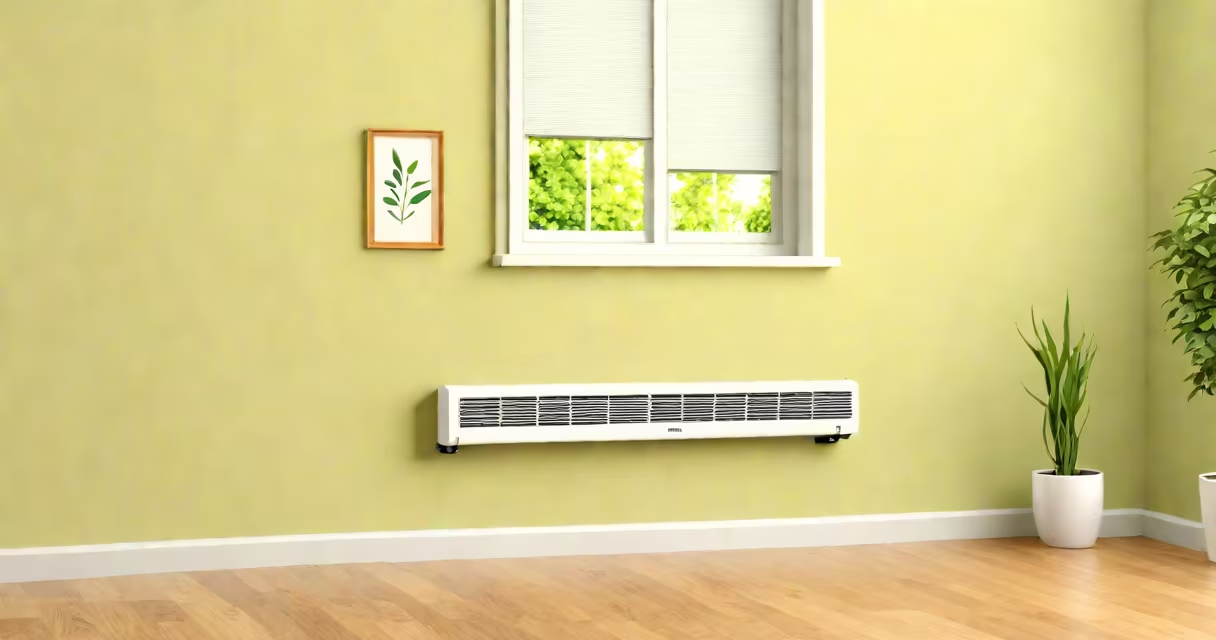
Electric baseboard heaters are wall-mounted, electrically powered heating units installed beneath windows or along interior walls to warm individual rooms. They operate using resistance heating elements that convert electricity directly into heat, distributing warmth through natural convection. These heaters are common in North American homes, especially in apartments and older buildings where central heating systems are absent or insufficient.
They function without ductwork, combustion, or moving parts. When turned on, electrical current passes through a metal heating element inside a metal casing. The element heats up, warming the air around it. As warm air rises, cooler air flows in from below, creating a continuous cycle of air movement. This process keeps room temperatures stable without noise or fumes.
Unlike forced-air furnaces or boilers, electric baseboard heaters do not require fuel delivery or venting. They draw power from standard household circuits and typically run on 120V or 240V electricity. Their simplicity makes them easy to install and maintain, though they consume more electricity per hour than gas-based systems.
Each electric baseboard heater contains a sealed metal housing with a series of aluminum fins attached to a resistive heating element. The element is usually made of nichrome wire-nickel-chromium alloy known for high resistance and durability. When electricity flows through the wire, it generates heat due to electrical resistance. The aluminum fins increase surface area, allowing faster heat transfer to the surrounding air.
A thermostat controls the heater's on/off cycle. Most models have a built-in dial or digital thermostat that senses room temperature. Once the set temperature is reached, the heater turns off. When the room cools below the set point, it turns back on automatically. Some models include safety features like thermal cutoff switches that shut off the unit if internal temperatures exceed safe limits.
Heat distribution relies entirely on convection. Cold air enters through the bottom grilles, warms as it contacts the hot fins, then rises out the top. No fans are involved, so operation is silent. This passive design prevents dust circulation, making baseboard heaters suitable for allergy sufferers.
Baseboard heaters come in several configurations based on size, voltage, and control options. The most common types differ in length, wattage, and installation method.
| Type | Typical Wattage | Common Use | Installation Notes |
|---|---|---|---|
| Standard 120V | 600-1,500 W | Small rooms, bathrooms, basements | Plugs into standard outlet; limited output |
| 240V High-Output | 1,500-2,500 W | Living rooms, bedrooms, offices | Requires dedicated circuit; higher efficiency per watt |
| Programmable Thermostat Models | Varies | Energy-conscious homes, rentals | Integrates with smart home systems; reduces runtime |
| Low-Profile/Flush-Mount | 800-1,200 W | High-traffic areas, hallways | Minimal protrusion; better for narrow spaces |
These heaters are frequently used in multi-unit dwellings such as apartment complexes. They allow tenants to control heat in their own units independently. Landlords often install them because they avoid the cost of installing central HVAC systems.
According to the U.S. Department of Energy, electric baseboard heaters are most efficient at converting electricity to heat-nearly 100% of input energy becomes usable heat. However, electricity remains one of the most expensive heating fuels per British Thermal Unit (BTU), making long-term operating costs higher than gas or oil systems.
Many people assume electric baseboard heaters are inefficient because they use electricity. But efficiency here refers to how well the system converts energy into heat-not cost. A baseboard heater delivers 1,000 watts of heat for every 1,000 watts of electricity consumed. That's 100% efficiency in conversion.
What's often misunderstood is that efficiency doesn't equal low cost. Electricity prices fluctuate widely by region. In areas with high electricity rates-such as California or New York-running baseboard heaters continuously can cost more than using a gas furnace. The U.S. Energy Information Administration reports average residential electricity prices at $0.16/kWh nationally, compared to $1.00 per therm for natural gas.
Another misconception is that baseboard heaters create uneven heat. While it's true that they warm air near the floor, proper placement under windows counteracts cold drafts. Windows are the primary source of heat loss in buildings. Installing heaters beneath them draws in cold air from the window and heats it before it spreads into the room.
Baseboard heaters are not the same as radiant floor heating or forced-air systems. Radiant floors heat objects and people directly via infrared radiation. Forced-air systems blow heated air through ducts. Baseboard heaters rely solely on convection and are limited to heating the immediate space around them.
Consider a 12 ft × 12 ft bedroom in Minneapolis, Minnesota, during winter. The room has single-pane windows and lacks insulation. To maintain 68°F, the heater must compensate for heat loss through walls and windows.
Using a 240V, 2,000-watt baseboard heater with a programmable thermostat:
This compares to a gas furnace running at 80% AFUE (Annual Fuel Utilization Efficiency), which would cost about $45/month for the same space. The baseboard heater is less expensive to install but more costly to operate.
I installed a pair of 240V baseboard heaters in my basement apartment last winter. I used a programmable thermostat to limit runtime to 4 hours per day when I was home. Over six weeks, my electricity bill rose by $38-about $6.30/week. The heaters kept the room consistently warm without noise or maintenance. I found them ideal for supplemental heating in a space with poor insulation.
Electric baseboard heaters deliver reliable, localized heat with minimal maintenance. They are best suited for small to medium-sized rooms, particularly in buildings without central heating. While not the cheapest option long-term, their ease of installation and precise temperature control make them a practical choice for many homes and rental units.