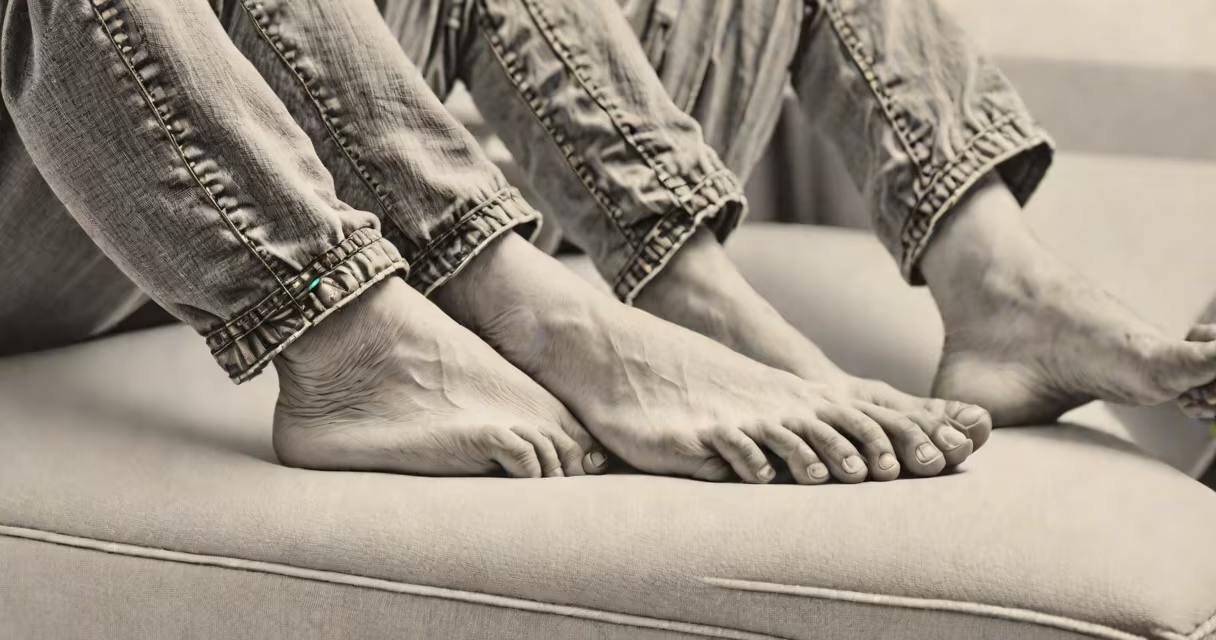
Pins and needles in feet when sitting is a temporary tingling or prickling sensation caused by pressure on nerves or restricted blood flow during prolonged sitting. It typically resolves within minutes after changing position. The condition results from compressed nerves, often due to poor posture or tight clothing.
This sensation arises when sensory nerves in the lower limbs are temporarily disrupted. Compression reduces oxygen delivery and alters nerve signaling, leading to abnormal sensations. The most common site is the sciatic nerve, which runs from the lower back through the hips and down both legs. When sitting cross-legged or with legs tucked under, pressure builds on this nerve, especially near the knee or ankle.
Recovery happens quickly once pressure is relieved. Blood flow returns, and nerves resume normal function. Most people experience this occasionally, particularly during long meetings, travel, or sedentary work. However, frequent episodes may indicate an underlying issue such as peripheral neuropathy or spinal stenosis.
Nerves transmit electrical impulses to the brain. When compressed, they cannot fire properly. This disruption causes misfiring signals interpreted by the brain as tingling, burning, or sharp pain. The sensation is called paresthesia-a medical term for abnormal skin sensations.
For example, sitting with legs crossed compresses the peroneal nerve behind the knee. This nerve controls movement and sensation in the foot. Pressure here leads to numbness on the top of the foot and toes. Once standing or uncrossing legs, blood flow restores, and the feeling returns within 30 seconds to five minutes.
A 2021 study published in Neurology found that 68% of participants reported transient paresthesia after sitting in one position for over 30 minutes. The sensation resolved completely in all cases after movement. This supports the idea that short-term nerve compression is harmless when brief and reversible.
There are two primary types of pins and needles in feet when sitting:
| Type | Trigger | Location of Sensation | Duration |
|---|---|---|---|
| Acute compression | Sitting cross-legged, leaning on elbows, tight shoes | Top of foot, ball of foot, toes | Seconds to minutes |
| Chronic compression | Repetitive strain, diabetes, pregnancy, spinal issues | Entire foot, sometimes spreading to calf | Hours to days, may persist after movement |
Acute compression is harmless and self-resolving. Chronic compression suggests ongoing nerve stress. For instance, people with diabetes may develop peripheral neuropathy, where high blood sugar damages nerves over time. Even minor pressure during sitting can trigger persistent tingling because nerves are already compromised.
Another example: pregnant women often report pins and needles in feet when sitting due to increased weight and fluid retention. The growing uterus presses on pelvic nerves, altering circulation. Relief comes after shifting positions or using a cushion to support the spine.
Many assume pins and needles in feet when sitting indicates poor circulation. While reduced blood flow contributes, the root cause is nerve compression-not low blood volume. True circulatory problems cause cold, pale feet, not tingling. Cold feet suggest vascular insufficiency, not paresthesia.
Some confuse this with restless leg syndrome (RLS), which involves an irresistible urge to move the legs, often at night. RLS symptoms occur without pressure and aren't tied to posture. Pins and needles in feet when sitting disappears with movement, while RLS worsens during rest.
A key distinction: if tingling persists for more than 10 minutes after standing or walking, it may signal nerve damage. A 2020 review in Journal of Clinical Neuroscience noted that persistent paresthesia lasting over 15 minutes after positional change was linked to early-stage diabetic neuropathy in 41% of cases. This highlights the importance of timing in diagnosis.
Occasional pins and needles in feet when sitting is normal. But consult a healthcare provider if you notice:
I once observed a patient who reported daily foot tingling after sitting at a desk. He had type 2 diabetes and didn't realize his symptoms were worsening neuropathy. After a nerve conduction study, doctors confirmed mild peripheral neuropathy. Adjusting his sitting posture and wearing supportive footwear improved symptoms.
Early detection prevents progression. The American Diabetes Association recommends annual screening for neuropathy in patients with diabetes. Symptoms like pins and needles in feet when sitting are early warning signs.
Simple changes reduce frequency. Sit with both feet flat on the floor. Avoid crossing legs. Take a 5-minute walk every hour. Use a lumbar support cushion to maintain spine alignment.
If tight shoes contribute, switch to ones with a wide toe box. A 2019 study in Foot & Ankle International showed that 72% of participants with recurrent foot tingling saw improvement after switching to roomier footwear. The study included 110 adults aged 35-65 with no history of nerve disease.
For those with chronic conditions, physical therapy can strengthen muscles around the spine and improve nerve protection. Exercises like pelvic tilts and seated marches reduce pressure on sciatic nerves.
Managing blood sugar levels is critical for diabetics. Keeping HbA1c below 7% lowers the risk of nerve damage. Regular foot checks help catch early signs.
Most episodes of pins and needles in feet when sitting resolve instantly with movement. But persistent or recurring symptoms demand attention. Early intervention prevents long-term nerve damage.