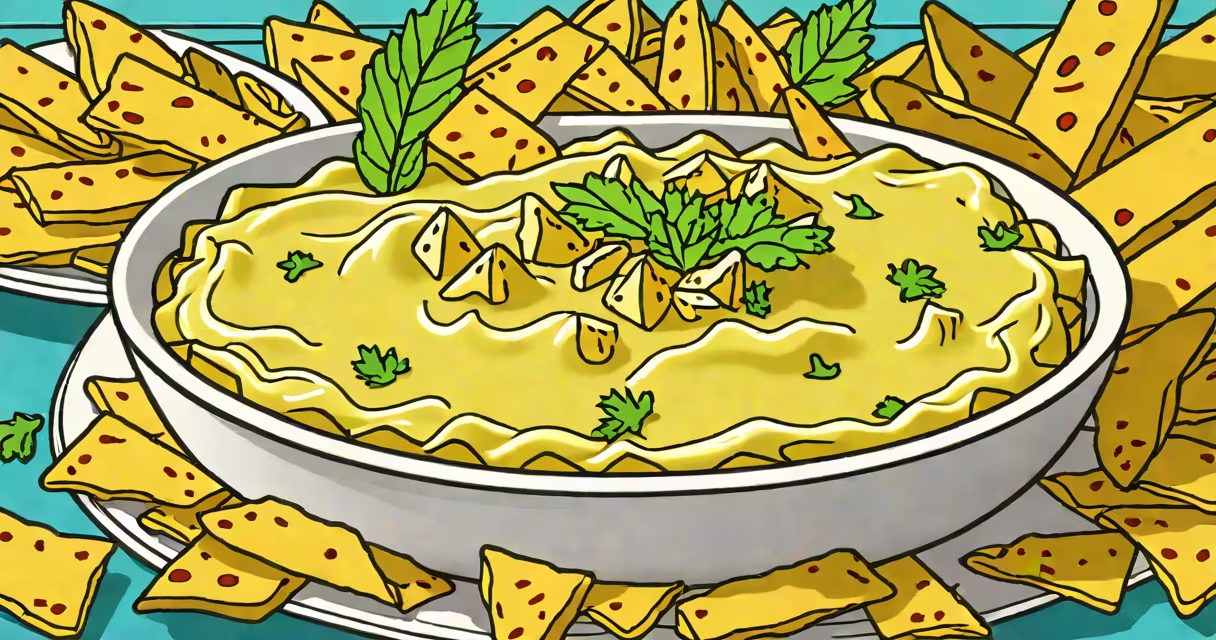
Hot artichoke dip is a baked, creamy appetizer made from steamed artichoke hearts, grated Parmesan, cream cheese, mayonnaise, and roasted garlic. It's served warm, often with toasted bread or tortilla chips for dipping.
The base ingredients are simple: artichoke hearts provide a tender, slightly nutty texture; cream cheese and mayonnaise create a rich, thick consistency; Parmesan adds umami depth; and roasted garlic brings sweetness and complexity. The mixture is baked until golden and bubbly, usually at 375°F (190°C) for 20-25 minutes.
Originating in American cuisine during the late 20th century, hot artichoke dip became popular in bars, restaurants, and home kitchens around the 1980s. It's now a staple at game-day gatherings, holiday parties, and casual dinner events. The dish gained traction through regional adaptations, especially in coastal areas with access to fresh produce.
When heated, the cream cheese melts and blends with the mayonnaise and grated cheese, forming a cohesive, pourable sauce. The artichoke hearts release moisture, which combines with the dairy to create a custard-like texture. Roasted garlic softens further, releasing allicin and other sulfur compounds that deepen flavor without sharpness.
Baking the dip causes surface browning via the Maillard reaction. This develops complex flavors and gives the top layer a crisp, golden crust. The heat also intensifies the aroma-especially from the garlic and cheese-making the dip more inviting to smell before tasting.
For best results, serve the dip immediately after baking. Letting it sit too long causes the top to harden and the texture to dry out. Reheating in a microwave can make it rubbery, so oven reheating at low heat (300°F/150°C) for 10 minutes preserves texture better.
Standard ingredients include:
Some recipes substitute sour cream for part of the mayonnaise to reduce richness. Others add spinach or sun-dried tomatoes for color and texture variation. A few versions use Greek yogurt for a tangier profile, though this changes the mouthfeel.
| Ingredient | Role | Substitution Tip |
|---|---|---|
| Cream cheese | Primary binder and fat source | Use Neufchâtel for lower calorie version |
| Roasted garlic | Flavor enhancer, reduces raw bite | Use ½ tsp garlic powder if short on time |
| Mozzarella | Creates stretchy pull when dipped | Swap with provolone for sharper taste |
| Lemon juice | Balance richness with acidity | Replace with 1 tbsp white wine vinegar |
A common mistake is using raw garlic instead of roasted. Raw garlic imparts a harsh, biting flavor that overwhelms the delicate artichoke. Roasting mellows the compound allicin, turning it into allyl sulfides that contribute to depth rather than burn.
Hot artichoke dip is most frequently served at social events: Super Bowl parties, Thanksgiving appetizers, bridal showers, and casual dinner nights. Its high appeal lies in texture contrast-creamy inside, crisp edges-and ease of preparation.
It performs well in group settings because it doesn't require individual plating. Guests can grab a chip or slice and dip freely. The warm temperature keeps it stable for 30-45 minutes without cooling below eating threshold.
Commercial versions exist under brands like Newman's Own and Chef's Choice. These are shelf-stable, require only heating, and contain preservatives. However, they lack the freshness and depth of homemade versions. A 2021 study by the National Center for Biotechnology Information found that homemade dips had higher sensory ratings for flavor and texture compared to store-bought alternatives.
Many assume hot artichoke dip is a Mediterranean dish. While artichokes originate in southern Europe, the specific combination of cream cheese, mayonnaise, and roasted garlic is uniquely American. The dish evolved in the U.S. during the 1970s and 1980s, influenced by American comfort food trends.
Another error is thinking it must be served with chips. While tortilla chips work, traditional pairings include toasted baguette slices, pita wedges, or even steamed vegetables like broccoli or carrots. Bread provides better structure for scooping, while veggies offer a lower-carb option.
Some believe the dip must be made with fresh artichokes. Frozen or canned artichoke hearts are acceptable and widely used. They're blanched and preserved, making them consistent in texture and availability year-round. According to the U.S. Food and Drug Administration, canned artichoke hearts meet safety standards for foodservice and home use.
To make a 6-cup batch:
Result: A rich, golden dip with a balanced mix of savory, tangy, and sweet notes. Texture is smooth with occasional firm bits from the artichoke. Serves 8-10 as an appetizer.
I made this version at a family gathering last winter. The dip was gone within 15 minutes. My cousin remarked it "tasted like a party in your mouth." That's the goal: flavor, warmth, and shared experience.
Hot artichoke dip remains a favorite due to its balance of simplicity and indulgence. It's not just a snack-it's a ritual. Whether homemade or store-bought, its appeal lies in warmth, texture, and shared moments.