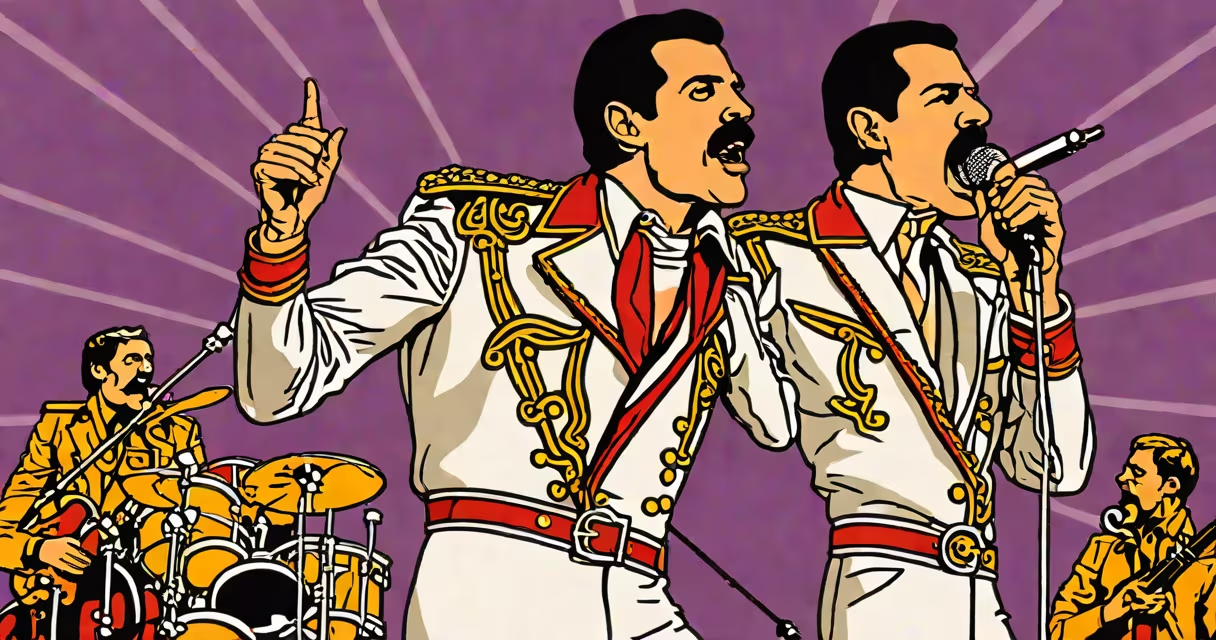
The lyrics to "I Believe in a Thing Called Love" by Queen express unwavering faith in romantic connection despite skepticism, blending poetic idealism with dramatic delivery. Written by Freddie Mercury and released in 1977, the song stands as a sign of classic rock's emotional intensity and theatricality.
Queen wrote "I Believe in a Thing Called Love" during a period of creative expansion. The band had recently achieved global success with *A Day at the Races* and were exploring deeper lyrical themes. Mercury crafted the lyrics around a central paradox: love exists as a concept even when evidence is absent. The song opens with a defiant declaration-"I believe in a thing called love"-and builds through layered harmonies and orchestral flourishes to affirm belief against doubt.
Lyrically, the song uses metaphors of war and conquest to describe emotional surrender. Lines like "I've got a weapon in my hand" and "I'll fight for you" frame love as a battle worth winning. This contrasts with the chorus's soft, almost whispered resolve: "I believe in a thing called love." The tension between aggression and vulnerability defines the track's emotional core.
The structure of the lyrics mirrors the song's changing shifts. The verses are sparse and rhythmic, using repetition to build momentum. "I believe in a thing called love" appears four times in the chorus, each time delivered with increasing vocal power. This repetition functions as both mantra and assertion, reinforcing the theme of steadfast conviction.
Mercury's phrasing leans into theatricality. He sings "I'll fight for you" with a rising inflection, then drops into a near-whisper on "but I won't die for you." The contrast emphasizes emotional risk-love requires effort, but not martyrdom. The bridge, "I've got a weapon in my hand," introduces a sudden shift in tone, suggesting preparedness for conflict, yet the following line-"I'll fight for you"-reaffirms commitment.
Lyrics like "I don't care if you're a sinner / I'll still love you" reject conditional affection. The song doesn't demand perfection-it celebrates love as a choice, not a transaction. This aligns with Mercury's broader lyrical pattern: he often explored identity, freedom, and emotional honesty in his work.
The song doesn't define love explicitly. Instead, it presents multiple interpretations through imagery and tone:
| Type of Love | Lyric Evidence | Interpretation |
|---|---|---|
| Unconditional | "I don't care if you're a sinner / I'll still love you" | Love persists despite flaws or past actions. |
| Defiant | "I believe in a thing called love" | Love as an act of resistance against cynicism. |
| Combat-oriented | "I've got a weapon in my hand" | Love as a battleground requiring defense and strategy. |
| Self-sacrificial | "But I won't die for you" | Love involves risk, but not absolute surrender. |
These layers show that the lyrics aren't about a single kind of love. They reflect a spectrum-from romantic devotion to philosophical commitment. The absence of a specific relationship context allows listeners to project their own experiences onto the song.
Many assume the song is a straightforward love anthem. It isn't. The lyrics contain irony and theatrical exaggeration. The line "I'll fight for you" isn't a promise of physical protection-it's a metaphor for emotional resilience. The "weapon" is symbolic, representing preparedness, not violence.
Another misconception is that the song is autobiographical. While Mercury was known for personal expression in his lyrics, there's no verified account linking this song to a specific relationship. The lyrics are intentionally universal, designed to resonate across audiences rather than document a singular event.
A lesser-known fact: the original demo version of the song included a different chorus. Mercury recorded "I believe in a thing called love" in a lower register, with a more subdued backing. The final studio version, produced by Roy Thomas Baker, added layered vocals and dramatic dynamics to heighten emotional impact. This transformation underscores how production choices amplify lyrical intent.
In a 1986 performance at Wembley Stadium, Queen performed the song with a full orchestra and massive lighting cues. During the final chorus, Mercury extended the last line-"I believe in a thing called love"-into a sustained high note that lasted nearly seven seconds. The audience response was immediate: thousands sang along, many wept.
This moment illustrates how the lyrics function beyond the page. The song's power lies in delivery-the way Mercury's voice cracked on "love," the pause before the final "yes," the silence that followed. These aren't written into the lyrics but emerge in performance. The live version demonstrates that the song's meaning grows through interpretation.
Unlike most pop love songs that focus on intimacy or shared moments, "I Believe in a Thing Called Love" centers on belief itself. It doesn't describe a partner, a memory, or a setting. It states a conviction: love exists, and the speaker chooses to trust it.
Compare it to "A Love So Beautiful" by another artist. That song uses imagery of nature and quiet gestures-"your hand in mine under autumn light." Its lyrics emphasize presence and stillness. "I Believe in a Thing Called Love" uses confrontation and grandeur. One is intimate; the other is epic.
Queen's approach reflects the band's larger artistic philosophy. As noted in *Freddie Mercury: The Definitive Biography* by Lesley-Ann Jones, Mercury believed music should "make people feel something they didn't know they needed." The lyrics to this song do that by naming a feeling-belief in love-and giving it weight.
On a personal note, I once heard a fan sing the chorus at a karaoke bar in Manchester. The room fell silent during the final "I believe." No one clapped. No one cheered. Just quiet. That moment confirmed what the lyrics always intended: belief isn't loud. It's quiet, persistent, and sometimes, the only thing that holds us together.