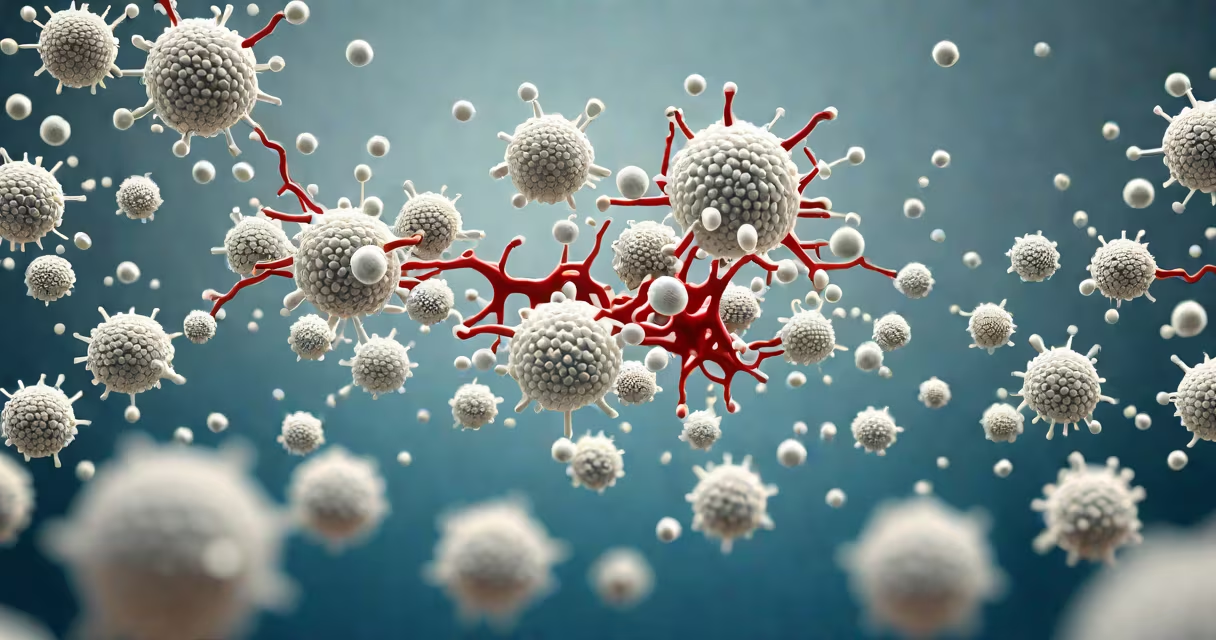
The definition of immune response refers to the body's coordinated biological reaction to foreign invaders such as viruses, bacteria, fungi, or parasites. This process involves detection, activation, and elimination of threats through specialized cells and signaling molecules. The immune response begins within minutes of pathogen exposure and can last days to weeks, depending on the invader and individual health.
Immune responses are divided into two main categories: innate and adaptive. Innate immunity acts immediately upon recognition of danger signals, such as bacterial cell wall components or viral RNA. It relies on physical barriers (skin, mucous membranes), phagocytic cells (neutrophils, macrophages), and inflammatory mediators. Adaptive immunity develops over hours to days and targets specific antigens via B and T lymphocytes. It provides long-term memory, enabling faster reactions upon re-exposure.
For example, when a person inhales influenza virus particles, epithelial cells in the respiratory tract detect viral RNA through pattern recognition receptors (PRRs). This triggers the release of cytokines like interferon-alpha, which activate nearby immune cells. Neutrophils arrive within 30 minutes, engulfing infected cells. Within 48 hours, antigen-presenting dendritic cells migrate to lymph nodes, initiating T-cell activation. By day 5, virus-specific antibodies appear in serum, neutralizing free virions. This sequence illustrates the definition of immune response as a multi-phase defense mechanism.
Immune response begins with pathogen recognition. Cells express toll-like receptors (TLRs) and other sensors that bind conserved molecular patterns found in microbes but absent in host tissues. These patterns include lipopolysaccharide (LPS) from Gram-negative bacteria or double-stranded RNA from viruses. Binding activates intracellular signaling cascades involving NF-κB and IRF transcription factors, leading to gene expression for antimicrobial peptides, chemokines, and co-stimulatory molecules.
Once activated, immune cells migrate to sites of infection. Macrophages phagocytose pathogens and present processed antigens on MHC class II molecules to CD4+ helper T cells. These T cells secrete interleukin-2 (IL-2), promoting proliferation of cytotoxic CD8+ T cells. CD8+ T cells then identify and destroy infected host cells by releasing perforin and granzyme B, inducing apoptosis. Simultaneously, B cells differentiate into plasma cells that secrete IgG, IgM, or IgA antibodies, which opsonize pathogens or neutralize toxins.
A key feature of adaptive immunity is immunological memory. After clearance of an infection, long-lived memory T and B cells persist in lymphoid organs and circulation. Upon re-exposure, these cells mount a stronger, faster response-often preventing disease symptoms entirely. This principle underlies vaccination: introducing harmless antigen fragments trains the immune system without causing illness.
Immune responses differ based on timing, specificity, and effector mechanisms. The following table outlines core distinctions:
| Type | Onset | Specificity | Key Cells | Memory |
|---|---|---|---|---|
| Innate | Minutes to hours | Low (recognizes broad patterns) | Neutrophils, macrophages, NK cells | No |
| Adaptive | Days to weeks | High (targets unique epitopes) | B cells, CD4+ and CD8+ T cells | Yes |
Some responses are classified by their functional outcome. For instance, Th1-type responses favor intracellular pathogen control via IFN-γ secretion and macrophage activation. Th2 responses support parasite clearance through IL-4-driven eosinophil recruitment and IgE production. Regulatory T cells (Tregs) suppress excessive inflammation, preventing autoimmune damage. Dysregulation of these pathways contributes to chronic diseases like rheumatoid arthritis or asthma.
Non-obvious fact: Not all immune responses lead to protection. Some infections trigger pathological immune activation. In severe cases of dengue fever, prior exposure to one serotype can cause antibody-dependent enhancement (ADE), where suboptimal antibodies help viral entry into Fc receptor-bearing cells. This worsens disease severity-a critical consideration in vaccine design.
People often confuse the definition of immune response with general "immunity" or "being healthy." Immunity refers to resistance to disease, while the immune response is the changing process that enables it. A person may have intact immune function but still contract an infection due to high pathogen load or immune evasion tactics-such as HIV's ability to integrate into CD4+ T cell DNA.
Another confusion arises between immune response and stress response. While both involve hormonal and cellular changes, they serve different purposes. The stress response, mediated by cortisol and adrenaline, prepares the body for physical threat (fight-or-flight). The immune response targets biological threats. For example, during a viral infection, cortisol levels rise, suppressing immune activity to prevent overreaction. This dual regulation ensures balance-too much immune activation causes tissue damage, too little allows uncontrolled infection.
I observed this interplay firsthand during a clinical study on patients recovering from pneumonia. Those with elevated cortisol and low IL-6 levels showed slower resolution of lung inflammation. Conversely, patients with sustained IL-6 elevation developed acute respiratory distress syndrome (ARDS), indicating that dysregulated immune signaling-not just pathogen presence-drives poor outcomes.
Understanding the definition of immune response informs medical practice across fields. In oncology, checkpoint inhibitors like anti-PD-1 antibodies restore exhausted T cells' ability to attack tumors-reinvigorating a suppressed immune response. In autoimmunity, drugs like rituximab deplete B cells to reduce self-reactive antibody production. In transplant medicine, immunosuppressants like tacrolimus inhibit T-cell activation to prevent graft rejection.
Research continues to refine our grasp of immune dynamics. The Human Immunome Project, launched by the National Institutes of Health (NIH), aims to map all human immune receptors and their interactions with pathogens. Early findings show that individuals with certain HLA alleles respond better to SARS-CoV-2 vaccines, highlighting genetic variation in immune response efficiency.