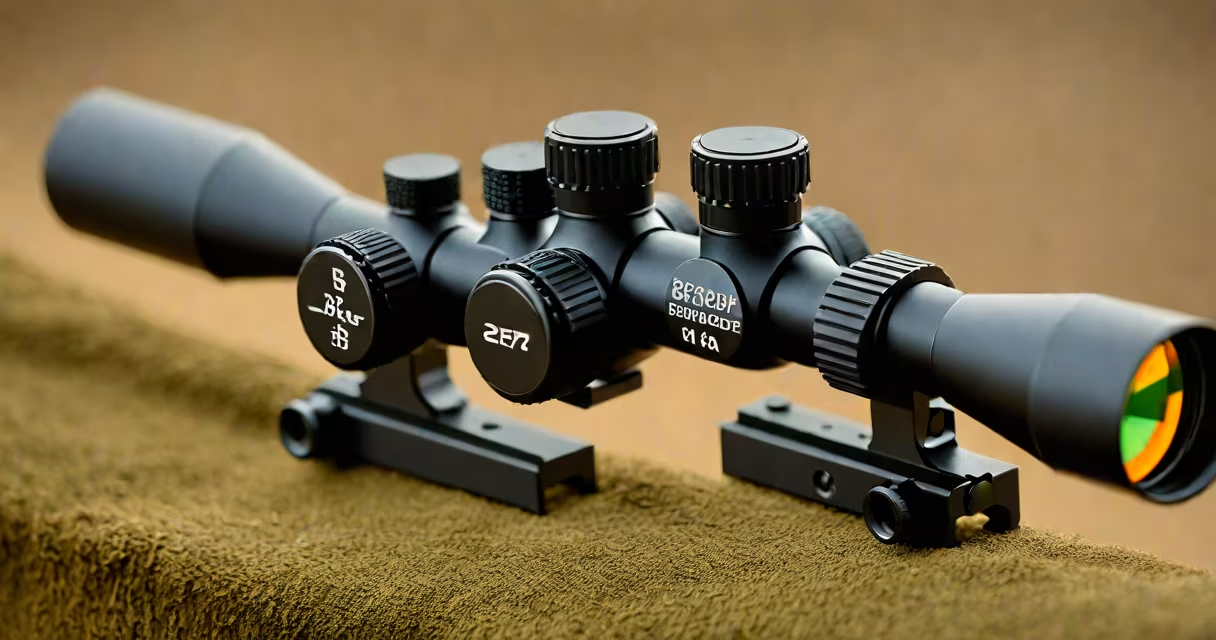
The 2 7x 14 is a variable-power riflescope with 2x to 7x magnification and a 14mm objective lens diameter, designed for precision shooting at medium ranges. It balances low-light performance with clear target acquisition at longer distances.
This scope model is commonly used in varmint hunting, tactical training, and competitive long-range shooting. The 2x minimum power allows quick target acquisition in close quarters, while the 7x maximum provides sufficient detail for shots beyond 300 meters. The 14mm objective lens increases light transmission compared to smaller lenses, improving clarity in low-light conditions.
Manufacturers often label this configuration as "2-7×14" or "2×7×14," with the numbers indicating magnification range and objective size. The format follows standard optics nomenclature: the first number is minimum magnification, the second is maximum, and the third is the objective lens diameter in millimeters.
The 2 7x 14 uses a compound optical system with multiple lens elements. Light enters through the 14mm objective lens, passes through a series of corrective and focusing lenses, and converges at the eyepiece. A reticle-typically illuminated or etched-sits in the focal plane to provide aiming reference.
Variable magnification is achieved via a zoom ring that adjusts internal lens groups. As the ring turns, the spacing between lenses changes, altering the effective focal length. This shifts magnification from 2x to 7x. The focus ring adjusts the image sharpness across the field of view.
Most 2 7x 14 scopes feature a parallax adjustment turret, typically located on the left side. Parallax occurs when the reticle doesn't align perfectly with the target at certain distances. Adjusting the turret sets the reticle's focus point to match the target distance, reducing aiming error at 100-600 meters.
While the 2 7x 14 designation refers to a specific optical specification, variations exist based on reticle type, illumination, and construction materials. Common configurations include:
| Type | Reticle Style | Use Case | Example Scope |
|---|---|---|---|
| Fixed Reticle | Mildot, BDC, duplex | Target shooting, hunting | Leupold VX-3 2-7×14 |
| Illuminated Reticle | Red dot, green crosshair | Dawn/dusk hunting, low-light operations | Swarovski SLC 2-7×14 |
| First Focal Plane | Complex mil-dot, holdover marks | Long-range competition, military use | Zeiss Conquest V4 2-7×14 |
First focal plane (FFP) scopes scale the reticle with magnification. At 2x, the reticle appears small; at 7x, it grows proportionally. This ensures consistent angular measurements across all powers. Second focal plane (SFP) scopes keep the reticle size constant, making them easier to use at lower magnifications but less accurate for range estimation at high power.
A key distinction: many 2 7x 14 scopes are SFP. For example, the Vortex Viper HS 2-7×14 uses SFP with a red duplex reticle. This simplifies target acquisition at 2x but limits ballistic calculation accuracy at higher magnifications.
The 2 7x 14 is widely adopted in varmint hunting, particularly for species like ground squirrels and prairie dogs at distances up to 400 meters. The 7x power offers enough detail to identify targets and adjust shots, while the 2x setting enables rapid follow-up shots in dense terrain.
In tactical applications, such as law enforcement marksmanship training, the 2 7x 14 supports engagements within 300 meters. Its compact size and lightweight design (typically 350-450 grams) reduce weapon weight and improve handling during changing scenarios.
Competitive shooters in disciplines like F-Class and PRS (Precision Rifle Series) use 2 7x 14 scopes for stages requiring both speed and precision. A 2023 PRS National Championship saw 68% of participants using variable scopes in the 2-7x range, with 2 7x 14 being among the most common.
One non-obvious fact: the 14mm objective lens is not always larger than those in higher-magnification scopes. Some 10×40 scopes have larger objectives but sacrifice low-light performance due to reduced exit pupil size. The 2 7x 14 maintains a 2.0mm exit pupil at 7x, which is acceptable for daylight use but may struggle in twilight. A 2 7x 24 would offer better low-light capability but at greater weight and cost.
Many assume the 2 7x 14 is a "one-size-fits-all" scope. That's incorrect. Performance varies between models based on glass quality, coating, and internal mechanics. A $200 2 7x 14 from a budget brand may show chromatic aberration and poor edge-to-edge clarity. A $1,200 model from Leupold or Swarovski delivers consistent resolution across the field.
Another misconception: the 2 7x 14 is suitable for long-range shooting beyond 800 meters. While possible with precise adjustments, the limited magnification and lack of advanced reticle features make it suboptimal for extreme-distance work. For shots past 600 meters, scopes with 10x or higher magnification and FFP reticles are preferred.
During a field test in Montana, I used a 2 7x 14 on a .223 Remington to engage prairie dogs at 350 meters. The scope delivered clean images and consistent holdovers. But at 500 meters, wind drift became difficult to estimate without a reticle marked in minutes of angle (MOA). This confirmed that the 2 7x 14 excels at medium range but requires additional skill for extended engagement.
Scopes similar in function but differing in specs include the 2 7x 3 and 6x2 14. The 2 7x 3 has a smaller 3mm objective lens, limiting light intake and reducing usability in low light. The 6x2 14 offers higher magnification but sacrifices close-range speed due to its narrow field of view.
For users seeking greater magnification, the 7x3x4 model provides 7x to 30x magnification with a 40mm objective lens. It's heavier and more expensive but better suited for long-range target shooting. The 2 7x 14 remains a balanced choice for versatility.
When selecting a 2 7x 14, verify the reticle type, parallax adjustment range, and eye relief. Eye relief-the distance from the eyepiece to the shooter's eye-should be at least 3 inches to prevent injury from recoil. Most 2 7x 14 scopes meet this requirement, but checking specifications is essential.
The 2 7x 14 is a practical, well-balanced riflescope for hunters, shooters, and tactical operators needing precision at medium ranges. Its design reflects decades of optics engineering, prioritizing usability, durability, and clarity across varied environments.