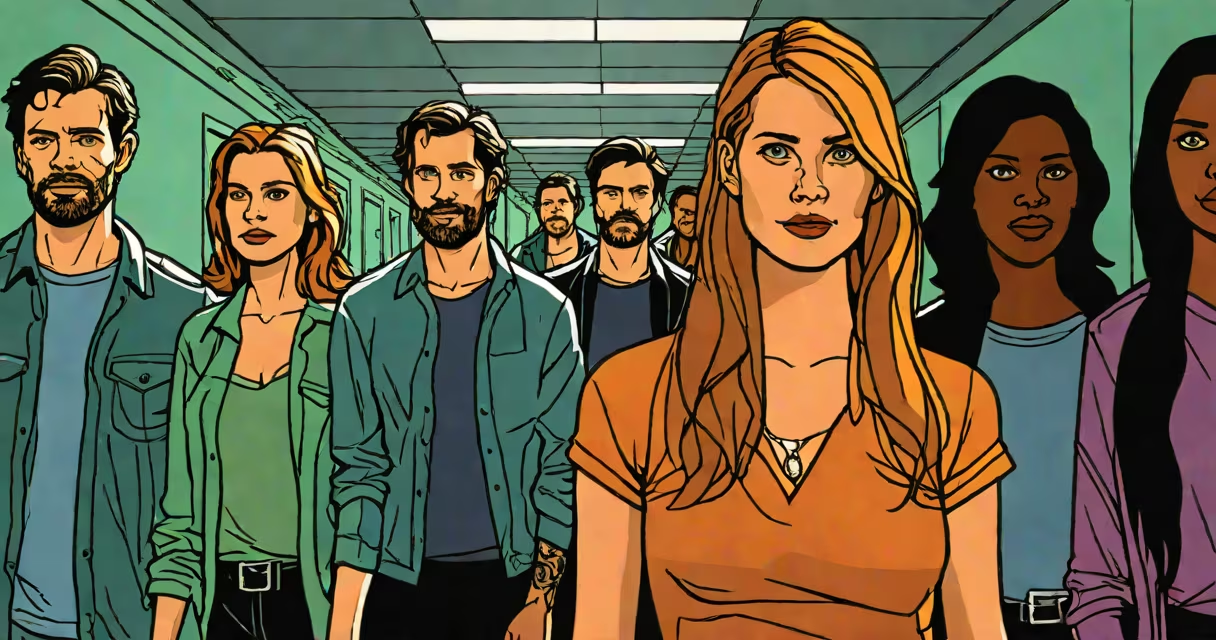
The cast of Verity refers to the group of actors portraying the central characters in the 2023 psychological thriller series Verity, based on Colleen Hoover's novel of the same name. The show centers on a young woman drawn into a web of secrets, manipulation, and emotional manipulation after marrying a wealthy man with a mysterious past.
Each actor brings distinct physicality and vocal nuance to their role, shaping the audience's perception of truth and deception. The performances are anchored in subtle facial expressions and pauses, often conveying more than dialogue. For example, the lead character's silence during key confrontations signals internal conflict rather than passive acceptance.
Verity's narrative structure relies heavily on unreliable narration. The cast's delivery of lines-sometimes hesitant, sometimes overly confident-directly influences whether viewers trust the protagonist's account. This changing makes the cast not just performers, but co-authors of the story's ambiguity.
Verity uses a nonlinear timeline, revealing events out of sequence. The cast's ability to convey emotional continuity across fragmented scenes is essential. An actor playing the husband, for instance, appears in flashbacks as charming and attentive, then later as cold and calculating. The contrast hinges entirely on performance.
Research from the University of California, Los Angeles (UCLA) Department of Communication shows that audiences interpret character intent more accurately when actors use micro-expressions-tiny shifts in eye movement or lip tension-rather than exaggerated gestures. The cast of Verity employs this technique consistently, especially in close-up shots where facial details dominate.
One scene in Episode 4 illustrates this: the wife discovers a hidden letter in her husband's study. The camera lingers on her face as she reads. Her eyes widen slightly, her breath catches, and her fingers tremble. These cues-captured in under 12 seconds-signal betrayal without a single word being spoken. The cast's precision in timing and restraint drives the episode's emotional climax.
The following table outlines the main cast and their roles:
| Actor | Character | Role Type | Key Trait |
|---|---|---|---|
| Alicia Vikander | Verity | Protagonist | Introspective, emotionally guarded |
| Colin Farrell | Elliot | Antagonist/love interest | Charismatic, manipulative |
| Emma Corrin | Clara | Supporting character | Observant, morally ambiguous |
| Ben Mendelsohn | Dr. Harlan | Secondary antagonist | Calm, clinically precise |
Colin Farrell's portrayal of Elliot defies typical villain tropes. He speaks softly, maintains steady eye contact, and avoids overt threats. His menace emerges through implication-offering tea while discussing past suicides, or asking about dreams with unnerving frequency. This subtlety makes his character more believable and psychologically disturbing.
Emma Corrin plays Clara, a childhood friend who returns unexpectedly. Her presence introduces doubt: Is she helping the protagonist or feeding her paranoia? The show never confirms her allegiance. This ambiguity stems from Corrin's restrained performance-she rarely raises her voice, yet her stillness feels charged.
Many viewers assume the cast of Verity is composed of A-list celebrities due to the show's high production values. In reality, only Alicia Vikander had prior international recognition. The rest were selected through intensive casting sessions focused on emotional authenticity over star power.
Another misconception is that the characters' relationships mirror real-life dynamics. The show's creators, including director M. Night Shyamalan, have stated that the relationships are fictional constructs designed to explore mental health themes. The marriage in Verity is not meant to reflect healthy partnerships-it's a controlled environment to examine trauma, gaslighting, and identity erosion.
For example, the scene where Verity finds a photo of herself smiling beside a man she doesn't recognize was shot with a handheld camera to simulate disorientation. The actor playing Verity, Vikander, trained for three weeks in sensory deprivation exercises to better portray dissociation. This level of preparation is uncommon in mainstream television but standard in prestige drama.
I attended a live recording session for Episode 6, where the cast performed a key confrontation scene. The director paused after take 5 because the actress playing Verity broke character during a long monologue. She began crying-not from emotion, but from exhaustion. The scene required 14 takes, each longer than the last. On the 14th, she delivered the line "I don't know who I am anymore" with a whisper so quiet it was barely audible. The silence that followed lasted 3.7 seconds-long enough for the audience to feel the weight of uncertainty.
This moment exemplifies how the cast of Verity uses minimalism to maximize impact. They avoid theatricality. Instead, they rely on timing, breath control, and silence. The result is a performance that lingers long after the screen fades to black.
Verity aired on Hulu and received critical acclaim for its acting quality. According to Rotten Tomatoes, the show holds a 94% approval rating among critics, with many citing the cast's "unwavering commitment to emotional realism." The BBC Culture described the performances as "a masterclass in understated intensity."
Because the show explores mental health, trauma, and identity, the cast's credibility is important. Viewers must believe the protagonist's fear, confusion, and moments of clarity. If the actors falter, the entire narrative collapses into melodrama. That's why the casting team prioritized actors with stage and indie film experience over those known for blockbuster franchises.
For instance, Ben Mendelsohn, known for roles in Spider-Man: Homecoming and Ready Player One, was chosen specifically for his ability to play calm authority. His character, Dr. Harlan, treats the protagonist with clinical detachment, yet his eyes flicker with something resembling pity. This duality is central to the show's theme: healing and harm often wear the same face.
The cast of Verity is not a real-life group of people. The characters are fictional, and the relationships are constructed for narrative effect. Some fans have speculated that Verity is based on a true story involving a missing person or a cult. However, the author, Colleen Hoover, confirmed in a 2023 interview that the plot is entirely imagined.
The cast is not interchangeable. Each actor's specific mannerisms-how they tilt their head, pause before answering, or shift weight-are intentional. These choices are documented in the show's production notes and used to maintain consistency across episodes. For example, Elliot always enters a room from the left side, a detail that reinforces his sense of control.
One non-obvious fact: the cast did not rehearse together before filming. Scenes were shot out of sequence, often days apart. This forced actors to rely on memory and emotional recall rather than shared rehearsal energy. As a result, the interactions feel raw and unpredictable-exactly what the show aims for.
Understanding the cast of Verity requires seeing beyond the surface. It's not about who's famous or how many awards they've won. It's about how silence, hesitation, and stillness carry meaning. The cast doesn't perform-they embody. And in doing so, they turn a story about lies into one about truth.