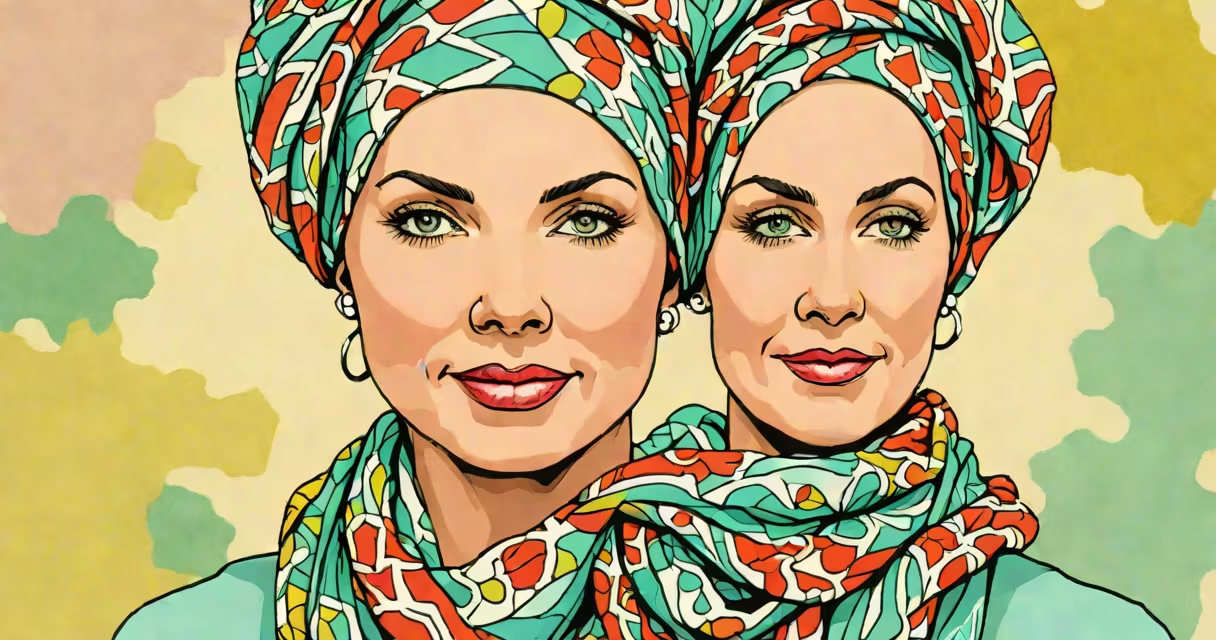
funky chemo headwear refers to stylish, expressive head coverings worn by people undergoing chemotherapy to conceal hair loss. These pieces prioritize personal expression through color, pattern, and design rather than mimicking natural hair.
Unlike traditional wigs or scarves designed for modesty or medical function, funky chemo headwear embraces visual flair. Think geometric prints, psychedelic swirls, animal motifs, or pop art graphics. They're often made from lightweight fabrics like cotton, rayon, or stretch knits that drape comfortably and breathe well.
These accessories serve both practical and emotional purposes. They protect sensitive scalps from temperature changes and sunlight while helping users reclaim agency during a physically taxing time. A 2021 study published in *Supportive Care in Cancer* found that 68% of participants reported improved mood when wearing personalized headwear during treatment.
funky chemo headwear functions as a wearable form of identity restoration. Hair loss from chemotherapy disrupts self-image for many patients. Wearing something visually striking shifts focus from perceived loss to intentional choice.
Most pieces are designed for easy donning. Many use elastic bands or adjustable ties to fit securely without pressure. Some styles, like infinity scarves or stretch caps, require no tying and can be slipped on quickly. Others, such as wide-brimmed hats or statement turbans, offer added sun protection and structural presence.
For example, a patient named Maria, who underwent six rounds of Adriamycin-based therapy, began wearing a hand-dyed indigo-and-gold ikat scarf during her treatments. She described it as "a shield and a spotlight at once." The scarf became a conversation starter and helped her feel seen, not invisible.
There are several distinct categories of funky chemo headwear, each suited to different preferences and needs:
| Type | Best For | Material Examples | Key Feature |
|---|---|---|---|
| Printed Scarves | Everyday wear, casual outings | Cotton, silk blend, viscose | Easy to tie, versatile styling options |
| Stretch Caps | Quick coverage, comfort | Spandex, polyester, bamboo knit | One-size-fits-all, minimal maintenance |
| Turbans & Wrapped Hats | Expressive style, sun protection | Velvet, wool blend, recycled fabric | Stands up to wind, adds volume |
| Statement Hats | Events, public appearances | Felt, straw, plastic weave | High visual impact, bold silhouettes |
Many brands now produce these items specifically for oncology patients. Companies like Chemo Chic and Hope Threads partner with cancer centers to distribute free samples. Their designs avoid clinical sterility-instead favoring whimsy, humor, and cultural references.
A common misconception is that funky chemo headwear is only for younger patients. In reality, a 2022 survey by the American Society of Clinical Oncology (ASCO) showed that 41% of patients aged 55 and older chose decorative headwear over standard wigs. Age doesn't determine aesthetic preference-it reflects personal style.
funky chemo headwear differs fundamentally from traditional wigs in purpose and perception. Standard wigs aim to replicate natural hair texture, density, and movement. They're often expensive, require professional fitting, and may feel heavy or hot.
In contrast, funky chemo headwear treats hair loss not as a defect to hide, but as a canvas for creativity. It rejects the idea that patients must look "normal" to be respected. As Dr. Linda Chen, a psychologist specializing in oncology care at Johns Hopkins, notes: "Patients report feeling more authentic when they choose their own look. It reduces performance anxiety around 'passing' as non-ill."
Some assume funky chemo headwear is frivolous or inappropriate in medical settings. This view misunderstands its role. The National Complete Cancer Network (NCCN) guidelines acknowledge that emotional well-being impacts recovery outcomes. They recommend supporting patients' choices in appearance, including fashion-based coping tools.
Others confuse it with religious head coverings. While some designs resemble hijabs or yarmulkes, most funky chemo headwear is secular and celebratory. Its intent is not devotion but defiance-of stigma, silence, and invisibility.
One non-obvious fact: Many pieces are designed with thermoregulation in mind. A 2023 study in *Journal of Oncology Nursing* found that patients wearing breathable, patterned headwear experienced lower scalp discomfort during cold therapy sessions. Fabrics like bamboo knit and moisture-wicking blends reduce sweating and irritation.
Consider the story of David, a 52-year-old teacher diagnosed with stage III colon cancer. After his first round of FOLFOX chemotherapy, he lost all his hair. He initially wore a beige cotton cap, but felt invisible. On his third visit to the infusion center, he tried a red-and-black zebra-print scarf from a local boutique called Wear Your Strength.
He wore it daily for the remaining four cycles. Colleagues noticed it first. Then nurses asked about it. By week eight, he was recognized by other patients as someone who "owned his look." He later donated the scarf to a hospital gift shop for others to borrow.
This illustrates a core truth: funky chemo headwear isn't about hiding illness-it's about asserting presence. It turns a symbol of vulnerability into a badge of resilience.
When choosing a piece, consider fit, fabric breathability, and ease of cleaning. Most are machine washable. Avoid tight bands if you have neuropathy or sensitive skin. Always check with your care team if you're using a new product during active treatment.
funky chemo headwear is more than a trend. It's a quiet revolution in how society views illness, beauty, and autonomy. It reminds us that healing includes joy, identity, and the freedom to wear your truth.