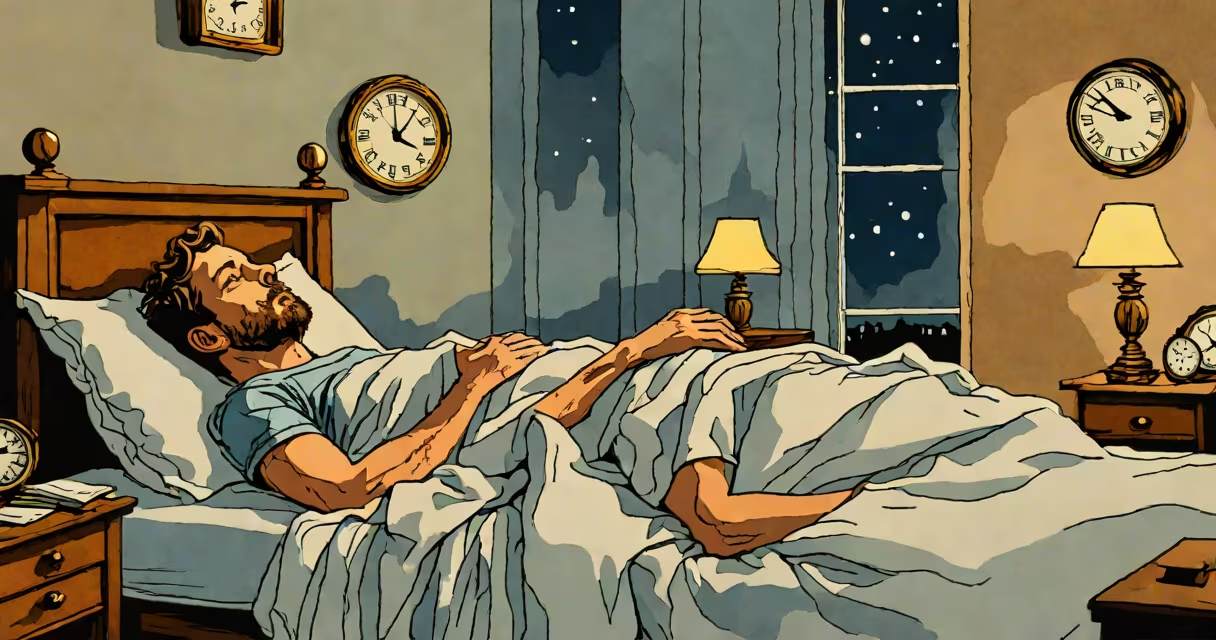
Why I can't fall asleep at night typically results from a mismatch between your body's internal clock and your sleep schedule, excessive screen exposure, stress, or untreated medical conditions like sleep apnea or restless legs syndrome. This issue affects 10-30% of adults globally, according to the American Academy of Sleep Medicine.
Difficulty falling asleep at night isn't a single problem-it's a symptom. It appears when your brain remains alert despite physical fatigue. The root causes span behavioral patterns, environmental triggers, and physiological factors. Understanding the difference between occasional trouble sleeping and chronic insomnia is critical. Chronic insomnia lasts three months or longer and occurs at least three times per week.
Research from the National Institutes of Health shows that 60% of people with persistent sleep onset issues have elevated cortisol levels during evening hours, indicating heightened stress response. This hormonal imbalance disrupts melatonin release, which normally signals the body to prepare for sleep. Without proper timing, even tiredness won't lead to rest.
Your ability to fall asleep hinges on two systems: the homeostatic drive (your body's need for sleep) and the circadian rhythm (your internal 24-hour clock). When both align, sleep begins smoothly. But when they're out of sync-due to late-night screen use, inconsistent bedtimes, or shift work-sleep onset becomes delayed or impossible.
For example, blue light from phones suppresses melatonin production by up to 50%, per a 2018 study published in Chronobiology International. If you check emails or watch videos before bed, your brain interprets this as daylight, delaying the natural drop in alertness needed to initiate sleep.
Even mild caffeine consumption within six hours of bedtime can reduce total sleep time by 1.5 hours, according to the Journal of Clinical Sleep Medicine. That's enough to push someone from "normal" sleep to "insomnia" territory.
Not all difficulty falling asleep stem from the same cause. The most common categories include:
| Type | Primary Cause | Typical Duration | Common Triggers |
|---|---|---|---|
| Acute insomnia | Stress, travel, illness | Less than 3 weeks | Job loss, surgery, bereavement |
| Chronic insomnia | Neurochemical imbalances, anxiety disorders | 3+ months | Persistent worry, medication side effects |
| Delayed sleep phase syndrome | Circadian rhythm misalignment | Long-term | Consistent late-night screen use, irregular schedules |
| Paradoxical insomnia | Perception vs. reality gap | Variable | High anxiety, trauma history |
Delayed sleep phase syndrome often goes undiagnosed. People with this condition feel alert until 2 a.m. or later, then struggle to wake early. It's not laziness-it's a biological misalignment. A 2020 study in Sleep Medicine Reviews found that 7% of adolescents and young adults meet diagnostic criteria for this disorder.
Paradoxical insomnia is especially misleading. Patients report sleeping only 2 hours per night, yet actigraphy (wrist-worn sleep trackers) shows 6-7 hours of actual sleep. The disconnect arises from hyper-awareness of sleeplessness, often linked to generalized anxiety disorder.
Why I can't fall asleep at night is most common in urban environments with high noise, light pollution, and constant digital stimulation. A 2021 survey by the CDC found that 35% of U.S. adults get less than 7 hours of sleep nightly-well below the recommended minimum.
Work-related stress plays a major role. Employees who report high job demands and low control over their schedule are twice as likely to develop insomnia, per a 2019 analysis in Occupational & Environmental Medicine. The mental load of planning, decision-making, and emotional regulation continues into the evening, keeping the prefrontal cortex active past bedtime.
A real-world example: a software developer working remote reported being unable to fall asleep after 9 p.m. despite feeling exhausted. He tracked his routine and discovered that reviewing Slack messages and debugging code until midnight triggered sustained cognitive arousal. After setting a hard cutoff at 8 p.m., he fell asleep within 20 minutes consistently.
Many assume that drinking alcohol helps them fall asleep. In reality, alcohol fragments sleep architecture-especially REM cycles-and increases nighttime awakenings. A 2013 study in Alcoholism: Clinical and Experimental Research showed that subjects who drank before bed had 28% more awakenings than those who didn't.
Another myth: "I'll catch up on sleep on weekends." This disrupts circadian rhythm further. A 2022 study in Nature Human Behaviour demonstrated that irregular weekend sleep patterns increase risk of metabolic syndrome and cardiovascular events over time.
Some people believe that lying in bed awake means they've "broken" their sleep. That's false. The brain doesn't require immediate sleep onset. It only needs consistent cues-darkness, quiet, cool temperature-to enter sleep mode. Staying in bed while awake reinforces the association between bed and wakefulness, worsening the problem.
Start with sleep hygiene: maintain a consistent wake-up time, avoid naps after 3 p.m., and limit caffeine after 2 p.m. Set a wind-down routine 60 minutes before bed-read a book, do gentle stretching, or practice mindfulness.
One effective method is stimulus control therapy. If you haven't fallen asleep within 20 minutes, get out of bed and do a quiet activity (like reading under dim light) until drowsy. Return to bed only when sleepy. Repeat as needed. This resets the brain's association between bed and wakefulness.
I tested this method during a period of high anxiety. After three nights of waking at 1 a.m. and lying awake for 90 minutes, I applied the rule: leave the room if not asleep in 20 minutes. On the fourth night, I fell asleep in 12 minutes. The key was removing the pressure to sleep-once I stopped fighting it, my body responded.
For persistent cases, cognitive behavioral therapy for insomnia (CBT-I) is the gold standard. It reduces reliance on sleep medications and improves long-term outcomes. A 2020 meta-analysis in JAMA Internal Medicine found CBT-I improved sleep efficiency by 25% and reduced nighttime awakenings by 40% over 6 weeks.
Why I can't fall asleep at night isn't a personal failing-it's a signal. Addressing the root cause through behavior, environment, and clinical support restores natural sleep patterns. You don't need more sleep-you need better sleep quality.