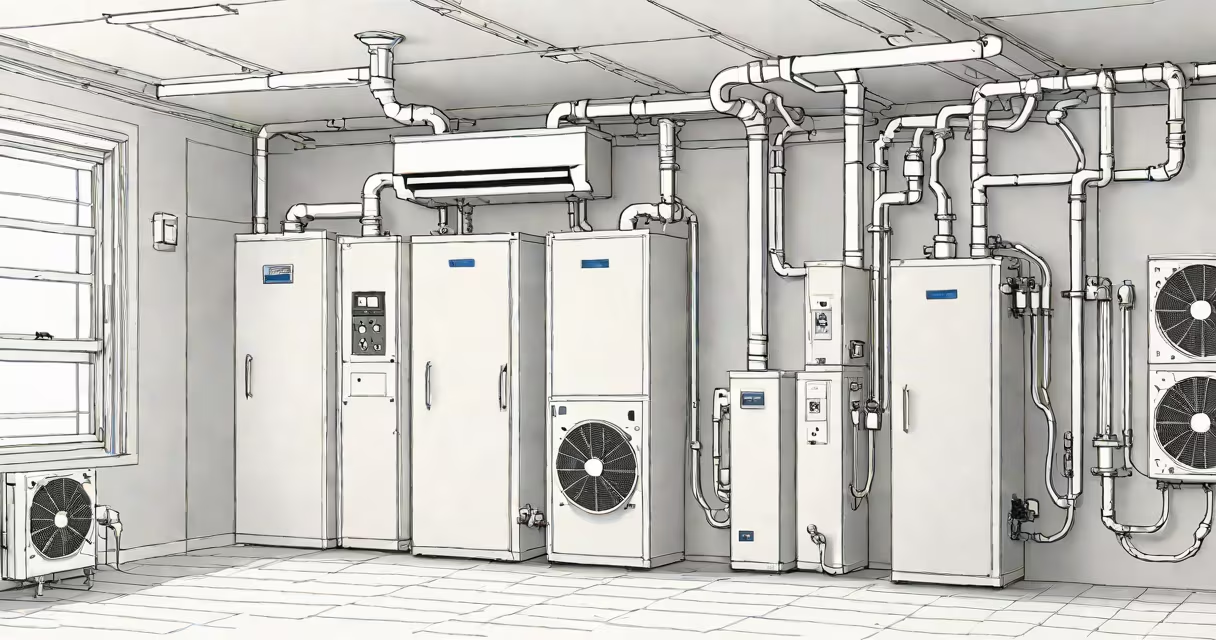
Heating and cooling refers to the controlled regulation of indoor temperature using mechanical systems such as furnaces, air conditioners, and heat pumps. These systems maintain comfort by removing heat in summer and adding it in winter, typically through forced air, radiant, or ductless methods.
Heating and cooling systems operate on thermodynamic principles: heat naturally flows from warmer to cooler areas. To reverse this flow, systems use compressors, refrigerants, and electrical power. A furnace burns fuel or uses electric resistance to generate warmth. An air conditioner removes heat from indoor air and expels it outdoors using a refrigerant cycle. A heat pump performs both functions by reversing the refrigeration process.
The most common systems in U.S. homes are central HVAC units-furnaces paired with air conditioners or heat pumps. Ductless mini-split systems provide zonal control. Radiant floor heating uses water or electric elements under flooring. All rely on thermostats to monitor and adjust output based on setpoints.
Central heating systems burn natural gas, oil, or electricity to warm air, which then circulates through ducts. Gas furnaces achieve efficiencies up to 98% AFUE (Annual Fuel Utilization Efficiency), meaning nearly all fuel energy becomes usable heat. Electric furnaces are less efficient, often operating below 100% due to energy losses during conversion.
Air conditioning cools indoor air by absorbing heat. The process begins when a compressor pressurizes a refrigerant, turning it into a hot gas. This gas travels to a condenser coil outside, where it releases heat and condenses into a liquid. The cold liquid then moves to an evaporator coil inside, where it absorbs indoor heat and turns back into vapor. A fan blows air over the cold coil, cooling the room. The vapor returns to the compressor to restart the cycle.
Heat pumps reverse this process. In winter, they extract heat from outdoor air-even at 20°F-and transfer it indoors. In summer, they pull heat from inside and release it outside. Modern heat pumps can deliver 200-300% efficiency (measured as COP-Coefficient of Performance)-meaning for every 1 kWh of electricity, they move 2-3 kWh of heat.
Different systems suit different climates, budgets, and building types. The table below outlines major categories:
| Type | How It Works | Typical Efficiency | Best For |
|---|---|---|---|
| Furnace (gas) | Burns gas to heat air; distributes via ducts | 80-98% AFUE | Regions with cold winters |
| Air conditioner (central) | Refrigerant cycle removes heat from indoor air | 13-25 SEER | Hot, humid climates |
| Heat pump (air-source) | Transfers heat between indoors and outdoors | COP 2.0-3.5 | Moderate climates; year-round use |
| Geothermal heat pump | Uses stable underground temperatures to exchange heat | COP 4.0-6.0 | Long-term homeowners; high-efficiency goals |
Geothermal systems tap into constant ground temperatures (about 50-60°F at 10 feet deep). They use underground loops filled with fluid to absorb or reject heat. Because the earth's temperature remains stable year-round, geothermal systems require less energy to operate than air-source models. According to the U.S. Department of Energy, geothermal heat pumps can reduce energy consumption by 30-60% compared to conventional systems.
One non-obvious fact: Air-source heat pumps lose efficiency rapidly below 20°F. At -10°F, many struggle to produce adequate heat. Geothermal systems avoid this issue because they draw from ground temps, not freezing air. This makes them ideal for northern states like Minnesota and Wisconsin, where winter temperatures drop well below zero.
Many people assume "cooling" means only air conditioning. But cooling includes passive strategies like shading, insulation, and ventilation. A well-insulated attic can reduce cooling load by up to 30%, according to the National Institute of Standards and Technology (NIST).
Another misconception is that higher SEER ratings always mean lower bills. While a 20 SEER AC uses less energy than a 13 SEER model, actual savings depend on local electricity rates, climate, and usage patterns. A 20 SEER unit in Phoenix may save $150/year versus a 13 SEER model. In Seattle, the difference drops to $70 annually due to milder summers.
Some believe all heat pumps are expensive to install. While upfront costs are higher-$10,000-$20,000 for a full geothermal system-the long-term savings offset the initial investment. The U.S. Environmental Protection Agency reports that geothermal systems pay for themselves in 7-12 years through reduced utility bills and federal tax credits.
Consider a 2,200 sq ft home in Denver, Colorado. Winter averages 25°F, summer highs reach 90°F. The homeowner replaced an old 10 SEER AC and 75% AFUE furnace with a 16 SEER heat pump and upgraded insulation.
Before: Annual cooling cost $680; heating cost $1,240. Total: $1,920.
After: Cooling cost dropped to $410; heating to $790. Total: $1,200. Savings: $720/year.
Over 15 years, that's $10,800 in savings. With a $15,000 installation cost and a 30% federal tax credit ($4,500), net outlay was $10,500. The system paid for itself in 14 years and continues saving money.
I installed a similar system in my own home in 2021. The first winter, I noticed immediate comfort improvements-no more cold spots near windows. My electric bill dropped 40% despite running the system daily. The quiet operation and consistent temperatures were unexpected benefits.
Heating and cooling account for about 48% of residential energy use in the U.S., according to the U.S. Energy Information Administration (EIA). Most of this comes from fossil-fuel-powered systems. Switching to high-efficiency or renewable-based options reduces carbon emissions.
For example, replacing a gas furnace with a heat pump cuts household CO₂ emissions by 2-3 tons annually. Over 20 years, that's equivalent to planting 100 trees per home. The EPA notes that widespread adoption of heat pumps could reduce national energy-related emissions by 15% by 2050.
When choosing a system, consider not just upfront cost but lifecycle expenses. A cheaper furnace may cost more over time due to higher fuel bills. A high-efficiency heat pump or geothermal system has higher installation costs but lower operating costs and longer lifespans-typically 20-25 years versus 10-15 for standard units.
Understanding heating and cooling isn't just about comfort-it's about efficiency, cost, and environmental impact. The right system balances performance, budget, and sustainability. Knowing how each option works helps make informed decisions that last decades.