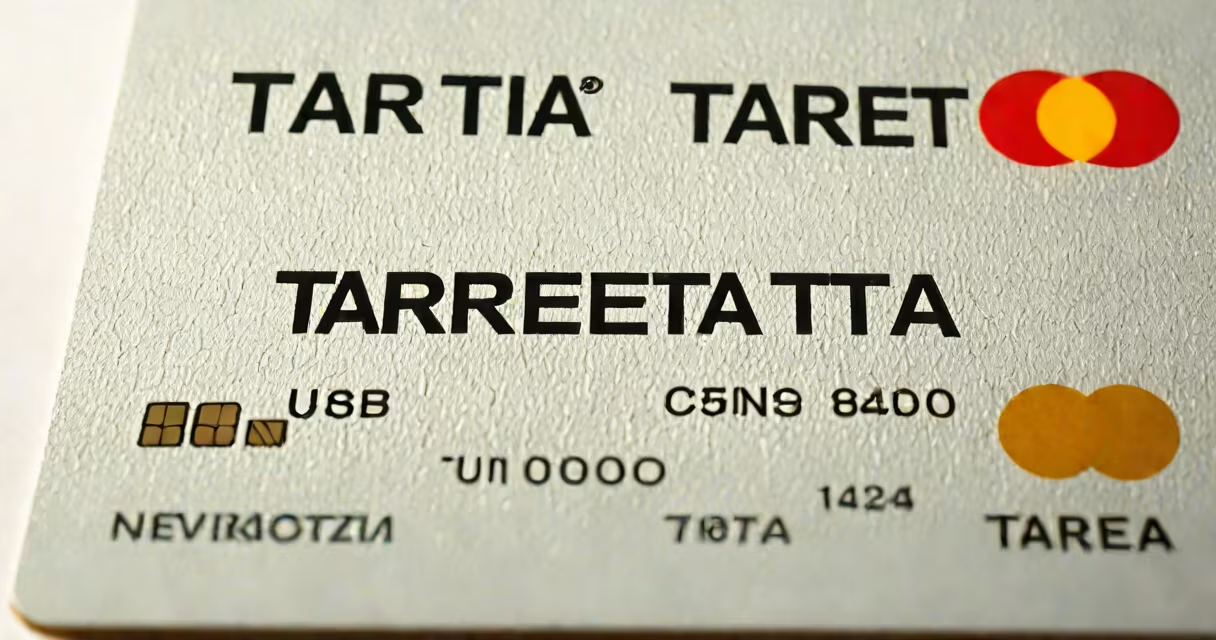
"Tarjeta" translates directly to "card" in English. It refers to any flat, rectangular piece of plastic or paper used for identification, payment, or access-such as a credit card, debit card, ID card, or transit pass.
The word appears in everyday Spanish speech across Latin America and Spain. It's not limited to financial tools-it describes anything that functions as a card, including entry tickets, membership cards, and even digital login credentials.
For example, in Mexico City, a person might say, "Necesito mi tarjeta de transporte para tomar el metro," meaning "I need my transit card to take the subway." The term applies equally in Colombia, Argentina, and Spain.
In Spanish, "tarjeta" functions as a feminine noun (la tarjeta) and follows standard gender agreement rules. It appears in both formal and casual settings, often paired with other words to specify function.
Common combinations include:
These compound terms are widely understood across Spanish-speaking regions. A traveler in Madrid might ask a hotel clerk, "¿Tienen tarjetas de habitación?" meaning "Do you have room key cards?"-a usage common in hotels worldwide.
There are several functional categories of "tarjeta" based on purpose:
| Type | Spanish Term | English Equivalent | Usage Example |
|---|---|---|---|
| Financial | tarjeta de crédito | Credit card | "Puedo pagar con tarjeta en este restaurante." |
| Identification | tarjeta de identificación | ID card | "La escuela requiere una tarjeta de estudiante." |
| Transportation | tarjeta de transporte | Transit card | "El metro solo acepta tarjetas de pago." |
| Gift/Prepaid | tarjeta de regalo | Gift card | "Compré una tarjeta de regalo para mi hermano." |
Each variant is used consistently across countries. In Buenos Aires, a student uses a "tarjeta de estudiante" to ride buses for free. In Bogotá, people swipe their "tarjeta de transporte" to enter the city's subway system.
Many learners mistake "tarjeta" for "tajeta" due to pronunciation similarities. This spelling error is frequent in informal writing but incorrect. The correct spelling includes the letter 'r' between 't' and 'a'.
Another confusion arises when mixing up "tarjeta" with "ticket." While both are pieces of paper or plastic used for entry or payment, "ticket" is "boleto" or "entrada" in Spanish. A concert attendee buys a "boleto," not a "tarjeta"-though a festival might issue a "tarjeta de acceso" for multiple days.
A non-obvious distinction: "tarjeta" can refer to a business card in Spanish, though "tarjeta de visita" is less common than "tarjeta profesional" in modern usage. In professional settings, especially in Spain, "tarjeta de visita" still appears on printed materials, but younger professionals prefer "perfil profesional" or "carnet de empresa" in digital formats.
Consider a scenario in Guadalajara, Mexico. A shopper enters a supermarket and selects groceries. At checkout, they hand the cashier a plastic card labeled "Visa." The cashier says, "¿Desea pagar con tarjeta o efectivo?" ("Would you like to pay with card or cash?")
The customer replies, "Con tarjeta, por favor," and inserts the card into the terminal. The system processes the transaction using the card's magnetic strip and chip. The entire interaction relies on the shared understanding of "tarjeta" as a payment tool.
This exchange happens millions of times daily across Spanish-speaking nations. According to the Banco de México (2023), 68% of transactions in urban areas were made via card, reinforcing "tarjeta" as a core term in economic life.
My own experience: When I lived in Santiago, Chile, I used my bank-issued "tarjeta de débito" to buy coffee daily. The barista never asked for a receipt-just a quick tap of the card on the reader. The word "tarjeta" was the only communication needed.
Using "tarjeta" correctly avoids misunderstandings in travel, finance, and daily interactions. Misusing it-such as saying "tarjeta" for a ticket-can lead to delays or confusion, especially in automated systems.
For example, a tourist in Barcelona tried to use a "tarjeta" to enter a museum. The machine rejected it because the visitor had a paper "entrada" (ticket), not a physical card. The staff clarified: "Esta entrada es un boleto, no una tarjeta."
Understanding the precise use of "tarjeta" ensures clarity in both spoken and written Spanish. It's not just about translating words-it's about fitting them into real-world actions.
"Tarjeta" means "card" in Spanish. It's a foundational word in modern communication, finance, and travel. Knowing its correct usage prevents errors and builds confidence in real-life situations.