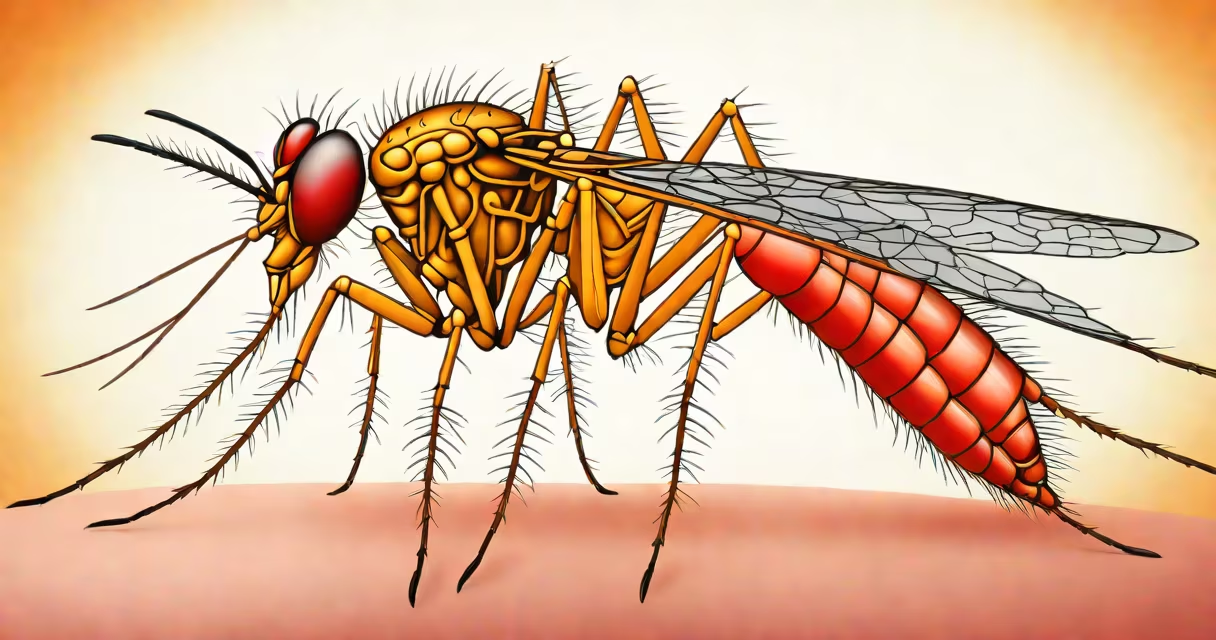
The female Anopheles mosquito is the only mosquito species known to transmit malaria. It carries the Plasmodium parasite, which causes the disease in humans. Transmission occurs during blood feeding, typically between dusk and dawn.
Anopheles mosquitoes differ from other biting insects. They rest horizontally on surfaces, unlike Aedes or Culex, which rest at angles. Their wings have distinctive dark spots, and they fly with a slow, deliberate motion. These traits help identify them in field surveys.
Out of over 3,500 mosquito species, only about 30 Anopheles species are effective vectors of human malaria. The most common transmitters include Anopheles gambiae, Anopheles funestus, and Anopheles stephensi. These species dominate in sub-Saharan Africa, South Asia, and parts of Southeast Asia-regions where malaria remains endemic.
Transmission begins when a female Anopheles mosquito bites an infected person. The bite injects sporozoites-early-stage parasites-into the bloodstream. These travel to the liver, where they multiply and mature into merozoites. After 5-16 days, merozoites enter red blood cells, triggering symptoms like fever, chills, and fatigue.
When another person is bitten, the cycle repeats. The parasite cannot survive in the mosquito's gut unless it reaches specific developmental stages. This requires a temperature of at least 20°C (68°F) and humidity above 60%. Lower temperatures halt development, limiting malaria spread in colder climates.
A single Anopheles mosquito can transmit malaria to multiple people over its lifespan. Females live 10-14 days on average, but under favorable conditions, they may survive longer. Each bite increases the risk of infection, especially in areas with high mosquito density and limited bed net usage.
Not all Anopheles species carry malaria. Some are harmless, while others are highly efficient vectors. The following table outlines key species involved in human transmission:
| Species | Primary Region | Transmission Efficiency | Key Trait |
|---|---|---|---|
| Anopheles gambiae | Sub-Saharan Africa | Very high | Rests indoors; prefers human blood |
| Anopheles funestus | Sub-Saharan Africa | High | Strong flier; breeds in clean water |
| Anopheles stephensi | South and Southeast Asia | High | Adapts to urban environments; breeds in polluted water |
| Anopheles albimanus | Central and South America | Moderate | Active early evening; prefers outdoor breeding sites |
Among these, Anopheles gambiae accounts for over 80% of malaria cases in Africa. Its preference for indoor biting makes it vulnerable to indoor residual spraying (IRS) and insecticide-treated bed nets (ITNs).
Many assume all mosquitoes cause malaria. This is false. Aedes aegypti, for example, transmits dengue and Zika, not malaria. Culex pipiens spreads West Nile virus. Confusing these leads to ineffective prevention strategies.
Another misconception is that male Anopheles mosquitoes transmit malaria. Males do not bite humans. They feed on nectar and play no role in disease spread. Only females take blood meals to nourish their eggs-and only then can they transmit Plasmodium.
Some believe malaria can be transmitted through casual contact. It cannot. The parasite requires a mosquito vector to complete its life cycle. You cannot catch malaria from touching someone who has it, sharing food, or being near a patient.
In 2010, Rwanda reported 1.2 million malaria cases annually. By 2020, that number dropped to 11,000. The reduction came from targeting Anopheles gambiae populations using ITNs and IRS. Health workers distributed 12 million bed nets between 2010 and 2015.
Surveillance teams monitored mosquito density weekly. When Anopheles numbers rose, they sprayed homes with pyrethroids. Indoor spraying reduced mosquito survival rates by 75% within six months. Over time, local transmission declined sharply.
One team leader noted: "We saw fewer people coming in with fevers. The drop wasn't immediate-it took two years-but the data confirmed we were hitting the right target." This success relied on identifying the correct vector: Anopheles gambiae.
According to the World Health Organization (WHO), malaria caused 608,000 deaths in 2023, mostly children under five. Most cases occurred in sub-Saharan Africa. The WHO estimates that eliminating Anopheles transmission could reduce deaths by 90% in high-risk zones.
Efforts to interrupt transmission focus on reducing vector populations. Methods include larviciding, environmental management, and genetic modification. The World Bank supports programs in Nigeria and Ethiopia that combine bed nets with community education.
Understanding which mosquito causes malaria is essential for public health planning. Misidentifying the vector leads to wasted resources. For example, spraying for Aedes mosquitoes in a region dominated by Anopheles offers no protection against malaria.