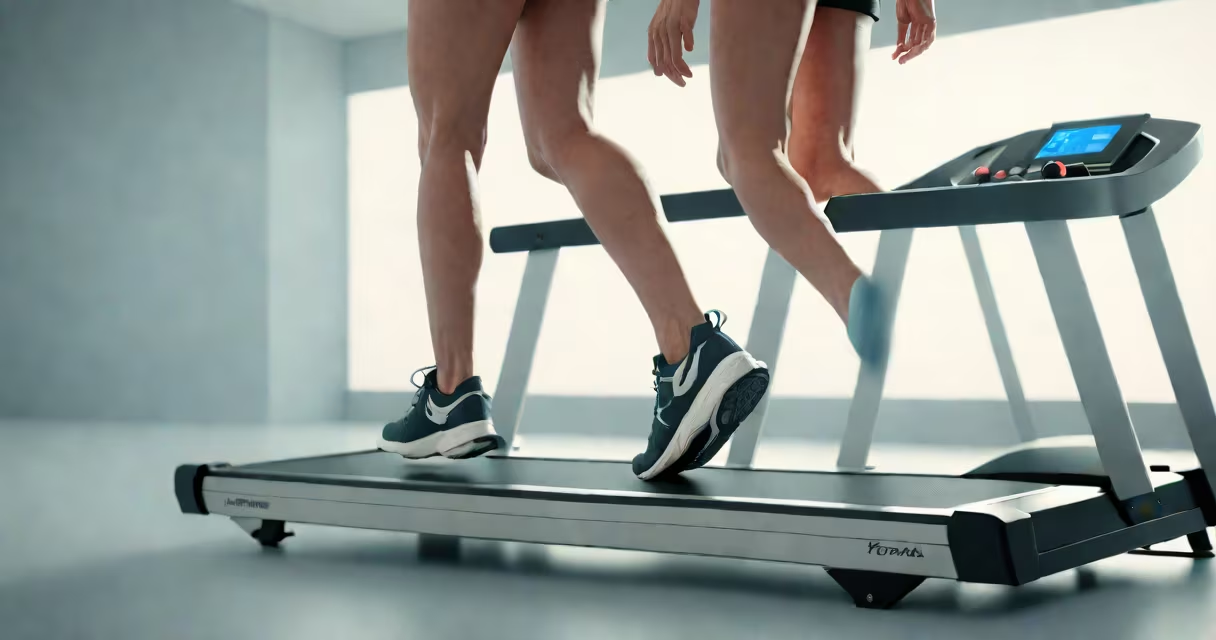
Total daily energy expenditure (TDEE) is the total number of calories your body burns in a 24-hour period. It accounts for basal metabolic rate, physical activity, thermic effect of food, and non-exercise activity thermogenesis. TDEE determines whether you gain, lose, or maintain weight based on calorie intake.
TDEE is not a single fixed number-it changes daily depending on movement, diet, sleep quality, and stress levels. For example, a sedentary adult male weighing 70 kg may have a TDEE of 2,200 calories on a low-activity day, but 2,800 on a day with intense training. This variability makes tracking TDEE essential for accurate nutrition planning.
Understanding TDEE allows people to set realistic goals for fat loss, muscle gain, or maintenance. A deficit of 500 calories below TDEE typically results in about 0.5 kg (1.1 lbs) of fat loss per week. Conversely, a surplus of 250-500 calories supports lean muscle growth when combined with resistance training.
TDEE is calculated by summing four components: resting metabolic rate (RMR), exercise activity, non-exercise activity thermogenesis (NEAT), and the thermic effect of food (TEF). RMR accounts for 60-70% of total energy use and represents calories burned while at rest. Exercise adds another 10-15%, depending on intensity and duration. NEAT includes fidgeting, standing, walking, and other daily movements-often overlooked but significant. TEF contributes 10% of total energy use and reflects the calories needed to digest, absorb, and process nutrients.
A 2018 study published in Obesity Reviews found that NEAT can vary by up to 1,000 calories per day between individuals with similar body compositions. One person might burn 300 extra calories through daily movement, while another burns only 100, even with identical exercise routines. This difference underscores why TDEE estimates must consider lifestyle factors beyond gym time.
For example, a 30-year-old woman who works a desk job, walks 5,000 steps daily, and lifts weights three times a week may have a TDEE of approximately 2,400 kcal. Her RMR is 1,500 kcal, exercise adds 300 kcal, NEAT contributes 400 kcal, and TEF accounts for 200 kcal. Without tracking NEAT, her actual energy needs could be underestimated by 400 kcal.
The following table breaks down the major contributors to TDEE and their average contributions across healthy adults.
| Component | Contribution to TDEE | Example (70 kg adult) |
|---|---|---|
| Basal Metabolic Rate (BMR) | 60-70% | 1,500 kcal/day |
| Exercise Activity | 10-15% | 300 kcal/day |
| Non-Exercise Activity Thermogenesis (NEAT) | 15-20% | 400 kcal/day |
| Thermic Effect of Food (TEF) | 10% | 200 kcal/day |
BMR is often confused with resting metabolic rate (RMR), but they differ slightly. BMR measures energy use under strict conditions-after 12 hours of fasting, in a thermally neutral environment, and at complete rest. RMR is measured under less stringent conditions and is typically 5-10% higher than BMR. Most online calculators use RMR approximations because they're easier to measure.
One non-obvious fact: TDEE drops by 2-3% per decade after age 30 due to declining lean body mass and reduced physical activity. A 40-year-old man with the same lifestyle as he had at 25 may burn 150 fewer calories per day. This decline explains why weight gain is common in middle age-even with unchanged eating habits.
People often assume TDEE is constant or that fitness trackers provide exact values. Neither is true. Fitness devices estimate TDEE using algorithms based on age, sex, weight, height, and activity level. A 2021 study in Journal of Personalized Medicine found that wrist-worn devices overestimated TDEE by an average of 12% during moderate-intensity activities and underestimated it by 8% during light activity.
Another misconception is that "calories in vs. calories out" is the only factor in weight management. While energy balance drives long-term outcomes, hormonal regulation, gut microbiome composition, and sleep quality influence appetite and fat storage. A person with poor sleep may feel hungrier despite consuming the same calories, leading to a higher actual intake than predicted by TDEE models.
I once tracked my own TDEE using a combination of a wearable device and manual logging. Over seven days, the device reported a daily average of 2,650 kcal. My actual food log showed I consumed 2,400 kcal. The discrepancy wasn't due to error-it reflected the device's tendency to inflate activity-related calorie burn. After adjusting for this, my real TDEE was closer to 2,500 kcal. This mismatch highlights why relying solely on device estimates can lead to inaccurate dietary planning.
To estimate your TDEE, start with your BMR using the Mifflin-St Jeor Equation:
For men: BMR = 10 × weight(kg) + 6.25 × height(cm) - 5 × age(y) + 5
For women: BMR = 10 × weight(kg) + 6.25 × height(cm) - 5 × age(y) - 161
Multiply BMR by an activity multiplier:
For example, a 35-year-old woman weighing 60 kg and 165 cm tall has a BMR of 1,386 kcal. With moderate activity, her TDEE is 1,386 × 1.55 = 2,148 kcal/day. Adjusting for NEAT and meal timing, her actual needs may be 2,200-2,300 kcal.
When aiming for weight loss, subtract 500 kcal from TDEE to create a deficit. A 2,200 kcal TDEE becomes a 1,700 kcal target. When gaining muscle, add 250-500 kcal, especially with strength training. Monitoring progress weekly prevents over-adjustment due to daily fluctuations.
For precision, use direct measurement methods like doubly labeled water or indirect calorimetry. These are gold-standard tools used in research and clinical settings. However, they're expensive and impractical for most people. Therefore, estimation remains the standard for daily use.
Accurate TDEE estimation improves outcomes in weight management, athletic performance, and metabolic health. It's not a single number-it's a changing range shaped by behavior, biology, and environment. Understanding this helps avoid frustration from inconsistent results and supports sustainable habits.
Knowing your total daily energy expenditure enables informed choices about food, activity, and recovery. It's not about perfection-it's about alignment. When intake matches output, energy balance stabilizes. When adjusted appropriately, it drives progress toward personal goals.