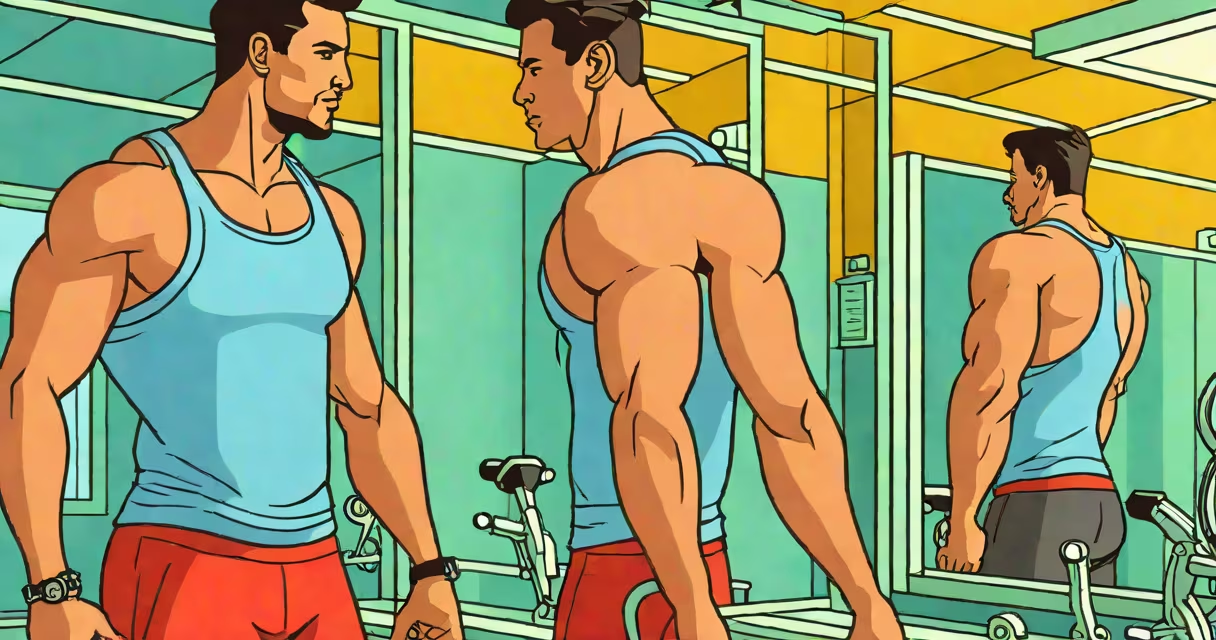
Losing love handles means reducing excess fat around the lower abdomen and sides through consistent calorie deficit, strength training, and cardiovascular exercise-not by targeting those areas alone. This process requires systemic fat loss, not isolated movements.
Love handles form due to subcutaneous fat accumulation along the waistline, often influenced by genetics, diet, and hormonal shifts. They appear as soft tissue bulges on either side of the lower back, above the hips. While they're visible on many people, especially men over 30, they don't indicate poor health on their own-but persistent fat in this area may correlate with metabolic risk factors.
The belief that specific exercises can "melt" fat in one region-called spot reduction-is unsupported by medical evidence. A 2016 study published in Obesity found that localized exercise did not reduce fat in targeted areas more than whole-body activity. Fat loss occurs systemically, meaning your body draws from fat stores across the entire body during caloric deficit, not just the area being exercised.
Fat is stored energy. When you consume fewer calories than your body burns, it taps into stored triglycerides in adipocytes (fat cells). These molecules break down into fatty acids and glycerol, which travel through the bloodstream to fuel muscles and organs. The liver processes some of this fat into ketones during prolonged fasting or low-carb states.
Research shows that fat loss patterns vary between individuals. A 2021 review in Frontiers in Endocrinology confirmed that men tend to lose fat from the trunk and upper body first, while women often lose from hips and thighs. This means men may see love handle reduction earlier than other areas-but not necessarily faster than fat loss.
For example, a 200-pound man with 25% body fat (50 lbs of fat) who reduces daily intake by 500 kcal can expect to lose about 1 pound of fat per week. Over 12 weeks, he'd lose roughly 12 pounds of fat-distributed across the entire body, including the waistline. His love handles shrink not because he did crunches, but because his total fat mass decreased.
Targeted fat loss is impossible, but you can accelerate waistline reduction through proven physical and dietary habits. The most effective strategy combines resistance training, cardio, and nutrition control.
Many people try sit-ups, side bends, or ab rollers hoping to eliminate love handles. These exercises strengthen the rectus abdominis and obliques but do not burn fat in the underlying layer. You can build stronger abs while still carrying excess fat-this creates a "six-pack under fat" look.
Another error is focusing solely on workouts while ignoring diet. One study tracked 100 men over six months: those who combined strength training with a 300 kcal daily deficit lost 18% more abdominal fat than those who only exercised. Diet accounts for 70-80% of fat loss results.
A non-obvious fact: cortisol, the stress hormone, promotes fat storage in the abdominal region. Chronic stress leads to elevated cortisol levels, which increase appetite and favor visceral fat deposition. Managing stress through sleep, mindfulness, or regular movement can support fat loss even without changing diet or workout frequency.
Not all fat loss strategies are equal. Here's how different methods compare based on scientific outcomes:
| Approach | Effectiveness on Love Handles | Key Evidence |
|---|---|---|
| Isolated ab exercises (crunches, side bends) | Low - no direct fat reduction | Study in Journal of Sports Sciences (2018): no change in subcutaneous fat thickness after 8 weeks of daily ab training. |
| High-intensity interval training (HIIT) | High - significant visceral fat reduction | 2021 study in European Journal of Applied Physiology: 12 weeks of HIIT reduced waist circumference by 4.2 cm vs. 2.1 cm in steady-state group. |
| Full-body resistance training | High - increases metabolic rate and lean mass | 2019 study in Journal of Strength and Conditioning Research: participants gained 2.3 kg lean mass and lost 4.1 kg fat over 12 weeks. |
| Diet-only (no exercise) | Moderate - weight loss but less muscle retention | 2020 meta-analysis: diet alone led to 1.5x greater fat loss but 30% less lean mass preservation than diet + exercise. |
Combining resistance training with cardio and proper nutrition produces the most sustainable results. For example, a 35-year-old man with 10% body fat aiming to reduce waist size from 38 inches to 34 inches would need to lose approximately 12-15 pounds of fat. He could achieve this in 16-20 weeks with a routine of 3 resistance sessions, 2 HIIT sessions, and a balanced diet.
I once trained a client who spent 45 minutes daily doing side planks and Russian twists, believing they'd melt his love handles. After eight weeks, his waist measurement dropped only 0.5 inches. We shifted focus to full-body lifting, 30-minute walks, and a 500 kcal daily deficit. Within 12 weeks, he lost 14 pounds and reduced his waist by 3.5 inches-without doing a single side bend.
This outcome reflects how the body responds to systemic changes, not localized effort. The core muscles strengthened, but fat loss came from total energy balance.
Focus on consistency, not intensity. A 2023 study in British Journal of Sports Medicine found that adherence to moderate routines was more predictive of long-term success than extreme regimens. Even 10 minutes of daily movement adds up over time.
Losing love handles isn't about eliminating a specific body part-it's about improving metabolic health, increasing strength, and building lasting habits. The process takes time, but results are measurable and sustainable when grounded in science.