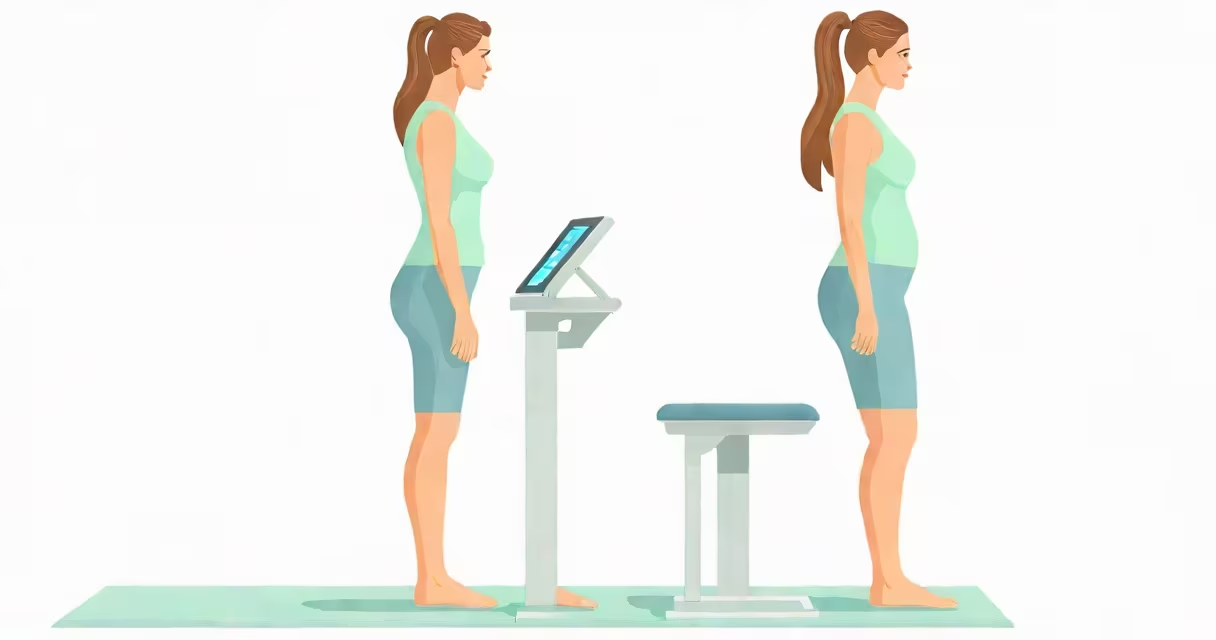
The ideal weight for someone who is 5 feet 2 inches tall typically ranges from 108 to 132 pounds for adult women and 110 to 135 pounds for adult men, depending on body fat percentage, muscle mass, and health. This range aligns with a Body Mass Index (BMI) between 18.5 and 24.9, which the Centers for Disease Control and Prevention (CDC) defines as healthy.
BMI is calculated using height and weight, but it doesn't account for muscle versus fat. A muscular person may fall into the "normal" BMI range yet carry more weight than someone with lower lean mass. For this reason, ideal weight should be interpreted alongside waist circumference, fitness level, and medical history.
For example, a 5'2" woman weighing 125 pounds has a BMI of 23.1-within the healthy range. But if she has a waist measurement above 35 inches, her risk for metabolic issues increases, even if her BMI is normal. The American Council on Exercise (ACE) recommends combining BMI with waist-to-hip ratio for better health assessment.
Ideal weight is derived from population-based health standards, primarily using BMI. The CDC uses BMI categories to classify weight status: underweight (<18.5), normal (18.5–24.9), overweight (25–29.9), and obese (≥30).
For a 5'2" individual, the upper limit of the healthy BMI range translates to about 132 pounds for women and 135 pounds for men. These values are not absolute targets but benchmarks. A person with higher muscle density may weigh more while still being metabolically healthy.
Health professionals often use waist circumference as a secondary measure. According to the National Institutes of Health (NIH), a waist size exceeding 35 inches for women or 40 inches for men indicates increased risk for heart disease and type 2 diabetes-even if BMI is normal.
There are several methods to estimate ideal weight, each with different assumptions and limitations. The most common approaches include:
| Method | Formula/Approach | Limitations |
|---|---|---|
| BMI-Based | Weight (kg) / Height (m²). Target: 18.5-24.9 | Doesn't distinguish between fat and muscle; less accurate for athletes |
| Devine Formula | Women: 45.5 kg + 2.3 kg per inch over 5 feet Men: 50 kg + 2.3 kg per inch over 5 feet |
Outdated; assumes average body composition; not adjusted for ethnicity or activity level |
| Hamwi Method | Women: 100 lb for 5 feet + 5 lb per inch over Men: 106 lb for 5 feet + 6 lb per inch over |
Still widely cited but lacks nuance; ignores body frame size and fat distribution |
None of these formulas are perfect. The Devine and Hamwi equations were developed in the 1970s and assume a standard body frame. They don't account for differences in bone density, muscle mass, or ethnic variation in body composition.
A 5'2" woman with a large frame may naturally weigh more than one with a small frame, yet both can be healthy. The NIH notes that body frame size should be assessed via wrist circumference-measuring the narrowest part of the wrist with a tape measure. Small frame: ≤6.5 cm; medium: 6.5-7.5 cm; large: ≥7.5 cm.
Many people equate ideal weight with a specific number on the scale. This leads to unhealthy behaviors such as restrictive dieting or excessive exercise. The ideal weight is not a single number-it's a range that supports long-term health.
Another misconception is that weight loss always equals improved health. A study published in JAMA Internal Medicine found that individuals with a BMI in the "overweight" category (25-29.9) had similar or lower mortality rates compared to those in the "normal" range, especially among older adults. This challenges the idea that lower weight always means better outcomes.
One non-obvious fact: The ideal weight for a 5'2" woman can differ based on age and hormonal status. After age 40, estrogen decline leads to increased abdominal fat storage, even if total weight remains stable. This shifts health risks upward despite unchanged BMI.
Sarah is a 5'2" woman who weighs 128 pounds. Her BMI is 23.8-well within the healthy range. She exercises regularly, eats whole foods, and has a waist circumference of 32 inches. Her blood pressure is 118/76 mmHg, and her fasting glucose is 89 mg/dL.
Despite her weight falling near the upper end of the ideal range, her health markers are excellent. She maintains energy levels, sleeps well, and feels strong. Her doctor confirms she is metabolically healthy.
Now consider Maria, also 5'2", who weighs 128 pounds but has a waist of 37 inches, elevated triglycerides, and prediabetes. Her BMI is the same, but her body composition differs. She carries more visceral fat, which increases cardiovascular risk. Her ideal weight goal is not to lose weight but to reduce abdominal fat through targeted nutrition and resistance training.
This illustrates that ideal weight is not just about numbers-it's about function, energy, and biomarkers.
If your weight is consistently above or below the healthy range for your height, consult a registered dietitian or physician. They can assess body composition using tools like DEXA scans or bioelectrical impedance analysis, which provide more accurate insights than BMI alone.
The ideal weight for 5'2" is not a fixed number. It's a changing range shaped by biology, lifestyle, and personal health goals. Focus on sustainable habits-not a magic number.