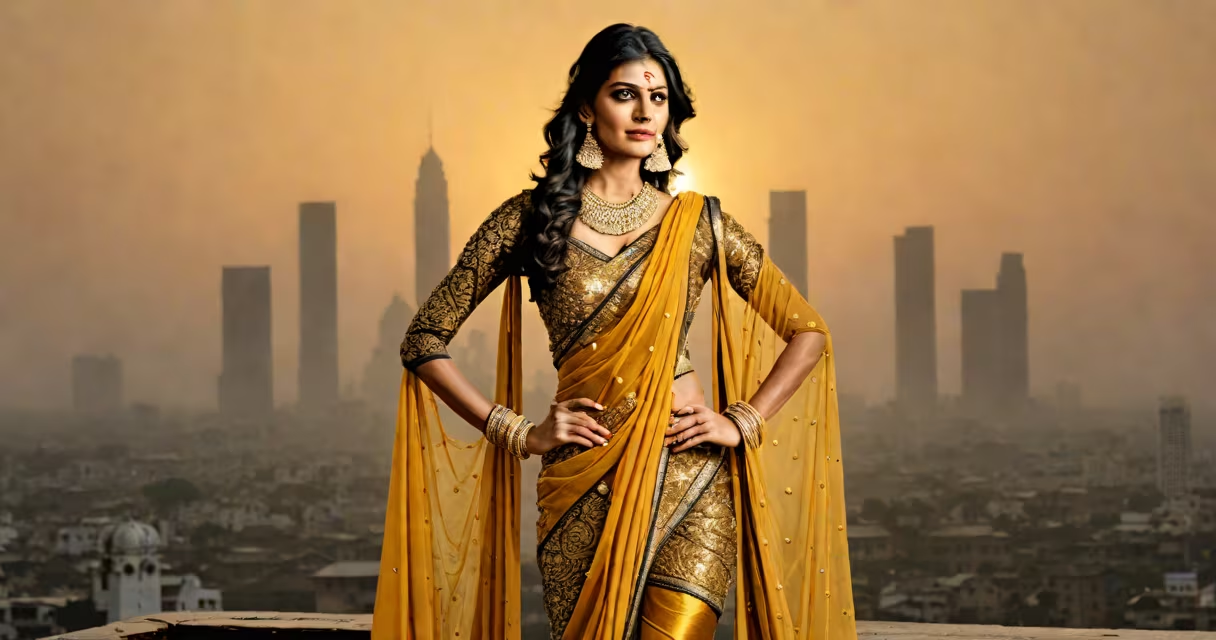
Indo-Western dresses combine Indian textiles, embroidery, and silhouettes with Western tailoring and structure, creating hybrid garments that blend cultural aesthetics for modern wear. These pieces often feature Indian motifs like zari work, gota patti, or chikankari paired with Western cuts such as sheath, A-line, or off-the-shoulder designs.
Originating in India during the late 20th century, Indo-Western dresses emerged as a response to evolving fashion tastes among urban South Asians. They gained global traction through celebrity appearances at award shows and high-profile events. Designers like Sabyasachi Mukherjee and Manish Malhotra popularized the style, blending handwoven silks with structured European tailoring.
The style is not limited to formal wear. Casual versions exist in cotton and rayon with minimal embroidery, worn for brunches or gallery openings. The versatility lies in adaptability-same fabric, different styling, different occasions.
These garments function by layering two distinct design philosophies: Indian aesthetic principles centered on ornamentation, symbolism, and regional textile heritage, and Western fashion's focus on silhouette, proportion, and ease of movement. The result is a garment that feels both familiar and new.
A typical Indo-Western dress uses a Western-style bodice-fitted, boned, or structured-with an Indian-inspired skirt or drape. For example, a knee-length A-line skirt made from Banarasi silk may be paired with a cropped, sleeveless top featuring mirror work from Gujarat. The top follows Western construction, while the fabric and embellishment root it in Indian craft.
Designers often use draping techniques like the lehenga drape or pallu fold, but apply them to a Western dress form. This creates visual continuity between cultures without requiring full traditional attire. The wearer maintains comfort and mobility, essential for long events or travel.
Indo-Western dresses vary widely in fabric, cut, and occasion-specific design. The most common types include:
| Type | Key Features | Common Occasions |
|---|---|---|
| Lehenga Gown | Long, flared skirt with a fitted Western bodice; often features heavy embroidery | Weddings, red carpet events |
| Sari-Style Dress | Draped front panel mimicking a sari pallu; attached to a Western slip or corset base | Formal dinners, cultural festivals |
| Bandhani Blouse + Palazzo Skirt | Hand-tied dye blouse with wide-leg pants; combines Indian print with modern fit | Casual gatherings, weekend outings |
| Churidar Jumpsuit | High-waisted, tapered legs with a crop top and statement sleeves | Parties, engagement functions |
Fabrics range from lightweight georgette and chiffon for summer wear to heavier brocade, velvet, and organza for winter events. Embellishments include zardozi (gold threadwork), stone setting, and hand-beaded borders. Some designers use recycled fabrics-like repurposed sarees-to reduce environmental impact.
According to the Council of Fashion Designers of America (CFDA), 62% of American fashion students surveyed in 2022 cited Indo-Western styles as influential in their design thinking, highlighting growing cross-cultural relevance.
Indo-Western dresses dominate South Asian wedding seasons, especially in cities like Mumbai, Delhi, and Toronto. They allow guests to honor tradition while avoiding the formality of full lehengas or sherwanis. A bride might wear a pastel pink Indo-Western gown with a sheer dupatta for her mehndi ceremony-traditional in color and motif, modern in cut.
They've also entered global fashion circuits. At the 2023 Met Gala, actress Priyanka Chopra wore a custom Indo-Western ensemble designed by Dolce & Gabbana-a crimson red velvet dress with gold-threaded peacock motifs and a dramatic train, styled with a modern, asymmetrical neckline. The look was praised by Vogue for "redefining diasporic elegance."
For everyday wear, Indo-Western pieces offer a middle ground between modesty and modernity. A woman in New York might wear a printed cotton Indo-Western dress with a belted waist and short sleeves to a friend's birthday party-visible cultural identity without overt costume status.
Many assume Indo-Western dresses are simply "Indian clothes with a Western cut." That's inaccurate. The fusion is intentional and structural-not decorative. A true Indo-Western piece integrates design logic from both traditions. For example, a sari-style drape isn't just glued onto a Western dress-it's engineered to drape naturally across the hips and shoulders using weight distribution and seam placement.
Another myth: these dresses are only for South Asian women. In reality, they're worn globally. A Japanese model wore a navy blue Indo-Western dress with silver embroidery at Paris Fashion Week 2022, described by Harper's Bazaar as "a quiet rebellion against cultural homogenization."
Also, not all Indo-Western dresses are elaborate. A simple cotton dress with a border of kantha stitch and a wrap-around waistband qualifies as Indo-Western-even if unembellished. The category isn't about opulence but hybrid design.
Consider a wedding guest attending a 12-hour celebration in Jaipur. She chooses a two-piece Indo-Western outfit: a maroon silk blouse with Chikankari embroidery from Lucknow, paired with a high-waisted, flared palazzo pant in ivory satin. The blouse is button-front with a mandarin collar-Western details-but the embroidery is entirely hand-stitched using traditional techniques.
She wears it with silver jhumkas and a clutch made from recycled sari fabric. The outfit allows movement for dancing, stays cool in desert heat, and respects cultural codes. It's not a traditional outfit, nor is it purely Western-it's a hybrid solution.
I once wore a similar outfit to my cousin's wedding in 2021. I felt confident, culturally connected, and comfortable throughout the night. The mix of textures and colors drew compliments from both Indian and Western guests-proof that the style resonates beyond borders.
What is Indo-Western dresses? They are not a passing trend. They represent a living evolution of fashion-one that honors heritage while embracing change. As noted by the Victoria and Albert Museum's South Asian fashion archive, "The Indo-Western dress is not a costume. It is a declaration of identity in motion."
Understanding what is Indo-Western dresses helps decode a key shift in global fashion: the rise of hybrid identity through clothing. Whether worn at a gala, a family reunion, or a music festival, these garments carry stories of migration, adaptation, and personal expression.