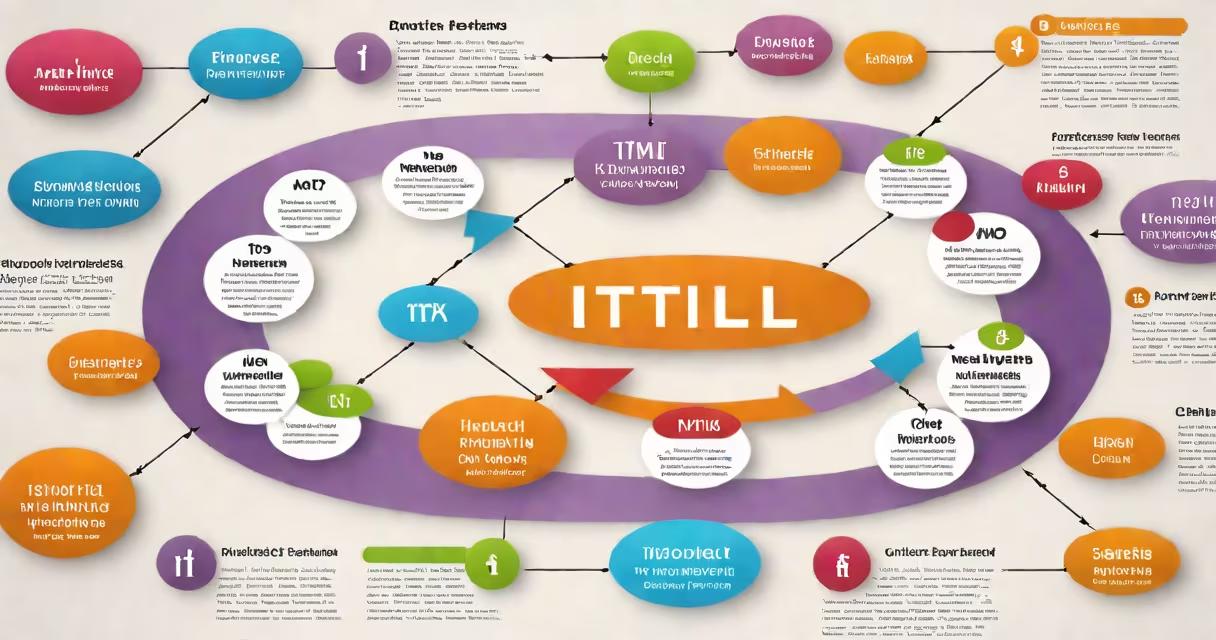
Itil v4 is the current version of the IT Infrastructure Library, a globally recognized structure for managing IT services. It shifts focus from rigid processes to value creation through integrated workflows, agile methods, and continuous improvement. The structure supports organizations in delivering high-quality IT services aligned with business outcomes.
Developed by Axel Springer UK (formerly AXELOS), itil v4 was released in 2019 to modernize legacy ITIL practices. It replaces the process-centric model of earlier versions with a service-focused approach centered on the Service Value System (SVS). This system helps every activity contributes to customer value, whether through incident resolution, change implementation, or strategic planning.
The core idea is that IT should not operate in isolation. Instead, it must collaborate with business units to deliver measurable results. For example, a company implementing a new cloud platform doesn't just track uptime-it measures how much faster teams deploy features, reduce downtime, or improve user satisfaction. Itil v4 provides the structure to make those connections visible and actionable.
Itil v4 operates through a set of interconnected concepts rather than standalone procedures. At its center is the Service Value System (SVS), which includes governance, service value chain, guiding principles, and continual improvement. These elements work together to ensure decisions are consistent, outcomes are tracked, and feedback loops exist.
The service value chain consists of six activities: plan, improve, engage, design and transition, obtain/build, and deliver and support. Each stage connects to the next, forming a continuous flow. For instance, a request to upgrade a server begins with a plan based on business needs, moves through design and testing, then transitions into production, and finally gets monitored for performance and user feedback.
Unlike previous versions that emphasized documentation and compliance, itil v4 encourages adaptability. Teams are expected to apply the four dimensions of service management-organizations and people, information and technology, partners and suppliers, and value streams and processes-to assess risks and opportunities in context. A retail bank upgrading its mobile app, for example, must consider not just technical performance but also customer behavior, staff training, and vendor contracts.
Itil v4 introduces several distinct but interdependent parts. The most critical are:
These components aren't optional-they're meant to be applied together. For example, a team rolling out a new HR portal uses the guiding principle "collaborate and promote visibility" during planning, applies the "incident management" practice to handle outages, and evaluates success using the four dimensions to check if employee adoption met expectations.
| Component | Description | Example Application |
|---|---|---|
| Guiding Principles | Seven rules for effective decision-making | "Progress iteratively with feedback" guides sprint planning in software delivery |
| Service Value Chain | End-to-end workflow for creating value | Designing a customer portal involves planning, building, testing, and supporting |
| Four Dimensions | Structure for assessing service quality holistically | Evaluating a cloud migration across people, tech, vendors, and processes |
| Practices | 34 standardized activities grouped by purpose | Using "deployment management" to control software releases |
Organizations across sectors adopt itil v4 to improve service delivery, reduce waste, and increase agility. Healthcare providers use it to manage electronic health record systems, ensuring patient data remains secure and accessible. Financial institutions apply it to automate loan processing while meeting regulatory requirements.
A real-world example is a U.S.-based insurance company that reduced claim resolution time by 37% after adopting itil v4. By mapping their end-to-end claim process through the service value chain, they identified bottlenecks in document verification and automated approvals using existing tools. They applied the "improve" practice to monitor progress and adjusted workflows monthly based on stakeholder feedback.
Itil v4 is especially valuable in hybrid environments where traditional IT coexists with cloud-native operations. Companies using both on-premise servers and AWS or Azure benefit from the structure's flexibility. The guiding principles allow teams to adapt practices without discarding existing investments. One telecom provider reported a 42% drop in unplanned outages after integrating itil v4 with their DevOps pipeline.
Many assume itil v4 is a replacement for agile or DevOps. That's incorrect. Itil v4 complements them. The structure doesn't dictate how teams build software-it defines how teams align delivery with business goals. For example, a development team can use Scrum sprints while still following itil v4's "plan" and "improve" practices to track impact on service availability.
Another misconception is that itil v4 requires full process standardization. In reality, the structure allows tailoring. A startup may implement only five key practices-such as incident, problem, and change management-while a multinational corporation adopts all 34. The choice depends on scale, risk tolerance, and maturity. According to AXELOS, over 60% of certified itil v4 practitioners work in organizations with customized implementations.
A lesser-known fact: itil v4 explicitly discourages measuring success solely by metrics like ticket closure rate. Instead, it promotes outcome-based evaluation. A team shouldn't celebrate resolving 95% of incidents quickly if users still report poor experiences. The structure pushes organizations to ask: "Did we solve the real problem?" and "Is the service better because of this action?"
I led a pilot project at a mid-sized logistics firm where we implemented itil v4 practices across IT and operations. We started with the "engage" and "deliver and support" stages of the service value chain. Within three months, frontline staff reported a 50% reduction in time spent reporting issues due to clearer escalation paths and shared documentation.
We didn't overhaul the entire system. We focused on one service-warehouse inventory tracking-and mapped it through the four dimensions. People were concerned about workload, so we applied the "focus on value" principle to prioritize tasks that improved accuracy over speed. After six weeks, error rates dropped from 12% to 4%. The team adopted the "improve" practice to review changes weekly, leading to sustained gains.
This experience confirmed that itil v4 isn't about perfect processes-it's about making improvements visible and sustainable. Even small teams can benefit by applying just a few principles.
What is itil v4? It's a modern, adaptable structure for delivering IT services that create measurable business value. It replaces outdated models with a changing system that integrates people, processes, technology, and partnerships. Organizations use it to align IT with strategy, improve outcomes, and respond to change faster.