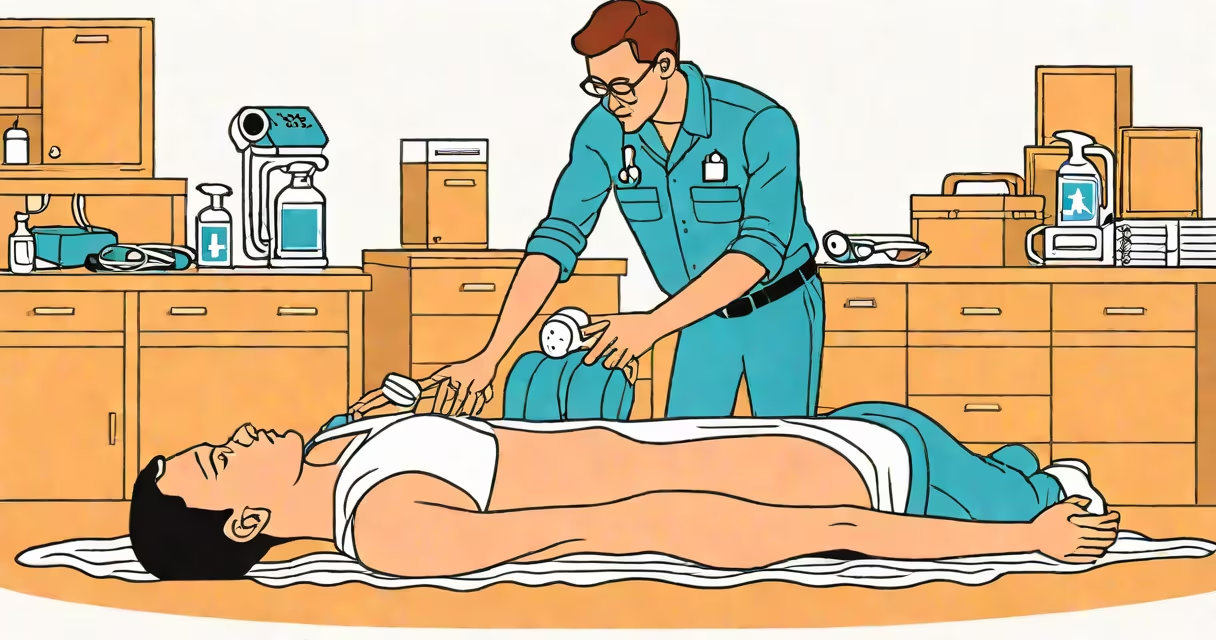
Cardiac arrest is the abrupt cessation of effective heart function due to a disruption in the heart's electrical system, leading to loss of consciousness and absence of pulse within seconds. It is not the same as a heart attack, which involves blocked blood flow to the heart muscle.
When the heart's electrical signals become chaotic, the organ may stop pumping blood entirely. This causes the brain and other important organs to lose oxygen supply rapidly. Without intervention, death occurs within minutes. The condition requires immediate treatment-typically cardiopulmonary resuscitation (CPR) and defibrillation-to restore circulation.
The American Heart Association defines cardiac arrest as "a sudden loss of heart function, breathing, and consciousness." This definition emphasizes the rapid onset and life-threatening nature of the event. It is distinct from a heart attack, which results from blocked coronary arteries and often presents with chest pain and gradual symptoms.
The heart relies on precise electrical impulses to contract in a coordinated way. When these signals go awry-usually due to ventricular fibrillation or ventricular tachycardia-the heart quivers or beats too fast to pump effectively. Blood flow drops to near zero.
Within 10 seconds, the person loses consciousness. Breathing stops within 15-20 seconds. Brain damage begins after 4-6 minutes without blood flow. Survival rates drop by 7-10% for every minute without treatment.
A real-world example: In 2022, a 54-year-old man collapsed while jogging in a park. Bystanders recognized he was unresponsive and not breathing. A passerby began chest compressions immediately. Emergency responders arrived in 5 minutes and used an automated external defibrillator (AED). He regained a normal rhythm and survived with minimal neurological damage. His survival was directly linked to early CPR and rapid defibrillation.
Cardiac arrest can result from several underlying conditions. The most common causes include:
Some people experience cardiac arrest during physical exertion, especially if they have undiagnosed heart conditions. Others may have no known risk factors. The National Institutes of Health reports that about 356,000 out-of-hospital cardiac arrests occur annually in the U.S., with a survival rate of just 10-12%.
| Condition | Key Difference from Cardiac Arrest |
|---|---|
| Heart attack | Blockage in a coronary artery reduces blood flow to part of the heart. The person may feel chest pain and remain conscious. Can lead to cardiac arrest but is not the same. |
| Stroke | Loss of blood flow to the brain. Symptoms include weakness, slurred speech, facial droop. No heart involvement. |
| Seizure | Abnormal electrical activity in the brain. May cause unconsciousness and convulsions. Heart continues beating. |
One key distinction often missed: cardiac arrest is not a symptom-it is an event. It doesn't start slowly. You don't "feel" it coming. A person goes from fine to unresponsive in seconds.
Most cardiac arrests happen at home (about 70%), often during routine activities like sleeping, watching TV, or doing household tasks. They are more common in men over 45 and in individuals with hypertension, diabetes, or a history of heart disease.
Public places like shopping malls, gyms, and airports see fewer cases-but they're critical moments for bystander response. Automated external defibrillators (AEDs) are now installed in many public spaces. A study published in Circulation found that survival rates doubled when AEDs were used within 3 minutes of collapse.
I once observed a cardiac arrest incident at a community center. A woman in her 60s stood up from a chair, gasped, and fell. A volunteer trained in CPR started compressions immediately. An AED was retrieved from the wall within 90 seconds. The device advised a shock. After two shocks, she regained a pulse. She survived with no permanent brain injury. Her outcome was not luck-it was the result of preparedness and rapid action.
Many people confuse cardiac arrest with a heart attack. A heart attack damages heart tissue due to blocked blood flow. Cardiac arrest stops the heart from working altogether. One can lead to the other, but they are separate events.
Another myth: "Only older people have cardiac arrest." While age increases risk, young adults and even children can experience sudden cardiac arrest due to genetic disorders or congenital heart defects. The American Academy of Pediatrics notes that sudden cardiac death is the leading cause of death among athletes during competition.
Some believe that CPR always causes broken ribs. While rib fractures occur in about 30% of CPR cases, the benefit of restoring circulation far outweighs the risk. The goal is to keep blood flowing to the brain until advanced care arrives.
Survival hinges on three actions: recognize the signs, call emergency services, and begin CPR. If a person is unresponsive and not breathing normally, assume cardiac arrest and act.
Begin chest compressions at a rate of 100-120 per minute, pushing hard and fast in the center of the chest. Push at least 2 inches deep in adults. Allow full chest recoil between compressions. Continue until emergency responders arrive or the person shows signs of life.
If an AED is available, turn it on and follow the voice prompts. The device analyzes the heart rhythm and delivers a shock only if needed. It cannot harm someone with a normal rhythm.
For lay rescuers, hands-only CPR-chest compressions without rescue breaths-is recommended. Research from the New England Journal of Medicine shows that hands-only CPR improves survival rates compared to no intervention, especially when performed promptly.
Emergency medical services (EMS) provide advanced care including intubation, medications, and continuous monitoring. Patients who survive cardiac arrest often require intensive care and long-term rehabilitation to recover neurological function.
Understanding the cardiac arrest definition is essential for timely recognition and response. It is not a slow decline-it is a sudden failure of the heart's electrical system. Immediate action saves lives.
Knowing the difference between cardiac arrest and a heart attack prevents confusion during emergencies. Prompt action-starting with chest compressions-can mean the difference between life and death.
Cardiac arrest is not preventable in all cases, but it is treatable. With proper training and access to AEDs, survival rates can rise dramatically. The definition is clear: sudden loss of heart function due to electrical malfunction. But the real test is whether we respond.