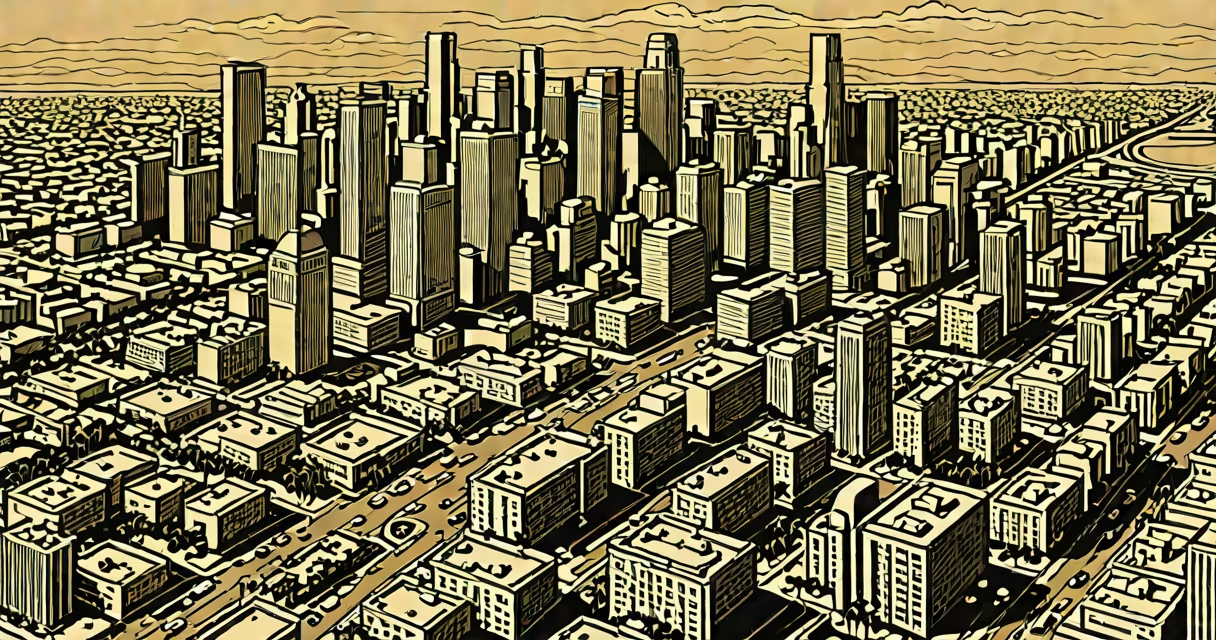
California Los Angeles is a metropolitan area spanning Los Angeles County and encompassing the city of Los Angeles, a major urban center in Southern California with over 4 million residents and a global influence in entertainment, culture, and transportation.
The term "California Los Angeles" refers to both the city and the larger county that surrounds it. The city of Los Angeles is the largest city in California and the second-largest in the United States by population. Los Angeles County, which includes the city and 88 other municipalities, covers 4,751 square miles and is the most populous county in the U.S., with over 10 million residents. This distinction matters because services like law enforcement, public health, and transportation are managed separately at city and county levels.
Los Angeles was founded in 1781 as a Spanish mission settlement called El Pueblo de Nuestra Señora la Reina de los Ángeles. Over time, it grew into a cultural and economic hub. Today, it is known for Hollywood, the entertainment industry, major ports, and a mix of urban and suburban environments. The city's layout is shaped by freeways, with major corridors like the I-5, I-10, and I-405 forming the core of regional travel.
Los Angeles operates under a city-county structure. The city government manages local services such as fire, police, street maintenance, and zoning within city limits. The county government oversees broader functions including public health departments, probation systems, and large-scale infrastructure projects like the LA Metro rail system.
For example, the Los Angeles Police Department (LAPD) serves the city's 496 square miles. The Los Angeles County Sheriff's Department handles unincorporated areas and provides security for county facilities, including jails and courthouses. These agencies operate independently despite geographic proximity.
Transportation is decentralized. The Metro system runs buses and light rail lines across the region, but many residents rely on personal vehicles due to limited transit coverage in low-density neighborhoods. The Port of Los Angeles and Port of Long Beach together handle nearly 40% of all containerized cargo entering the U.S. annually, making the region a critical node in global trade.
Los Angeles is not a single entity. It consists of distinct neighborhoods, cities, and zones with different governance, demographics, and economic profiles.
| Type | Examples | Key Features |
|---|---|---|
| City Center | Downtown LA, Arts District | High-density, mixed-use, transit hubs. Home to City Hall and the LA Convention Center. |
| Suburban Cities | San Fernando Valley, Pasadena, Long Beach | Lower density, car-dependent, school districts separate from LA Unified School District. |
| Unincorporated Areas | Canoga Park (partially), Palmdale (outside LA County) | Service delivery by county. No municipal government. Higher reliance on sheriff's deputies. |
Neighborhoods vary widely. Koreatown is a dense commercial district with Asian-owned businesses and cultural events. Beverly Hills is a wealthy enclave with strict zoning laws and private security. South Central LA has historically faced disinvestment, though recent efforts have expanded affordable housing and small business grants.
Many assume "Los Angeles" means only the city. But the term often refers to the entire metropolitan region, including Orange County, Riverside County, and San Diego County in informal usage. This leads to confusion when discussing traffic patterns, weather, or crime statistics.
Another misconception is that Los Angeles is a single jurisdiction. It is not. The city of Los Angeles shares borders with 34 incorporated cities and several unincorporated areas. Each has its own mayor, council, and budget. For example, the city of Inglewood has a population of about 40,000 and operates its own police force, while neighboring Compton has a different fiscal model and public works schedule.
A lesser-known fact: Los Angeles County is the largest county in the U.S. by population, but it is not the largest by land area. That title belongs to San Bernardino County, which is twice the size. However, Los Angeles County's population density-over 2,100 people per square mile-is among the highest in the nation.
In 2023, a wildfire broke out in the Angeles National Forest near the border of Los Angeles and San Bernardino counties. The incident required coordination between multiple agencies:
This event showed how "California Los Angeles" involves overlapping jurisdictions. A single disaster requires collaboration across city, county, state, and federal levels.
During a visit to the LA County Department of Health Services clinic in Watts, I observed a patient receiving care for diabetes. The clinic is funded by county taxes and staffed by county employees. The patient's primary care provider had no affiliation with the city's health department. This illustrates the division between city and county services, even when they serve adjacent populations.
Understanding the difference between the city and county helps clarify how services are delivered. For instance, Los Angeles is a city, but it exists within a larger county structure. The city has its own charter and elected officials, while the county operates under state law with a board of supervisors.
California Los Angeles is not a monolith. It is a layered system of governance, geography, and identity. Recognizing its components-city, county, neighborhoods, and institutions-reveals how a single name can represent a vast and interconnected reality.