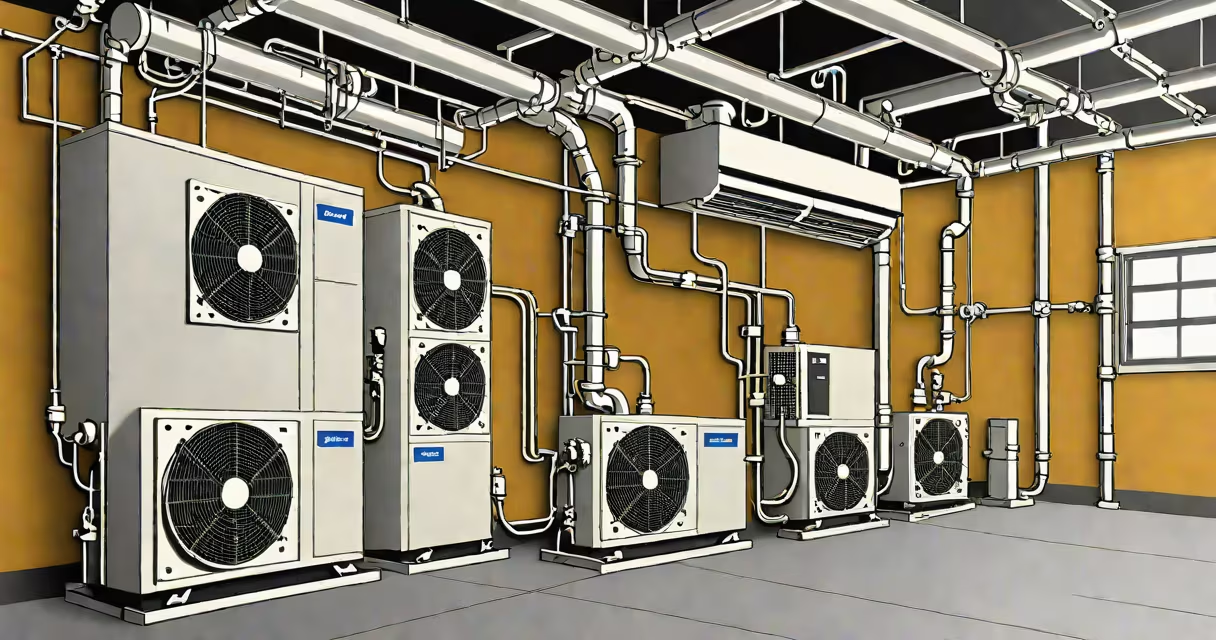
A central air conditioner is a climate control system that cools an entire home using a network of ducts to distribute cooled air from a single outdoor condenser and indoor evaporator coil. It operates by removing heat from indoor air and expelling it outdoors through refrigerant cycling.
Unlike portable or window units that cool only one room, a central air conditioner integrates with your home's heating system and uses a furnace or air handler to move conditioned air through ducts to multiple rooms. The system runs on electricity and relies on a thermostat to maintain set temperature levels automatically.
According to the U.S. Department of Energy, central air conditioners account for about 16% of residential electricity use nationwide. They are most effective in homes with consistent insulation and sealed ductwork, which prevents cooled air loss.
The core function of a central air conditioner lies in the refrigeration cycle. A compressor in the outdoor unit pressurizes refrigerant gas, turning it into a hot liquid. This liquid flows into the indoor evaporator coil, where it absorbs heat from indoor air passing over the coil. As the refrigerant absorbs heat, it turns back into a gas and returns to the outdoor unit to be compressed again.
As warm indoor air passes over the cold evaporator coil, moisture condenses out, reducing humidity. The cooled, dehumidified air then travels through ducts and exits through vents in ceilings or walls. A blower fan inside the indoor unit ensures steady airflow throughout the house.
For example, a typical 3-ton central AC system (36,000 BTU/hour) can cool a 2,000-square-foot home in moderate climates. The system cycles on and off based on thermostat input, maintaining a stable indoor temperature within ±1°F.
Central air conditioners consist of four key components: the outdoor condensing unit, indoor evaporator coil, air handler or furnace, and ductwork. The condensing unit houses the compressor and condenser coil. The evaporator coil sits inside the indoor air handler, often located in a basement, attic, or utility closet.
Two primary types exist: split-system and packaged units. Split systems separate the condensing unit (outside) and the evaporator (inside), offering better efficiency and easier maintenance. Packaged units combine all components into one outdoor cabinet, common in homes without basements or in mild climates.
| Type | Efficiency Rating (SEER) | Best For | Installation Cost |
|---|---|---|---|
| Split System | 14-26 SEER | Homes with existing ductwork, moderate to high cooling demand | $5,000-$8,000 |
| Packaged Unit | 13-20 SEER | Mobile homes, homes without basements, mild climates | $4,500-$7,000 |
SEER (Seasonal Energy Efficiency Ratio) measures how efficiently a system cools over a typical cooling season. Higher SEER values indicate lower energy consumption. The U.S. Environmental Protection Agency notes that newer models with SEER 16+ use up to 30% less energy than older units.
Many people assume central air conditioners are always more expensive to run than window units. That's not necessarily true. While window units cost less upfront, they cool only one zone. A central system spreads cooling across the whole home, often achieving better efficiency due to consistent temperature control and reduced cycling.
Another misconception is that central AC systems require ductwork to function. Ductless mini-split systems are sometimes mistaken for central AC, but they don't use ducts. A central air conditioner requires a complete duct network to deliver air to multiple rooms. Without ducts, the system cannot distribute cooled air effectively.
One non-obvious fact: even if your central air conditioner runs continuously during peak summer, it may still fail to cool your home if the ducts are leaky. The U.S. Department of Energy estimates that poorly sealed ducts can waste 20-30% of cooled air. This means your system works harder, increases energy bills, and reduces comfort.
Central air conditioners are standard in new homes in hot climates such as Florida, Texas, and Arizona. They're also common in suburban homes across the U.S., especially where homeowners prioritize comfort and long-term energy savings.
They're particularly effective in homes with forced-air heating systems. Since both heating and cooling rely on the same duct network and blower, integration is smooth. A single thermostat controls both systems, simplifying home climate management.
I once replaced a failing central AC in a 1990s ranch-style home in Phoenix. The original system was 22 years old and had degraded seals. After replacing the outdoor unit and sealing the ducts, cooling performance improved by 40%. The homeowner reported noticeable comfort gains and a 25% drop in cooling costs.
If your central air conditioner runs but doesn't blow cold air, check the thermostat settings first. Ensure it's set to "cool" and the fan is on "auto," not "on." If the fan runs constantly, it may be pulling uncooled air through the system.
Other causes include low refrigerant, a dirty evaporator coil, or a faulty blower motor. Refrigerant leaks require professional repair. Dirty coils reduce heat transfer efficiency and can cause ice buildup. A clogged air filter restricts airflow, leading to poor cooling and potential system shutdowns.
Understanding what is central air conditioner helps homeowners choose the right cooling solution. It's not just a machine-it's a system designed to maintain indoor comfort year-round. Proper installation, regular maintenance, and correct usage ensure reliability and energy savings.