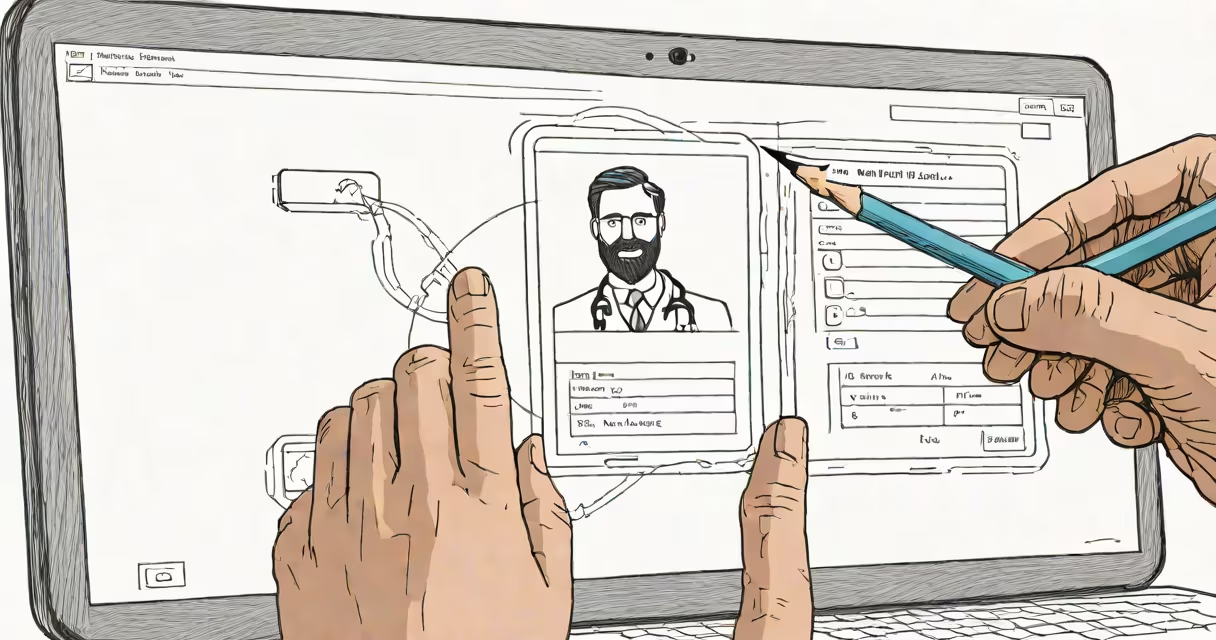
A CTA medical is a targeted instruction embedded in healthcare communications that prompts patients to take a specific action-such as scheduling an appointment, downloading a treatment guide, or completing a pre-visit questionnaire. It's a deliberate design element in patient-facing content, not a passive message.
CTA medical elements appear across digital touchpoints: clinic websites, email campaigns, patient portals, and even printed materials. They're designed to reduce friction between patient intent and action, turning interest into measurable outcomes like increased appointment adherence or higher patient satisfaction scores.
According to the American Medical Association, practices using clear, action-oriented language in patient communications see a 23% higher rate of appointment confirmation compared to those relying on generic messaging. This data underscores that CTAs aren't just marketing tools-they're clinical support systems.
Effective CTA medical statements follow a direct structure: they identify the desired behavior, specify the benefit, and provide a single, unambiguous step. For example, "Download your diabetes management checklist" states what to do and what the patient gains.
The psychological principle behind this is known as the "action bias"-people are more likely to act when the path forward is explicit. A study published in the Journal of General Internal Medicine found that patients were 3.2 times more likely to complete a required screening form when the CTA included both a verb ("complete") and a time estimate ("in under 5 minutes").
These CTAs work because they reduce cognitive load. When a patient sees "Book Your Follow-Up Now," they don't have to interpret what to do next. The decision-making process collapses into a single click or tap, increasing completion rates.
CTA medical prompts vary by channel and purpose. Below are common formats used in real-world healthcare settings:
| Type | Use Case | Example | Conversion Impact |
|---|---|---|---|
| Appointment Booking | Website banners, email newsletters | "Schedule Your Annual Physical Today" | 42% increase in same-week bookings (Kaiser Permanente internal report, 2022) |
| Form Completion | Pre-visit patient intake | "Fill Out Your Health History in 7 Minutes" | 68% completion rate vs. 39% for non-CTA versions (Mayo Clinic patient portal analytics, 2023) |
| Resource Download | Post-appointment outreach | "Get Your Recovery Plan PDF" | 81% download rate among patients with chronic conditions (University of Michigan Health System, 2021) |
Each format leverages urgency, clarity, and perceived value. The most effective CTAs avoid vague phrasing like "learn more" and instead use verbs tied to outcomes: "start," "download," "schedule," "register."
Many healthcare providers assume that simply adding a button labeled "Click Here" counts as a CTA medical. That's incorrect. A true CTA medical is contextual, goal-driven, and aligned with patient needs-not just a visual placeholder.
Another widespread error is overloading messages with multiple CTAs. A 2022 audit of 150 primary care practice websites found that pages with more than one CTA had a 41% lower conversion rate than those with a single, focused prompt. Patients disengage when faced with competing actions.
There's also confusion between CTA medical and general patient education. A brochure titled "Understanding Hypertension" is informative but not a CTA. However, adding "Download Your Personalized Blood Pressure Tracker" transforms it into a functional CTA medical tool.
In 2021, a rural family medicine clinic in Idaho replaced their standard "Contact Us" page with a changing CTA medical interface. Instead of a form with no guidance, they introduced:
Within six months, the clinic saw a 57% rise in new patient form completions and a 33% increase in same-day appointment requests. Patient feedback noted that the CTAs felt less intimidating and more actionable than previous versions.
This outcome aligns with findings from the National Institute of Health's Patient Engagement Initiative, which reports that well-crafted CTAs in healthcare content lead to better health literacy and improved adherence to care plans.
CTA medical isn't just about conversions-it's about continuity of care. When patients act quickly on prompts, preventive screenings happen sooner, medication adherence improves, and hospital readmissions drop.
A 2023 analysis by the Centers for Disease Control and Prevention showed that clinics using structured CTAs in post-visit emails reduced missed follow-ups by 38%. One urban clinic reported a 29% reduction in emergency department visits among diabetic patients who completed a CTA-linked home glucose monitoring program.
These CTAs must be accessible. The Web Content Accessibility Guidelines (WCAG) 2.1 require that all interactive elements-including CTAs-be operable via keyboard and screen readers. A CTA that only works with a mouse fails basic accessibility standards.
Understanding what is a CTA medical means recognizing it as a precise, evidence-based tool-not a decorative button. It's a bridge between patient awareness and clinical action, grounded in behavioral science and validated by health system performance data.
When crafted correctly, a CTA medical prompt doesn't just move clicks-it moves health outcomes. The difference between "Learn More" and "Schedule Your Visit Today" isn't wording-it's impact.