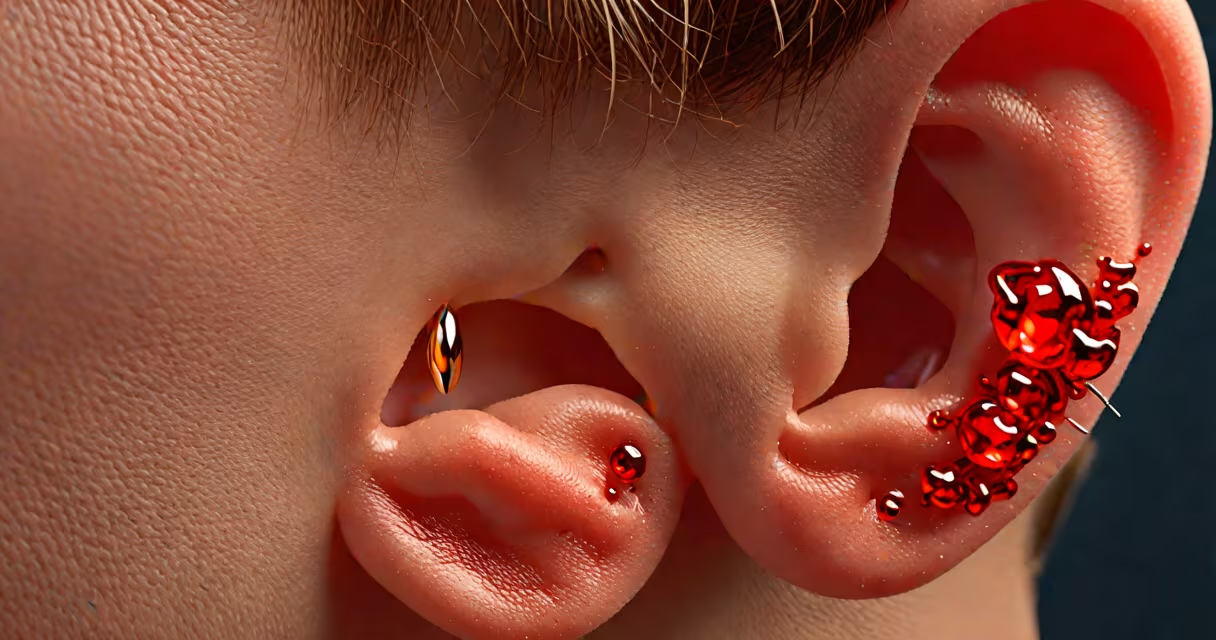
An infected ear piercing develops redness, swelling, warmth, pain, and often pus or discharge. It occurs when bacteria enter the wound during or after piercing, triggering inflammation and immune response. Left unaddressed, infection can progress to abscess formation, prolonged healing, or tissue damage.
Ear piercings are common, with 83% of U.S. adults aged 18-25 reporting at least one, according to the Pew Research Center. While most heal without issue, infections occur in 10-15% of cases, especially during the initial 6 weeks. The risk increases with improper aftercare, using non-sterile jewelry, or touching the site with unwashed hands.
Bacteria such as Staphylococcus aureus or Pseudomonas aeruginosa enter through the puncture wound. The body responds by sending white blood cells to the area, causing localized inflammation. This results in visible signs: redness spreading beyond the piercing site, tenderness, and warmth. Swelling may restrict movement of the earlobe or cartilage.
Pus forms when dead white blood cells, bacteria, and tissue debris accumulate. It appears yellow, green, or gray and may crust around the jewelry. A fever above 100.4°F (38°C) indicates systemic spread and requires medical attention. Infections typically begin within 3-7 days post-piercing but can appear later if hygiene lapses occur.
According to the American Academy of Dermatology, early intervention reduces complications. Delaying treatment increases the chance of chronic infection or keloid scarring. One study found that 30% of untreated infections progressed to requiring antibiotics or surgical drainage.
Infections fall into two categories: superficial (skin-level) and deep (cartilage or tissue involvement). Superficial infections affect the outer earlobe and respond well to saline soaks and clean aftercare. Deep infections, especially in cartilage piercings, are harder to treat and carry higher risks.
| Type | Location | Common Symptoms | Treatment |
|---|---|---|---|
| Superficial | Lobe, helix | Redness, swelling, clear or yellow discharge | Saline rinses, clean jewelry, avoid touching |
| Deep (e.g., cartilage) | Upper ear, antihelix | Severe pain, thick pus, hearing changes, ear deformity | Medical evaluation, antibiotics, possible removal of jewelry |
Cartilage infections are particularly dangerous. The tissue has poor blood supply, making it hard for antibiotics to reach. Untreated, they can cause necrosis (tissue death) or perichondritis-a serious condition that may require surgery. A 2021 study in the Journal of Clinical Medicine reported that 12% of cartilage piercing infections required surgical intervention due to delayed care.
Many assume that a small amount of discharge is normal. While some clear or slightly cloudy fluid is typical in early healing, thick, colored, or foul-smelling discharge signals infection. Using alcohol or hydrogen peroxide to clean the site damages tissue and delays healing. These substances dry out the skin and kill healthy cells needed for repair.
Another error is switching jewelry too soon. Replacing a healed piercing's stud with a hoop or barbell can trap bacteria and irritate the site. Jewelry should remain in place until fully healed-typically 6-8 weeks for lobes, 6-12 months for cartilage. Changing it prematurely disrupts the healing process.
I once observed a client who used tea tree oil on her infected lobe piercing. She believed it was "natural" and safe. Instead, the essential oil caused chemical irritation, worsening redness and swelling. The dermatologist diagnosed contact dermatitis, not infection, but the confusion delayed proper treatment. Always verify the cause before applying home remedies.
Stop touching the piercing. Wash hands thoroughly before cleaning. Use a sterile saline solution (like NeilMed or H2O Saline) twice daily. Soak a cotton ball, apply gently to the area, then pat dry. Avoid submerging in pools, hot tubs, or lakes until healed.
If symptoms persist beyond 48 hours or worsen-swelling spreads, pain intensifies, fever develops-seek medical care. A doctor may prescribe oral antibiotics like cephalexin or clindamycin. For severe cases, drainage may be necessary. Never attempt to drain pus yourself; this risks spreading infection.
Remove the jewelry only under professional guidance. Removing it during active infection can seal off the wound, trapping bacteria inside. If the doctor advises removal, do so carefully and replace with a sterile, hypoallergenic piece afterward.
Prevention is key. Choose a licensed piercer who uses autoclaved tools and sterile needles. Opt for implant-grade titanium or surgical steel jewelry. Follow aftercare instructions precisely. Clean only with saline-not soap, alcohol, or ointments.
For related concerns, explore what happens if your ear is clogged-a different condition involving the ear canal, not the piercing site.
Recognizing early signs of infection prevents long-term issues. Redness, swelling, and pus are not normal healing markers. Address them promptly with proper care or medical support. Timely action stops minor problems from becoming serious complications.