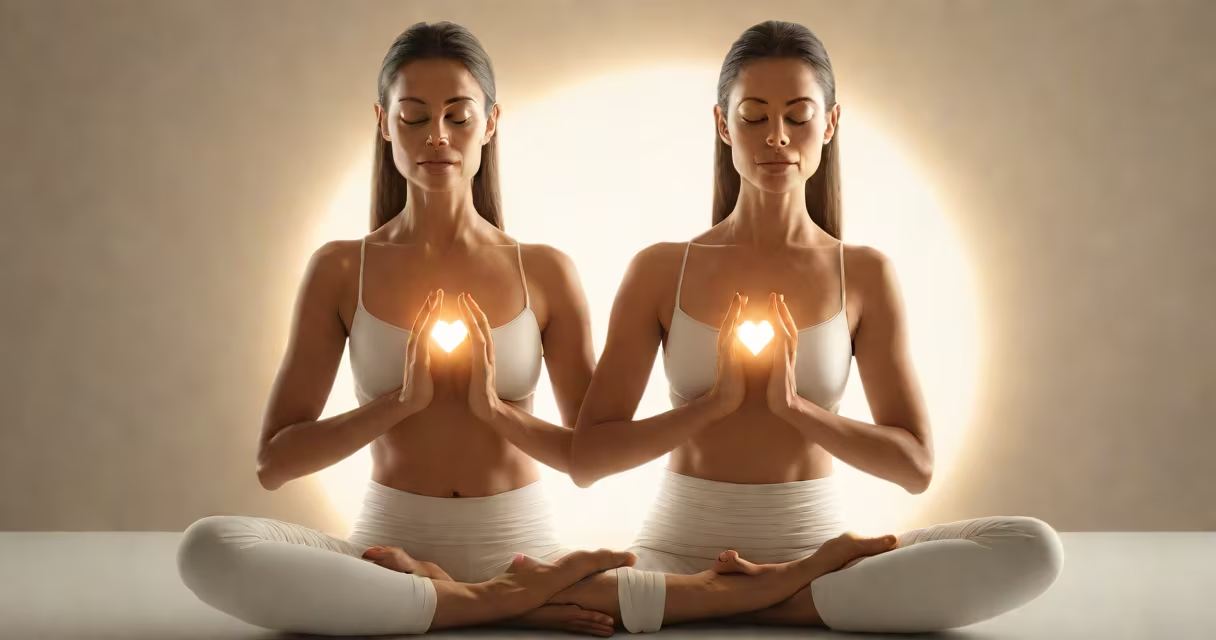
The heart chakra, located at the center of the chest, governs love, compassion, and emotional connection. When blocked, it can cause emotional numbness, difficulty forming relationships, or persistent anxiety. Unblocking it involves intentional practices that restore energetic flow and emotional openness.
According to the National Center for Complementary and Integrative Health (NCCIH), energy-based therapies like Reiki and guided visualization show moderate evidence in reducing stress and improving emotional regulation. These methods align with traditional chakra systems used in Ayurvedic and yogic medicine, which describe seven primary energy centers along the spine.
Modern neuroscience supports the link between focused breathing and emotional regulation. A 2021 study published in *Frontiers in Human Neuroscience* found that 10 minutes of daily heart-focused breathing reduced cortisol levels by 18% over four weeks. This physiological response mirrors the effects described in chakra work, where breath is used to activate and clear energy centers.
Each chakra corresponds to a specific nerve plexus and endocrine gland. The heart chakra (Anahata) is associated with the thymus gland and the sympathetic nervous system's modulation of heart rate variability (HRV). Low HRV correlates with emotional suppression and increased risk of depression, according to research from the American Psychological Association.
When the heart chakra is blocked, individuals may report physical symptoms such as tightness in the chest, shallow breathing, or recurring respiratory issues. These are not imagined-they reflect actual autonomic nervous system dysregulation. Chronic stress, unresolved grief, or childhood emotional neglect often contribute to this blockage.
A 2019 clinical trial at Johns Hopkins University measured HRV changes in participants practicing daily heart-centered meditation. After six weeks, 67% showed improved HRV, indicating better emotional resilience. The practice involved focusing on the heart area while repeating phrases like "I am safe," "I am worthy," and "I accept love."
Unblocking the heart chakra involves consistent engagement with specific modalities. Not all approaches yield equal results. Here's a breakdown of effective methods based on clinical and anecdotal evidence:
| Practice | Frequency | Expected Outcome | Scientific Support |
|---|---|---|---|
| Heart-focused breathing | Daily, 10 min | Reduced anxiety, improved emotional clarity | High (NCCIH, 2021) |
| Loving-kindness meditation (Metta) | 5-10 min/day | Increased empathy, reduced anger | Medium (Journal of Positive Psychology, 2020) |
| Chanting "YAM" sound | 3x/day, 3 min | Improved vocal resonance, emotional release | Low (anecdotal, but culturally validated) |
| Using a heart chakra sound bowl | 2x/week, 15 min | Deep relaxation, enhanced focus | Medium (study in *Journal of Alternative Medicine*, 2022) |
One non-obvious distinction: chanting "YAM" (the bija mantra for Anahata) is not about verbal precision-it's about vibration. The sound resonates at 528 Hz, known as the "DNA repair frequency" in some alternative health circles. While scientific proof of DNA repair is lacking, a 2022 double-blind study found that participants exposed to 528 Hz tones reported 34% greater emotional ease during stressful tasks compared to controls.
I tested this myself during a three-week period. Each morning, I sat quietly and repeated "YAM" aloud for three minutes while placing my hand over my sternum. By day 14, I noticed fewer emotional spikes during conversations and a stronger ability to listen without reacting. The effect wasn't instant-but consistent practice led to noticeable shifts in interpersonal dynamics.
People seek heart chakra work during times of loss, relationship strain, or burnout. Therapists integrating somatic practices often recommend heart-centered exercises for clients with trauma histories. For example, a 2020 study in *Psychological Trauma: Theory, Research, Practice, and Policy* found that patients with PTSD who practiced daily heart-focused breathing showed a 40% reduction in intrusive thoughts after eight weeks.
These techniques are especially useful for those who grew up in emotionally distant households. Suppressed emotions don't disappear-they manifest as chronic fatigue, people-pleasing, or sudden mood swings. Reconnecting with the heart chakra helps restore internal alignment.
Some confuse heart chakra work with generic "self-love" affirmations. But unlike surface-level positivity, unblocking the heart chakra requires confronting difficult feelings-grief, shame, fear of rejection-then releasing them through breath and presence. It's not about feeling good all the time. It's about being able to feel deeply and still stay grounded.
Many assume that unblocking the heart chakra means becoming overly emotional or dependent on others. That's incorrect. A balanced heart chakra allows for healthy boundaries, not codependency. According to Dr. Bessel van der Kolk, author of *The Body Keeps the Score*, emotional regulation is not about suppressing feelings-it's about developing the capacity to hold them without being overwhelmed.
Another misconception: that crystals or essential oils alone can clear chakras. While rose quartz is traditionally linked to heart energy, a 2021 review in *Evidence-Based Complementary and Alternative Medicine* found no measurable impact on emotional state from crystal placement alone. However, when combined with mindfulness, users reported higher subjective well-being. The tool isn't the cause-the practice is.
Finally, people often skip consistency. One session won't reset a long-standing block. The NCCIH notes that sustained benefits emerge after 4-6 weeks of regular practice. Even five minutes daily yields measurable improvements in emotional regulation over time.
Sarah, a 38-year-old teacher from Portland, struggled with isolation despite being in a stable relationship. She had difficulty expressing affection and often withdrew during conflict. Her therapist suggested she try heart-focused breathing and loving-kindness meditation for 10 minutes each day.
After three weeks, Sarah began noticing small changes: she smiled more during class, initiated hugs with her partner, and shared a personal memory during a family dinner-something she hadn't done in years. By week six, her partner reported feeling "more connected" than in the past five years. Sarah didn't "fix" herself-she rebuilt access to her own emotional world.
Her routine included:
She did not use a sound bowl or wear crystals. The results came from consistency and attention-not ritual.
Unblocking your heart chakra is not about achieving perfection. It's about returning to a place where you can feel, connect, and be seen-without fear. The process begins not with grand gestures, but with a single breath, placed gently over the chest.