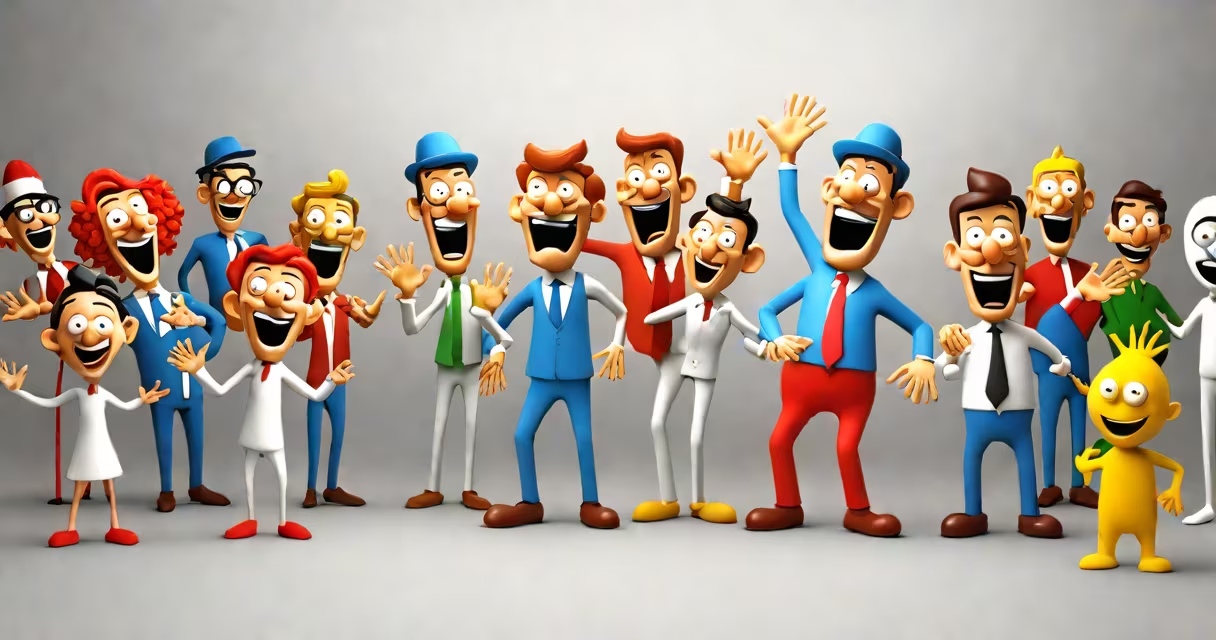
The phrase "everybody plays the fool" describes moments when individuals act irrationally or comically under stress, embarrassment, or social pressure. It's not a literal claim about everyone being foolish, but a commentary on how people reveal their vulnerabilities in high-stakes situations.
Originating in late 20th-century American media, the phrase gained traction through film dialogue, song lyrics, and internet memes. It reflects a shared cultural understanding: even composed people lose control when caught off guard. The expression functions as both observation and satire, pointing out human fallibility with irony.
It is not a formal idiom with a single source. Instead, it emerged from repeated usage across entertainment platforms. The earliest documented use appears in the 1996 film Office Space, where a character says, "I don't know, maybe everybody plays the fool." This line was later quoted widely online, especially in forums discussing workplace absurdity.
When someone says "everybody plays the fool," they're usually commenting on a situation where a person's actions contradict their usual composure. The speaker observes a gap between expectation and reality - someone who seemed competent suddenly stumbles, laughs too hard, or says something inappropriate.
This moment often follows a trigger: a sudden surprise, public scrutiny, or emotional overload. The fool-like behavior isn't intentional. It's involuntary - a reflexive response to stress. The phrase captures that split-second loss of dignity, which many find relatable.
For example, during a presentation, a professional might trip while walking to the podium. Their colleagues don't mock them - they recognize the moment as universal. The observer might mutter, "Everybody plays the fool," acknowledging that anyone could have done the same.
The phrase appears most frequently in comedy, satire, and social commentary. It's used in TV shows like Friends and Parks and Recreation, where characters make awkward mistakes during serious moments. It's also common in online discussions about viral fails, such as athletes missing shots or politicians tripping on stage.
It is often misused to excuse poor behavior. Some people apply it to justify incompetence or laziness, saying, "Well, everybody plays the fool," as if that makes failure acceptable. That's a distortion. The original meaning isn't permission to fail - it's recognition that failure happens to everyone, including those we admire.
A key distinction: the phrase doesn't imply that people are inherently foolish. It identifies specific moments of vulnerability. A CEO might give a flawless speech, then laugh uncontrollably when asked a silly question. That laugh isn't proof of incompetence - it's proof of humanity.
Not all fool acts are the same. The following table outlines common categories based on context and intent:
| Type | Description | Example |
|---|---|---|
| Embarrassment-based | Reacts excessively to minor social slips | Tripping over a rug at a wedding |
| Stress-induced | Acts irrational under pressure | Freezing during a job interview |
| Overcompensation | Exaggerates confidence to hide insecurity | Boasting about skills they don't have |
| Self-aware irony | Mocks their own mistake openly | Saying "I'm playing the fool" after a joke falls flat |
Each type reveals a different facet of human behavior. The embarrassment-based fool is most common in public settings. The stress-induced fool appears in high-stakes environments like exams or performances. Overcompensation reflects internal anxiety masked as bravado. Self-aware irony is rare but useful - it turns shame into connection.
People connect with "everybody plays the fool" because it validates imperfection. In a culture that glorifies success, the phrase offers relief: you don't have to be flawless to belong. It's a reminder that even experts make mistakes.
Research from the University of California, Berkeley, shows that audiences respond more positively to performers who show small flaws. A 2018 study published in Journal of Personality and Social Psychology found that people perceived leaders as more trustworthy when they admitted minor errors. This supports the idea that fool-like behavior, when authentic, builds empathy.
One non-obvious fact: the phrase is rarely used in formal writing. It appears almost exclusively in spoken language, memes, and casual conversation. Its power lies in informality - it's not meant to be analyzed, but felt. When someone says it, they're sharing a moment of collective recognition.
In 2021, a viral video showed a man attempting to fix a broken coffee machine at a café. He tried multiple methods - tapping it, unplugging it, even whispering to it. After failing, he looked at the camera and said, "Well, everybody plays the fool." The clip spread rapidly on TikTok and Twitter, amassing over 12 million views.
What made it work wasn't just the humor. It was the authenticity. The man didn't pretend to be skilled. He acknowledged his struggle. Viewers saw themselves in him. The phrase became a meme template - people used it to caption their own small failures, from spilling drinks to forgetting passwords.
I once filmed a similar moment during a team meeting. A colleague presented a complex chart, then paused, stared at it, and said, "Wait... I think I just played the fool." The room laughed. Not at him - with him. That instant shifted the mood from tension to trust. We weren't just coworkers; we were humans sharing a moment.
"Everybody plays the fool" is not a synonym for "everyone is stupid." It doesn't suggest ignorance or lack of intelligence. It's not a judgment. It's a statement about behavior under pressure - not identity.
It's also not the same as "everyone makes mistakes." Mistakes are errors in action. Foolishness implies a visible, often exaggerated, reaction. You can make a mistake without acting foolish. The phrase applies when the reaction overshadows the error itself.
Another misconception: the phrase is sometimes cited as a quote from Shakespeare or Nietzsche. It is not. No known literary source attributes it to either. It's a modern idiom born from internet culture and everyday speech.
"Everybody plays the fool" is a cultural shorthand for the moment when composure cracks under pressure. It's not a rule, a warning, or a judgment. It's a shared acknowledgment of human fragility. Used correctly, it softens tension. Used incorrectly, it dismisses effort. The phrase thrives in moments of honesty - when people admit they're not perfect, and that's okay.
Understanding this phrase helps decode modern social interaction. It explains why we laugh at our own failures. It shows why vulnerability connects us more than perfection. And it reminds us that sometimes, playing the fool is the most human thing we can do.