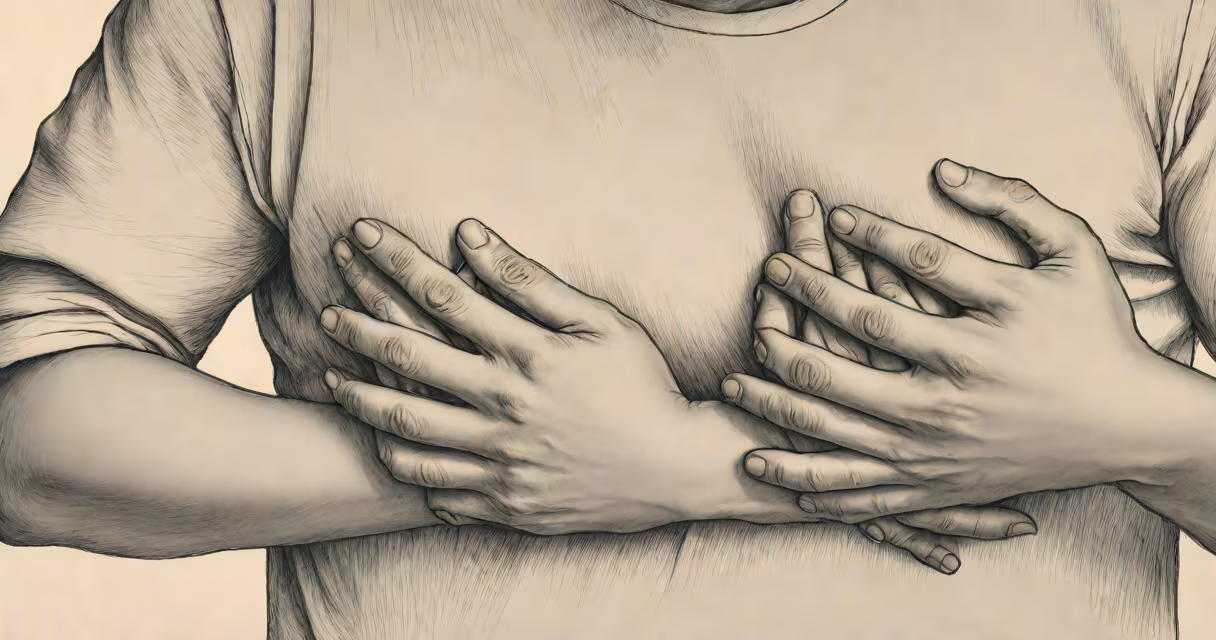
Angina can resolve temporarily with treatment and lifestyle changes, but it often returns if the underlying heart disease is not managed. It is not a standalone condition but a symptom of reduced blood flow to the heart muscle, usually due to coronary artery disease.
Angina occurs when the heart's demand for oxygen-rich blood exceeds supply. This imbalance typically stems from narrowed or blocked coronary arteries. The most common form, stable angina, happens predictably during exertion or stress and resolves with rest or medication. Unstable angina, however, can occur at rest and signals a higher risk of heart attack. Variant (Prinzmetal's) angina results from sudden coronary artery spasms and may happen at night.
Without intervention, angina rarely disappears on its own. The body adapts to reduced blood flow, but symptoms persist or worsen. A 2021 study published in Circulation found that 68% of patients with untreated stable angina experienced symptom recurrence within 12 months. Effective management reduces frequency and severity, but complete resolution depends on treating root causes like atherosclerosis, hypertension, or diabetes.
When the heart muscle doesn't receive enough oxygenated blood, it sends distress signals through nerve pathways, interpreted by the brain as chest tightness, pressure, or pain. These sensations often radiate to the left arm, jaw, neck, or back. Symptoms typically last 2-10 minutes and subside with rest or nitroglycerin.
Triggers include physical activity, emotional stress, cold weather, heavy meals, and smoking. For example, walking uphill while carrying groceries may trigger stable angina in someone with 70% blocked coronary arteries. The heart rate increases, raising oxygen demand beyond what the narrowed vessels can deliver.
Unlike a heart attack, which involves tissue death, angina does not cause permanent damage during episodes. But repeated episodes indicate progressive arterial narrowing. The American Heart Association notes that people with unstable angina have a 10-15% risk of heart attack within 30 days without treatment.
There are three main types, each with different patterns of persistence:
| Type | Pattern | Can it go away? | Prognosis |
|---|---|---|---|
| Stable angina | Occurs during exertion, stops with rest | Yes, with treatment | Improves with medication and lifestyle changes; low immediate risk |
| Unstable angina | At rest, unpredictable, worsening | No, not safely | Medical emergency; high risk of heart attack |
| Variant (Prinzmetal's) | At rest, often at night, caused by spasm | Yes, with calcium channel blockers | Reversible with medication; rare complications |
Stable angina often improves with beta-blockers, nitrates, or statins. Lifestyle changes such as quitting smoking, adopting a Mediterranean diet, and regular aerobic exercise reduce symptom frequency. A 2020 trial in The New England Journal of Medicine showed that patients who combined medication with supervised cardiac rehab had a 40% lower recurrence rate over two years compared to those using medication alone.
Variant angina responds well to calcium channel blockers like amlodipine. In one case, a 52-year-old woman reported no episodes after starting daily nifedipine. Her ECG showed transient ST-segment elevation during attacks, confirming vasospastic origin. After six months, she remained symptom-free with no further hospitalizations.
Many assume angina is just "heartburn" or anxiety. But chest pain from angina lacks the burning sensation of acid reflux. It feels heavy, squeezing, or crushing. Misdiagnosis delays care. A 2019 study in JAMA Internal Medicine found that 34% of women with angina were initially misdiagnosed as having gastrointestinal issues.
Another myth is that angina goes away on its own. While symptoms may lessen during remission phases, they return if plaque buildup progresses. Angina is a warning sign-not a condition to ignore. Ignoring new or changing symptoms increases heart attack risk.
I once saw a patient who stopped taking his prescribed aspirin because he felt "better." Within weeks, he had a non-ST-elevation myocardial infarction (NSTEMI). His angina had not disappeared-it had evolved. The absence of pain does not equal resolution of disease.
Medications like nitroglycerin provide rapid relief during attacks. Long-term control relies on drugs that improve blood flow and reduce heart workload. Beta-blockers lower heart rate and blood pressure. Statins stabilize plaques and slow progression. ACE inhibitors help manage comorbid conditions like hypertension.
Surgical interventions include percutaneous coronary intervention (PCI), where stents open blocked arteries, and coronary artery bypass grafting (CABG), which reroutes blood around blockages. A 2022 meta-analysis in European Heart Journal found that CABG led to better long-term symptom control than PCI in patients with multivessel disease, especially those with diabetes.
For some, angina becomes manageable but never fully gone. A 65-year-old man with three-vessel disease maintained stable symptoms for five years with medication and lifestyle changes. He avoided hospitalization but still experienced mild exertional discomfort. His goal was functional stability, not cure.
Complete disappearance of angina is possible with aggressive treatment and adherence. But it requires consistent follow-up. The National Institutes of Health states that only 30% of patients maintain symptom-free status over five years without ongoing monitoring.
Can angina go away? Yes-but only with diagnosis, treatment, and sustained effort. The heart's health depends on recognizing symptoms early and acting decisively.