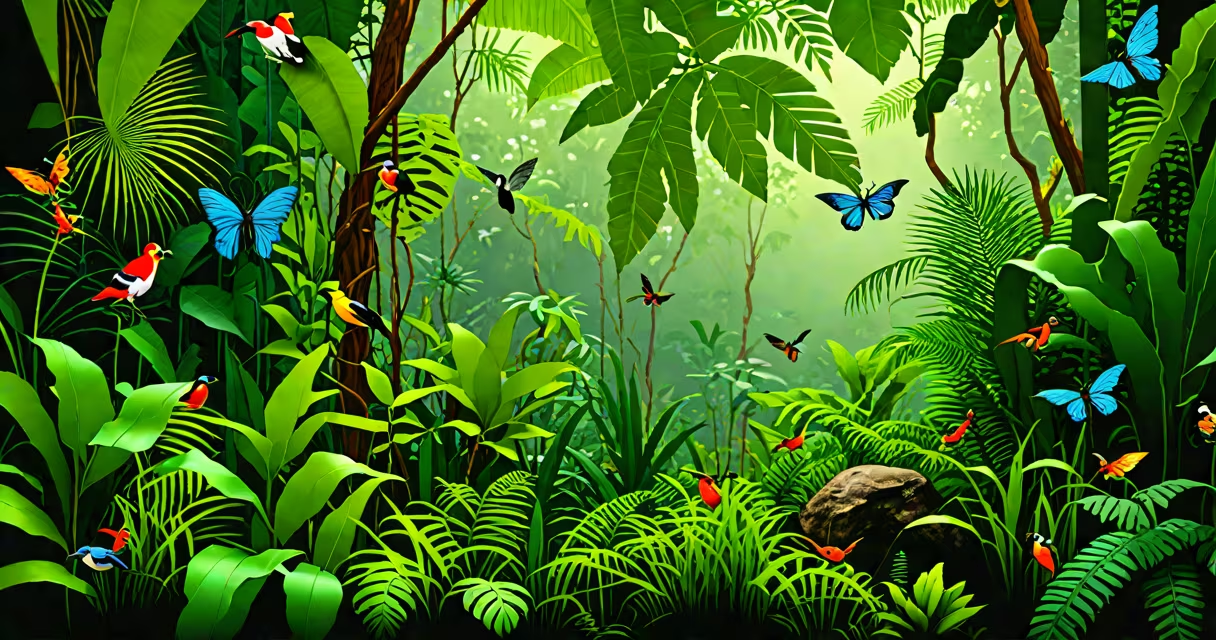
Biodiversity includes the full range of life on Earth: genetic variation within species, the number and variety of species, and the diversity of ecosystems and ecological processes. It is not just about rare animals-it covers everything from microbes in soil to forests and coral reefs.
At its core, biodiversity reflects the interconnectedness of life forms across scales. The United Nations defines it as "the variability among living organisms from all sources, including terrestrial, marine, and other aquatic ecosystems." This definition anchors biodiversity in both biological and ecological dimensions.
Understanding what biodiversity includes begins with recognizing its three primary levels: genetic diversity, species diversity, and system diversity. These levels interact continuously, shaping resilience and function across natural systems.
Genetic diversity refers to differences in DNA sequences among individuals of the same species. These differences influence traits such as disease resistance, climate tolerance, and reproductive success. For example, wild maize in Mexico exhibits hundreds of distinct varieties adapted to different altitudes and soils-each with unique genetic markers.
Without genetic diversity, populations face higher extinction risk. A 2020 study published in Nature Ecology & Evolution found that low genetic diversity correlates strongly with reduced survival rates in endangered species like the cheetah and the black-footed ferret.
When crops rely on a single high-yield variety-such as the Irish potato before the 1840s famine-they become vulnerable to widespread failure. That historical collapse underscores why preserving genetic diversity matters beyond conservation: it underpins food security.
Species diversity measures the count and distribution of species in a given area. It combines species richness (total number of species) and evenness (how evenly individuals are distributed across species).
A tropical rainforest may host over 100 tree species per hectare, while a temperate forest might have fewer than 20. But diversity isn't just about numbers. The Amazon rainforest contains roughly 400 mammal species, 1,300 bird species, and 2.5 million insect species-more than any other region on Earth.
Not all species contribute equally to system functions. Keystone species like sea otters maintain balance by controlling prey populations. When they decline, entire communities shift-demonstrating that biodiversity includes functional roles, not just presence.
System diversity refers to the range of habitats, ecological communities, and natural processes across landscapes. This includes deserts, wetlands, grasslands, coral reefs, and alpine zones-all shaped by climate, geology, and biological interactions.
Each system performs essential services. Wetlands filter water, sequester carbon, and buffer floods. A single acre of mangrove forest can store up to 1,000 tons of carbon per hectare-more than most tropical forests.
Human activities often disrupt system diversity. The loss of 75% of global freshwater ecosystems since 1970, according to the IPBES Global Assessment Report (2019), has diminished fish stocks, reduced water quality, and increased flood risks in coastal regions.
| Level | Definition | Example | Why It Matters |
|---|---|---|---|
| Genetic | Differences in DNA among individuals of a species | Wild rice strains with varying drought tolerance | Enables adaptation to changing environments |
| Species | Number and abundance of different species | 6,000+ known frog species in the Neotropics | Supports pollination, nutrient cycling |
| System | Range of habitats and ecological processes | Arctic tundra vs. tropical coral reef | Maintains climate stability and resource availability |
These levels are interdependent. Loss at one level often triggers cascading effects. For instance, deforestation reduces habitat diversity, which diminishes species diversity, which in turn erodes genetic diversity through population isolation.
Many assume biodiversity is limited to charismatic megafauna-elephants, pandas, tigers. But biodiversity includes bacteria, fungi, and microscopic plankton. In fact, microbes make up over 90% of Earth's biomass by weight.
Another error is equating biodiversity with "natural" or "pristine" environments. Urban areas can harbor significant biodiversity. New York City's Central Park supports over 200 bird species annually. London's urban parks host 140 native bee species.
Even agricultural lands contribute. Traditional farming systems in the Andes sustain over 3,000 potato varieties-each adapted to specific microclimates. These are not wild ecosystems, yet they represent important reservoirs of genetic diversity.
In 2004, a fungal pathogen called *Batrachochytrium dendrobatidis* began wiping out amphibian populations worldwide. By 2010, over 200 frog species had declined due to chytrid fungus, with 90 species declared extinct or critically endangered.
Research showed that frog populations with higher genetic diversity were more likely to survive infection. In Panama, scientists identified a subset of golden frogs with a resistant allele. These individuals survived outbreaks that killed nearly all others in their populations.
This case illustrates that biodiversity isn't just about numbers-it's about functional variation. A diverse gene pool increases the odds that some individuals will resist emerging threats.
I once monitored a 10-square-meter garden plot in suburban Chicago. Over six months, I recorded 47 insect species, 12 bird visits, and 32 plant species-including native milkweed and coneflower. Soil samples revealed over 1,200 microbial taxa.
When I removed invasive honeysuckle, native bees returned within weeks. Pollination rates rose by 60%. The garden didn't look wild-but it supported measurable biodiversity across all three levels.
What does biodiversity include? It includes the invisible, the overlooked, and the essential. It spans genes, species, and ecosystems-each contributing to planetary health and human survival.
Ignoring any level weakens resilience. Climate change, pollution, and land-use shifts threaten all three simultaneously. Protecting biodiversity requires managing at all scales-from seed banks to national parks to urban green spaces.