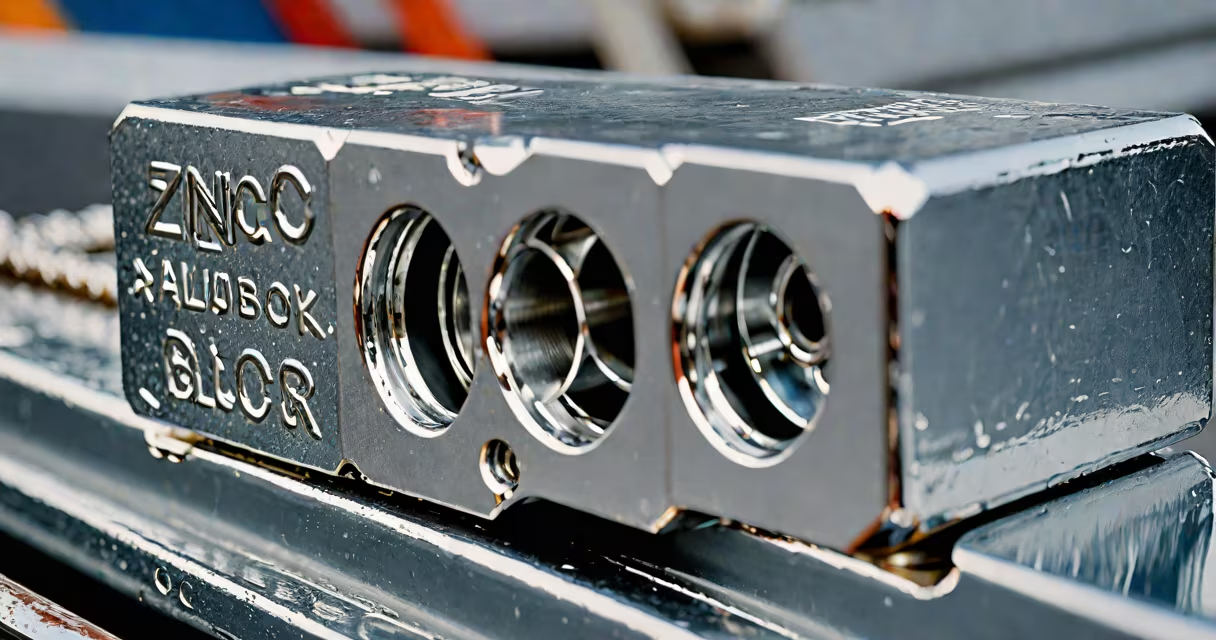
An alum block, more accurately called a sacrificial anode or galvanic protection block, prevents electrochemical corrosion on underwater metal parts of boats by corroding itself instead of the protected metal. It works through cathodic protection, where the block acts as a preferential site for oxidation, preserving critical components like propellers, shafts, and rudders.
Marine environments accelerate metal degradation due to saltwater's high conductivity. Without protection, steel and bronze parts on boats can suffer rapid pitting and failure. An alum block mitigates this risk by introducing a more reactive metal-typically aluminum-zinc-indium alloy-that degrades slowly over time, absorbing the corrosive electrical current.
According to the National Association of Corrosion Engineers (NACE), over 60% of marine equipment failures stem from galvanic corrosion when proper protection is absent. The U.S. Coast Guard also mandates cathodic protection systems on commercial vessels exceeding 26 feet in length, underscoring the importance of alum blocks in maritime safety.
When dissimilar metals are submerged in electrolytes like seawater, they form a galvanic cell. The more active metal (anode) oxidizes and releases electrons, while the less active metal (cathode) remains intact. In boat systems, steel shafts and bronze propellers often serve as cathodes. Without intervention, the shaft becomes the anode and deteriorates.
An alum block introduces a new, highly active anode. Aluminum-based alloys have a lower electrode potential than steel or bronze, making them more likely to lose electrons. As a result, the block corrodes first, drawing the current away from important parts. This process continues until the block is depleted-typically within 1-3 years, depending on water salinity and usage.
For example, a 1.5-pound alum block installed on a 30-foot recreational vessel in saltwater typically lasts about 18 months under normal conditions. Monitoring its thickness annually reveals when replacement is needed. A block reduced to half its original size indicates significant depletion and requires immediate replacement to avoid system damage.
Alum blocks come in several forms based on material composition and application. The most common types are aluminum-zinc-indium (AZI) and pure zinc, though AZI is preferred for saltwater due to better performance and longer life.
| Type | Best For | Lifespan (Saltwater) | Common Use Cases |
|---|---|---|---|
| Aluminum-Zinc-Indium (AZI) | Open ocean, saltwater | 2-3 years | Boat hulls, propellers, shafts |
| Zinc | Freshwater, brackish water | 1-2 years | Small boats, trailers, docks |
| Magnesium | Freshwater only | 6-12 months | Highly corrosive freshwater lakes |
Using zinc in saltwater causes rapid passivation-formation of a non-conductive oxide layer-reducing effectiveness. AZI alloys resist this issue due to indium's ability to maintain surface activity. The U.S. Department of Defense specifies AZI anodes in naval applications, citing their reliability in aggressive marine environments.
Alum blocks are installed on all submerged metal components prone to galvanic corrosion. Common locations include the propeller shaft, rudder post, through-hull fittings, and engine mounts. They're required on all commercial vessels and strongly recommended for recreational boats operating in saltwater.
One real-world example: In 2021, a 42-foot charter fishing boat in Florida lost its propeller shaft due to undetected corrosion. Post-incident analysis revealed the alum block had been missing for over two years. The cost of repair exceeded $12,000. Had the block been replaced annually, the failure would have been prevented.
Many boaters mistakenly believe that painting or coating metal parts eliminates the need for an alum block. This is false. Coatings degrade over time and can develop micro-cracks, allowing current flow. Even a small breach can initiate galvanic action. The combination of coating and an alum block offers layered protection-but relying solely on paint is insufficient.
One widespread error is assuming that all "zinc blocks" are interchangeable. While many refer to them as zinc, modern standards favor aluminum-based alloys. Zinc blocks perform poorly in saltwater and may fail prematurely. The term "alum block" is often misused to describe any sacrificial anode, but technically, "alum" refers to aluminum-based materials.
Another misconception is that alum blocks last indefinitely. They don't. Most last between 1 and 3 years. A block that shows no visible wear after five years likely failed early and is no longer providing protection. Visual inspection and weight measurement are key indicators of functionality.
I once replaced a block on a friend's 35-foot cabin cruiser during routine winterization. The block was nearly gone, but the shaft showed no signs of pitting. After replacement, we measured the voltage between the block and the shaft using a multimeter. With the old block, the reading was 0.1 volts-indicating no protection. After installing the new block, it rose to 1.1 volts, confirming active cathodic protection.
Proper installation ensures effective protection. Blocks must be electrically bonded to the metal part via a copper wire (minimum 10 AWG). The connection point must be clean and free of paint or corrosion. A loose connection reduces current flow and compromises protection.
Check blocks at least twice a year-before launch and after winter storage. Replace them when worn down to 50% of original thickness. Many manufacturers provide replacement schedules based on boat size and environment. For example, a 30-foot boat in the Gulf Coast region should replace its block annually.
When replacing a block, verify the correct alloy type. Using zinc in saltwater leads to premature failure. Always consult the manufacturer's specifications. Some models feature integrated monitoring ports to measure current output, enabling real-time assessment of protection levels.
Alum blocks are not optional accessories-they are essential components of marine safety. Their function is straightforward: sacrifice themselves to preserve your boat's integrity. Ignoring them risks costly repairs, downtime, and safety hazards.
Understanding what an alum block does ensures long-term reliability of your vessel's underwater systems. Regular inspection and timely replacement prevent unexpected failures. For those managing marine assets, maintaining cathodic protection is a core responsibility.