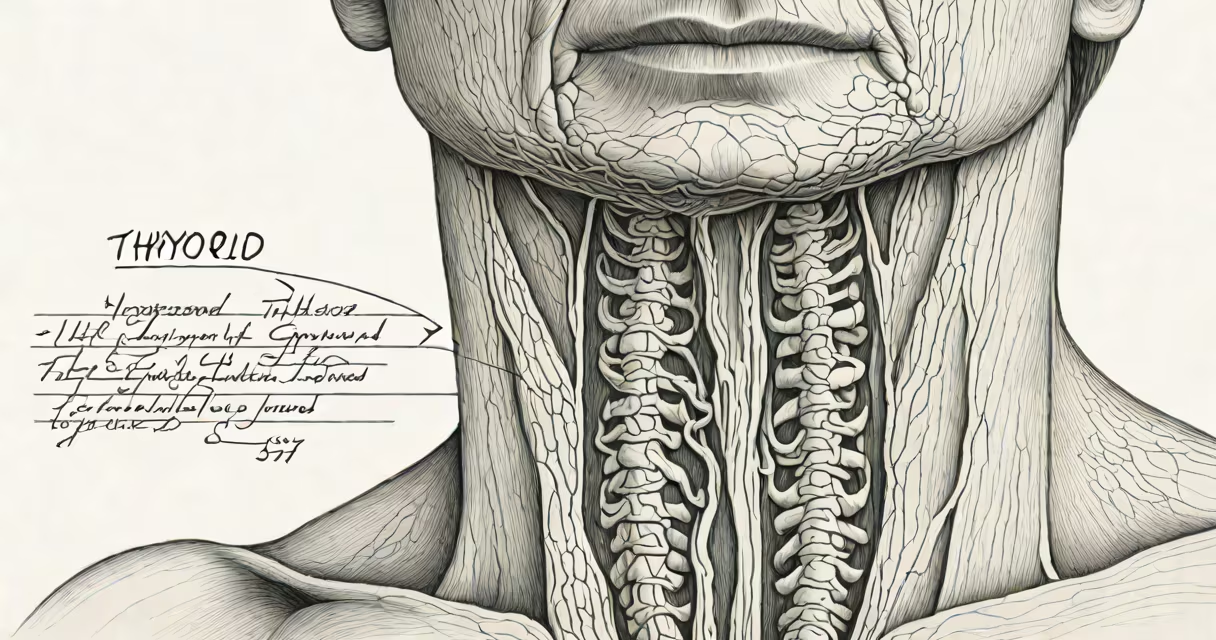
A large thyroid, medically known as a goiter, occurs when the thyroid gland enlarges beyond normal size due to underlying hormonal imbalance, nutrient deficiency, or structural growths. This condition affects about 5% of adults in the U.S., according to the American Thyroid Association.
Goiters develop when the thyroid must work harder to produce sufficient thyroid hormones. The most common cause is iodine deficiency, especially in regions where dietary iodine is low. Other drivers include autoimmune conditions like Hashimoto's thyroiditis and Graves' disease, benign nodules, and rare thyroid cancer. Not all goiters affect hormone levels-some are euthyroid, meaning thyroid function remains normal despite visible enlargement.
Goiters vary in size. A small nodule may go unnoticed, while a large multinodular goiter can compress the windpipe or esophagus, causing hoarseness, difficulty swallowing, or shortness of breath. Diagnosis begins with a physical exam, blood tests for TSH, T3, T4, and imaging such as ultrasound or radioactive iodine uptake scans.
The thyroid sits at the base of the neck, just below the Adam's apple. It produces hormones that regulate metabolism, heart rate, body temperature, and energy levels. When the body lacks iodine-a mineral essential for making thyroid hormones-the gland compensates by growing larger to capture more iodine from the bloodstream. This leads to diffuse goiter formation, often seen in areas with poor soil iodine content.
In autoimmune diseases, the immune system attacks the thyroid tissue. In Hashimoto's thyroiditis, chronic inflammation leads to gradual gland destruction and eventual hypothyroidism. The gland often swells early in the disease process, sometimes, even before hormone levels drop. In Graves' disease, antibodies mimic TSH and overstimulate the thyroid, leading to hyperthyroidism and rapid gland enlargement.
Nodules-solid or fluid-filled lumps-can form within the thyroid. Most are benign, but some grow large enough to cause cosmetic concern or compress nearby structures. Ultrasound-guided fine-needle aspiration biopsy is used to assess suspicious nodules for cancer risk. A single large nodule is called a solitary nodule; multiple nodules suggest multinodular goiter.
Goiters fall into distinct categories based on their cause and appearance. The table below outlines the major types and their root triggers.
| Type | Primary Cause | Prevalence | Key Diagnostic Clue |
|---|---|---|---|
| Iodine-deficiency goiter | Lack of dietary iodine | Common in developing regions | Endemic in areas with low soil iodine; often bilateral and symmetrical |
| Hashimoto's goiter | Autoimmune destruction of thyroid tissue | Most common cause in the U.S. | High TPO antibodies; firm, rubbery texture on exam |
| Graves' goiter | Autoantibodies stimulate TSH receptor | Less common than Hashimoto's | Associated with eye bulging (exophthalmos); diffuse enlargement |
| Multinodular goiter | Benign nodules forming over time | More frequent in older adults | Ultrasound shows multiple cystic or solid nodules |
| Thyroid cancer-related goiter | Malignant tumor growth | Rare; <0.5% of all goiters | Hard, immobile nodule; may have cervical lymph node involvement |
One non-obvious distinction: not all goiters are caused by hormone imbalance. Some, particularly multinodular ones, remain euthyroid-meaning TSH and free T4 levels stay within normal range. These cases are often discovered incidentally during imaging for unrelated issues.
Goiters occur worldwide but are more prevalent in regions with low iodine intake. The World Health Organization estimates that over 2 billion people globally consume insufficient iodine. In the U.S., iodized salt has reduced deficiency-related goiters since the 1920s, yet they still appear in populations avoiding iodized salt or consuming goitrogenic foods like raw cruciferous vegetables in excess.
Women are affected 5-10 times more often than men, especially between ages 30 and 60. Hormonal shifts during pregnancy, postpartum, and menopause increase risk. A personal history of autoimmune disease raises odds-up to 20% of patients with Hashimoto's develop a goiter over time.
Environmental factors matter. Exposure to radiation, especially in childhood, increases long-term thyroid cancer risk. In Fukushima, Japan, children exposed to fallout had a higher incidence of thyroid nodules and goiters decades later, per a 2018 study published in Environmental Health Perspectives.
Many assume a large thyroid always means hyperthyroidism. That's false. A goiter can result from underactive thyroid function, as in Hashimoto's, or even normal function. Only about 15% of goiters are associated with abnormal hormone levels.
Another myth: all goiters require surgery. Not true. Small, asymptomatic goiters are monitored with periodic exams and ultrasounds. Treatment depends on symptoms, size, and whether nodules are suspicious. Levothyroxine suppression therapy may shrink goiters in some cases, though evidence is mixed.
During a clinical visit, I once examined a 48-year-old woman with a visible neck swelling. She reported no fatigue or weight changes. Blood tests showed normal TSH and free T4. Ultrasound revealed a 3 cm multinodular goiter with no signs of malignancy. After counseling, she opted for observation-no medication, no surgery. Her goiter remained stable over two years.
Understanding what causes a large thyroid involves separating symptom patterns from biological mechanisms. Accurate diagnosis relies on clinical evaluation, blood work, and imaging-not assumptions. Early detection prevents complications like airway compression or vocal cord damage. Knowing the root cause guides treatment, not fear.