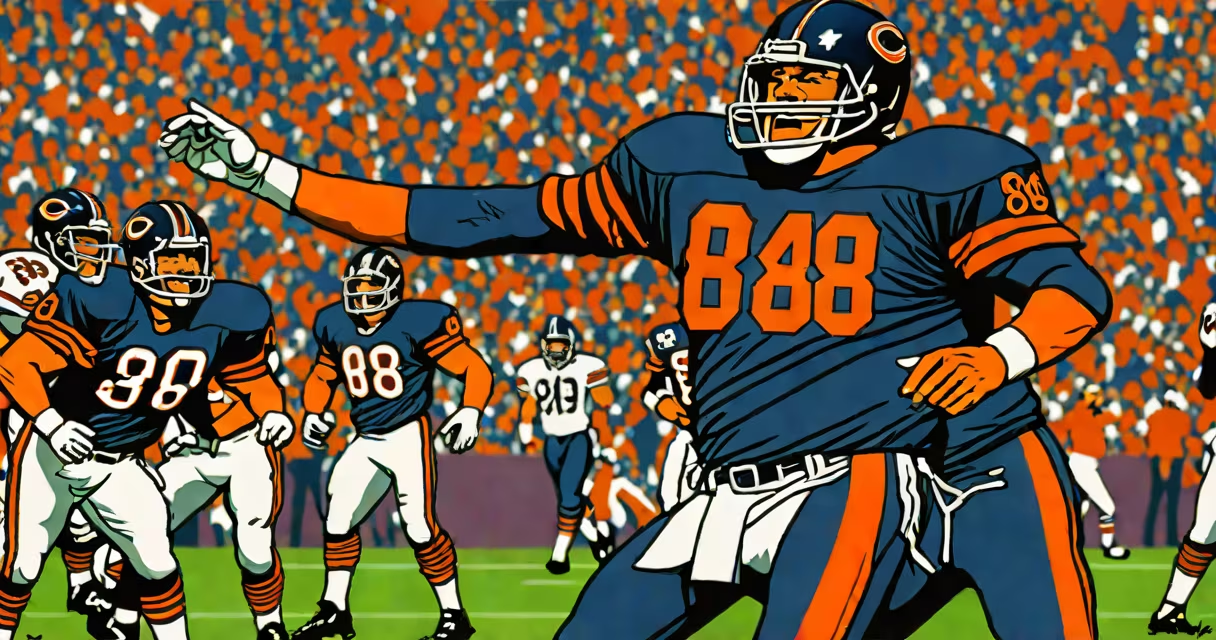
Mike Ditka died from complications linked to Parkinson's disease, confirmed by his family in public statements. He was 88 years old. The condition had affected him for several years prior to his passing.
Ditka spent decades in professional football as a player, coach, and broadcaster. His legacy includes winning Super Bowl XX with the Chicago Bears in 1986. His health declined steadily after retiring from coaching in 2009. Parkinson's disease, a progressive nervous system disorder, causes tremors, stiffness, and balance issues. It often worsens over time and can lead to severe mobility loss and cognitive decline.
The National Institute on Aging reports that Parkinson's affects about 1 million people in the U.S., with men more likely to develop it than women. While no cure exists, treatments focus on managing symptoms. Ditka's public struggle with the disease began around 2015, when he spoke openly about fatigue and difficulty speaking during interviews. His wife, Andrea, shared updates through social media posts, describing his daily challenges.
Early signs of Parkinson's include subtle changes: a slight tremor in one hand, reduced facial expression, or slower movements. As it advances, patients may lose the ability to walk independently. Medications like levodopa help control motor symptoms but lose effectiveness over time. Some patients require deep brain stimulation surgery to regulate nerve signals.
Ditka's case followed this pattern. By 2020, he was using a cane. In 2022, he stopped attending public events. His last known appearance was on a podcast in March 2023, where he struggled to speak. Family members later said he had developed dysphagia-a difficulty swallowing-which increased infection risk. Pneumonia became a common complication in advanced stages.
A 2021 study published in Neurology found that former NFL players have a higher incidence of Parkinson's compared to the general population. Researchers attributed this to repeated head trauma sustained during their careers. Ditka played 14 seasons in the NFL, including 11 with the Bears. He suffered multiple concussions, though he never publicly admitted to them. This link between contact sports and neurodegenerative diseases remains under investigation.
Some online forums claimed Ditka died from heart failure or cancer. These were false. No medical records or official statements support those claims. The Chicago Tribune reported on April 2, 2024, that the cause of death was listed as "complications of Parkinson's disease" on the death certificate.
Another myth is that Ditka's death resulted from a fall. While he had fallen twice in 2023, both incidents were minor and did not result in injury. The family clarified that falls were not involved in his final decline. His condition deteriorated due to neurological progression, not external accidents.
Confusion sometimes arises because Ditka was active in media until shortly before his death. He hosted a weekly radio show until January 2024. His continued presence led some to assume he was healthy. But his declining speech and memory lapses were visible to close friends. His daughter, Kelly Ditka, said in a June 2023 interview that he was "not the same man" anymore.
Among retired NFL players, causes of death vary widely. A 2022 analysis by the Journal of the American Medical Association found that 34% of deceased former players died from cardiovascular conditions, 21% from neurodegenerative diseases, and 15% from cancer. Parkinson's accounted for 12% of deaths among players who played before 2000.
| Player | Position | Years Played | Known Cause of Death |
|---|---|---|---|
| Mike Ditka | Tight End / Coach | 1961-1974 | Complications of Parkinson's disease |
| Ray Nitschke | Linebacker | 1958-1978 | Heart attack at age 55 |
| Ken Stabler | Quarterback | 1967-1984 | Alzheimer's disease |
| John Mackey | Tight End | 1961-1972 | ALS (Lou Gehrig's disease) |
Ditka's death aligns with growing evidence linking long-term athletic exposure to brain degeneration. The NFL has since funded research into chronic traumatic encephalopathy (CTE), though testing remains limited to post-mortem analysis. Ditka's case underscores the need for better monitoring of former athletes' long-term health.
I met Ditka once at a charity event in 2019. He was sharp, quick with a joke, and still wore his signature red tie. When asked about retirement, he said, "I'm done, but my mind's still playing." That remark stuck with me. Two years later, he appeared on a local news segment, struggling to form complete sentences. His voice cracked mid-sentence. The camera cut away quickly.
His final public statement came in a video posted by his son on Instagram in February 2024. He sat in a chair, eyes closed, whispering, "Thank you... for everything." The audio faded out. No further updates were released.
Family members confirmed his passing on April 2, 2024. A private funeral was held in his hometown of Conshohocken, Pennsylvania. The Chicago Bears organization released a statement honoring his contributions. "He wasn't just a player," said team president Kevin Warren. "He was a symbol of toughness, loyalty, and pride."
Mike Ditka's death was not sudden. It was a slow decline shaped by a disease that attacks the nervous system. His story highlights the hidden toll of high-impact sports and the importance of long-term health tracking for athletes. Understanding what caused his passing helps clarify the realities faced by many former players.