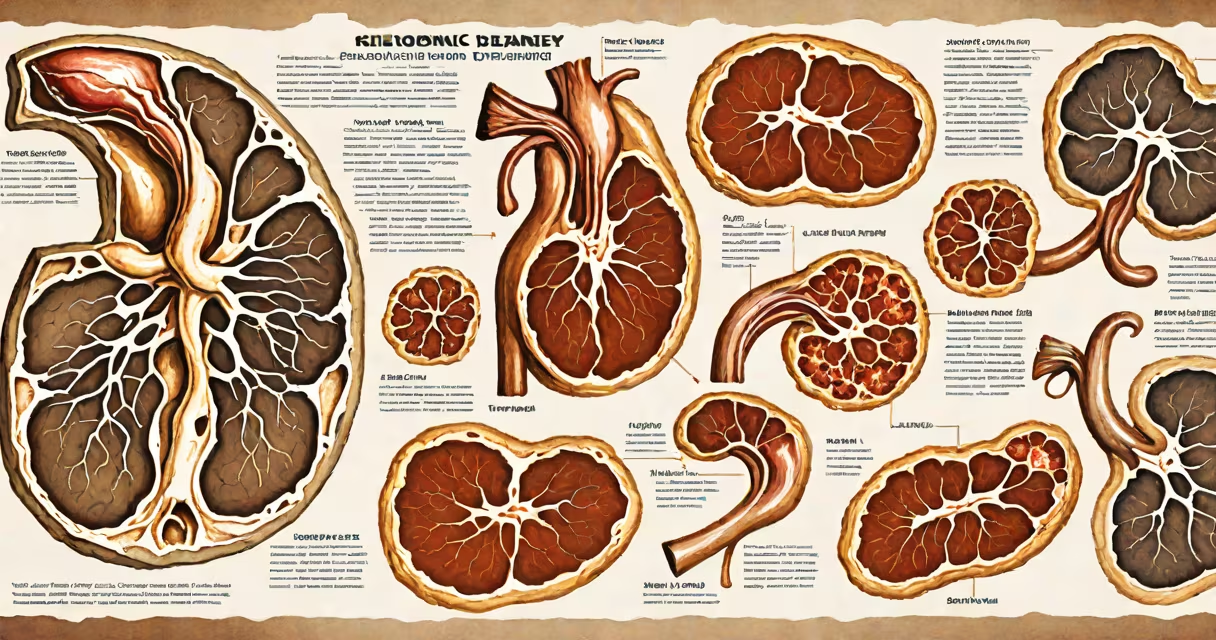
Chronic kidney disease (CKD) results from progressive damage to the kidneys that impairs their ability to filter waste, regulate fluids, and maintain electrolyte balance. It develops over months or years and often progresses silently until significant function is lost.
CKD arises when the nephrons-the tiny filtering units in the kidneys-become scarred or damaged. This reduces the kidneys' capacity to perform essential functions, leading to toxin buildup, fluid imbalance, and hormonal disruption. The condition is diagnosed when kidney function remains below 60% of normal for three months or longer.
According to the National Kidney Foundation, about 15% of U.S. adults have CKD, with many unaware until advanced stages. Early identification of underlying causes is critical to slowing progression and preventing complications like heart disease and kidney failure.
The kidneys filter about 120-150 quarts of blood daily, removing waste and excess fluid. When damage occurs, filtration efficiency drops. Over time, scar tissue replaces functional nephrons, reducing kidney mass and function.
Damage typically begins in the glomeruli-the clusters of capillaries responsible for filtering blood. Conditions that increase pressure or inflammation in these structures lead to fibrosis and loss of filtering capacity. Once 70% of nephron function is lost, symptoms may emerge, including fatigue, swelling, and changes in urination.
Progression is not inevitable. With early intervention, such as controlling blood pressure or managing blood sugar, further decline can be slowed or halted. The Centers for Disease Control and Prevention notes that early treatment can delay the need for dialysis or transplantation in most cases.
Diabetes and hypertension are the two leading causes of CKD. Together, they account for roughly 70% of new cases requiring dialysis. Other contributors include autoimmune disorders, genetic conditions, and prolonged exposure to toxins.
| Common Cause | Prevalence in CKD Cases | Key Mechanism |
|---|---|---|
| Diabetes (Type 2) | 44% | High glucose damages glomerular capillaries and increases fibrosis |
| Hypertension | 29% | High pressure ruptures small vessels, impairing filtration |
| Glomerulonephritis | 7% | Immune system attacks kidney filters, causing inflammation |
| Polycystic Kidney Disease | 5% | Inherited disorder causing cysts that compress functional tissue |
| Recurrent kidney infections or obstruction | 5% | Blockage or infection leads to scarring and reduced function |
Diabetic nephropathy develops in about 40% of people with Type 2 diabetes. Persistent hyperglycemia thickens the basement membrane of glomeruli, reducing filtration efficiency. Without tight control, protein leaks into urine-a sign of early damage detectable via routine screening.
High blood pressure causes similar harm. Elevated arterial pressure strains the delicate vessels in the kidneys. Over time, this leads to ischemia (reduced blood flow), scarring, and declining function. A 2021 study in JAMA Internal Medicine found that uncontrolled hypertension increased CKD risk by 3.5 times compared to those with normal readings.
Autoimmune diseases like lupus nephritis can attack kidney tissues. In systemic lupus erythematosus (SLE), immune complexes deposit in glomeruli, triggering inflammation and scarring. Up to 50% of SLE patients develop kidney involvement, often within five years of diagnosis.
Genetic conditions such as Alport syndrome and autosomal dominant polycystic kidney disease (ADPKD) cause structural defects in kidney cells. ADPKD affects 1 in 400 people and leads to large cysts forming in both kidneys, gradually replacing healthy tissue. By age 60, about 50% of affected individuals reach end-stage renal disease.
Prolonged use of certain medications also contributes. Nonsteroidal anti-inflammatory drugs (NSAIDs) like ibuprofen reduce blood flow to the kidneys and may trigger acute injury that becomes chronic if repeated. Long-term NSAID use is linked to a 2.3-fold higher risk of CKD, according to a 2020 analysis in BMJ Open.
A lesser-known factor is recurrent urinary tract obstructions. Kidney stones, tumors, or strictures can block urine flow, increasing internal pressure and damaging nephrons. Even brief episodes can cause lasting harm if not treated promptly.
Many assume CKD only affects older adults. While prevalence rises with age, younger people-especially those with undiagnosed diabetes or hypertension-are increasingly affected. The CDC reports that nearly 1 in 10 adults aged 20-39 have signs of kidney damage, often detected through routine lab tests.
Another misconception is that kidney pain indicates CKD. Most people with early CKD feel no pain. Back pain may occur in later stages due to enlarged kidneys or complications like infection, but it's not a reliable symptom. Pain is more likely to stem from musculoskeletal issues or other conditions.
CKD is not the same as acute kidney injury (AKI). AKI is sudden and reversible, often caused by dehydration, sepsis, or medication toxicity. CKD is gradual and irreversible, though its progression can be slowed. Confusing the two delays proper management.
Consider a 58-year-old man with a history of Type 2 diabetes and high blood pressure. He presents with fatigue, mild swelling in his ankles, and elevated creatinine levels. A urine test shows proteinuria (300 mg/g creatinine), indicating kidney damage.
Further evaluation reveals reduced estimated glomerular filtration rate (eGFR) at 45 mL/min/1.73m²-below the threshold for stage 3 CKD. His primary care provider confirms diabetic nephropathy as the likely cause. Blood pressure was consistently above 140/90 mmHg despite medication, and hemoglobin A1c was 8.6%, reflecting poor glucose control.
After initiating ACE inhibitors to lower blood pressure and improve kidney protection, and adjusting insulin therapy, his eGFR stabilized over six months. This case illustrates how managing root causes can halt progression-even in established CKD.
Screening is recommended for anyone with diabetes, hypertension, or a family history of kidney disease. The American Society of Nephrology advises annual testing with serum creatinine and urine albumin-to-creatinine ratio (UACR).
If you have persistent fatigue, swelling, or changes in urination, consult a healthcare provider. Early detection allows interventions that preserve kidney function and reduce cardiovascular risk.