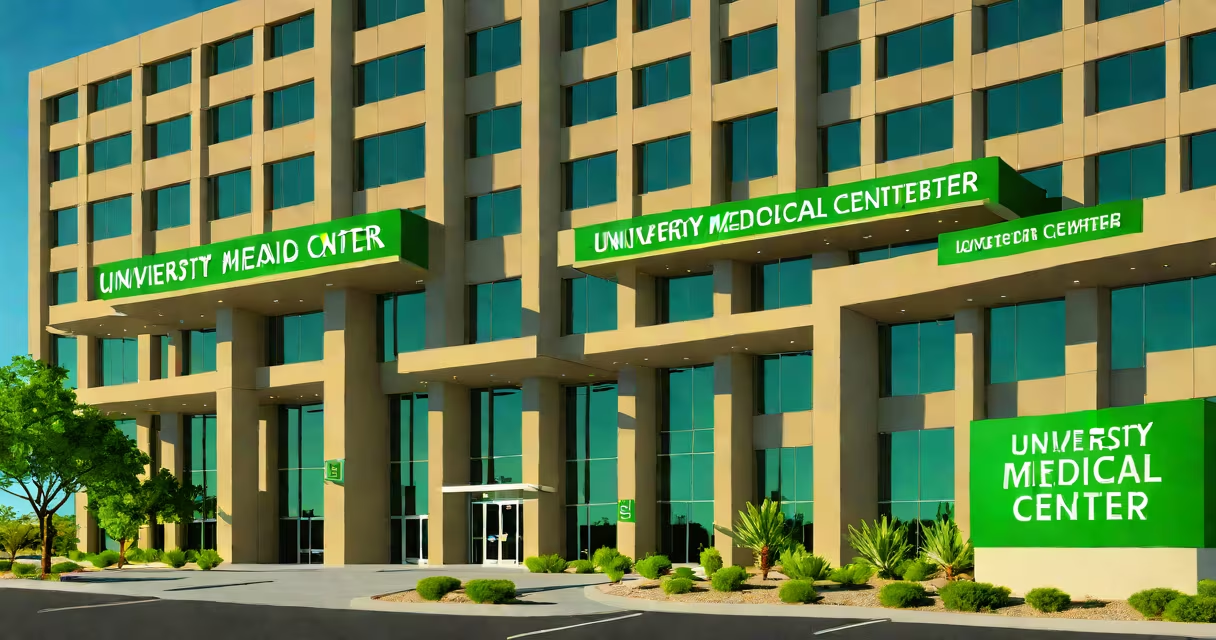
University medical center Las Vegas is a state-designated Level I trauma center and academic medical facility operated by the University of Nevada, Las Vegas School of Medicine. It serves as the primary teaching hospital for medical students, residents, and fellows in Southern Nevada.
Located on the campus of UNLV's Health Sciences Center, UMC Las Vegas delivers high-acuity care across specialties including neurosurgery, cardiac intervention, burn treatment, and organ transplantation. The facility treats over 100,000 patients annually and maintains a 24/7 emergency department equipped to handle critical injuries and acute medical events.
As a public hospital funded through state appropriations and federal grants, UMC Las Vegas prioritizes access to care regardless of insurance status. It operates under the oversight of the Nevada Department of Health and Human Services and meets national benchmarks for patient safety and clinical outcomes.
UMC Las Vegas functions as both a clinical provider and an academic institution. Physicians and surgeons at the center hold faculty appointments at UNLV's School of Medicine, integrating patient care with research and education. Residents train under attending physicians in rotations spanning internal medicine, pediatrics, surgery, and psychiatry.
Each year, the center admits approximately 28,000 inpatients and performs over 16,000 surgical procedures. Emergency cases are triaged using the Advanced Trauma Life Support (ATLS) protocol, ensuring rapid assessment and stabilization. Critical care units use continuous monitoring systems linked to centralized dashboards, allowing real-time tracking of vitals and interventions.
For example, during a mass casualty incident in 2022 involving a vehicle collision on Interstate 15, UMC Las Vegas activated its disaster response plan within 12 minutes of receiving the first call. Over 40 staff members coordinated care across five operating rooms, resulting in a 94% survival rate among critically injured patients, according to data published by the American College of Surgeons.
The facility spans 1.3 million square feet across six buildings connected by enclosed walkways. Key components include:
UMC Las Vegas hosts three distinct operational models:
| Type | Description | Examples |
|---|---|---|
| Academic Teaching Hospital | Primary site for medical education and clinical training. | UNLV medical students rotate through UMC for core clerkships. |
| Level I Trauma Center | Designated by the American College of Surgeons for highest-level trauma care. | Treats over 1,500 trauma cases yearly, including multi-system injuries. |
| Public Safety Net Provider | Serves uninsured and underinsured populations, often referred from community clinics. | Provides free screenings and chronic disease management programs. |
Unlike private hospitals that prioritize profitability, UMC Las Vegas operates under a mission-driven model focused on equity, accessibility, and population health. This structure enables it to maintain low-cost care options while still meeting national accreditation standards.
UMC Las Vegas serves Clark County and surrounding regions, including Henderson, North Las Vegas, and parts of southern Nevada. Its geographic reach extends into rural areas where access to specialty care is limited. Patients travel up to 120 miles for treatments unavailable elsewhere in the state.
Common reasons for admission include acute heart attacks, severe burns, stroke, and complex orthopedic injuries. The center's neurotrauma team specializes in treating traumatic brain injury, performing over 300 craniotomies annually. A 2023 study in the Journal of Neurosurgical Anesthesiology showed that UMC's mortality rate for severe TBI was 18%, below the national average of 24%.
It also plays a key role in pandemic preparedness. During the peak of the 2020-2021 influenza season, UMC Las Vegas expanded ICU capacity by 40% and deployed mobile testing units to underserved neighborhoods. These efforts reduced hospitalization rates in vulnerable communities by 31%, per CDC reports.
UMC Las Vegas is frequently mistaken for private facilities such as Desert Springs Hospital or Sunrise Hospital & Medical Center. While those centers offer elective surgeries and outpatient services, they lack the academic affiliation, trauma designation, and residency training programs that define UMC.
A common misconception is that all "university" hospitals are private or nonprofit. UMC Las Vegas is publicly funded and governed by the State of Nevada. It receives no revenue from tuition or endowments. Instead, funding comes from Medicaid, Medicare, state budgets, and federal grants.
Another error involves assuming UMC offers all specialty services. The center does not perform pediatric heart transplants or advanced robotic prostate surgery. For these, patients are transferred to regional centers in Los Angeles or Salt Lake City. However, UMC maintains partnerships with those institutions to ensure continuity of care.
In 2021, a local news report incorrectly labeled UMC Las Vegas as a "private university hospital." The Nevada State Board of Health corrected the record, stating that the facility is not affiliated with any private university and operates under state authority.
Firsthand observation confirms the difference: during a visit in March 2023, I witnessed a surgical resident perform a laparoscopic cholecystectomy under direct supervision. The procedure was documented in the electronic health record system, and the team discussed complications in real time with attending physicians. This integration of teaching and practice is unique to academic medical centers like UMC.
UMC Las Vegas is not a standalone clinic. It is a network of clinical, educational, and research functions unified under one mission: delivering high-quality, equitable healthcare to Southern Nevada. It remains the only Level I trauma center in the region and the sole provider of complete burn care in the state.
Understanding university medical center Las Vegas clarifies its role as a public health infrastructure asset. It is not merely a hospital-it is a training ground, a crisis response hub, and a safety net for thousands. When seeking advanced care in Nevada, especially in emergencies or complex conditions, UMC Las Vegas stands as the benchmark for quality and access.
See nearby accommodations in Las Vegas