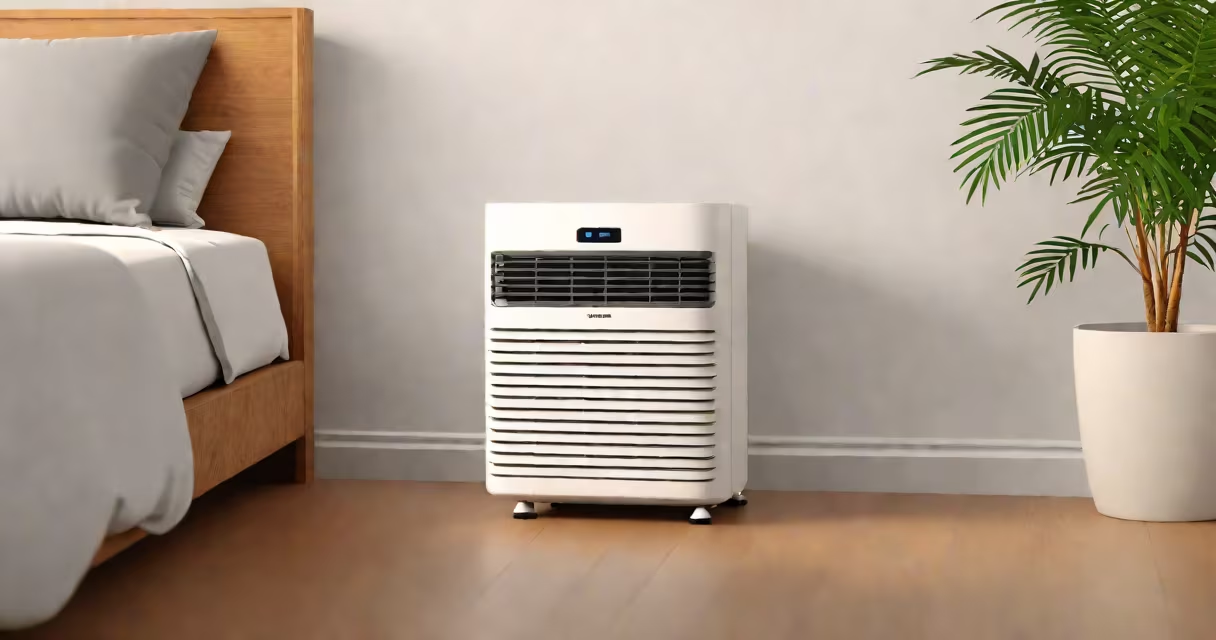
The smallest floor air conditioner is a compact, portable unit measuring under 18 inches wide and typically under 16 inches tall, designed to cool rooms up to 150 square feet. It operates on standard 115V household outlets and includes a single exhaust hose for heat expulsion. These units are ideal for bedrooms, home offices, or dorm rooms where space and portability matter.
These units function using a refrigerant-based cooling cycle. Warm indoor air passes over cold evaporator coils, which extract heat and moisture. The cooled air returns to the room while the heat is expelled through a flexible exhaust hose. Most models feature a fan-only mode, timer settings, and remote control. They do not require permanent installation and can be moved between rooms.
Key components include a compressor, condenser coil, evaporator coil, blower fan, and a drain pan. The compressor pressurizes refrigerant to circulate through the system. The condenser coil releases heat outdoors via the exhaust hose. The evaporator coil cools the indoor air. A small pump may handle condensed water drainage, though many models rely on manual emptying.
Smallest floor air conditioners fall into two categories: portable and mini split-style. Portable units are fully mobile, often with casters and a single exhaust hose. Mini split-style units resemble small wall-mounted systems but sit on the floor and connect to a compact outdoor condenser via a refrigerant line.
| Type | Dimensions (W × D × H) | BTU Capacity | Room Size | Power Source |
|---|---|---|---|---|
| Portable | 15.5 × 14.5 × 16.5 in | 5,000-8,000 | up to 150 sq ft | 115V outlet |
| Mini Split-Style | 17 × 15 × 18 in | 6,000-9,000 | up to 200 sq ft | 115V outlet |
Portable units dominate the smallest floor segment. Their compact size allows placement under desks or beside beds. Some models weigh less than 50 pounds, making them easy to move. Mini split-style units offer better efficiency and quieter operation but require more setup and higher upfront cost.
These units serve small living areas where window units don't fit or permanent AC isn't available. Common use cases include college dorms, rental apartments, hotel rooms, and small home offices. They provide immediate cooling without drilling holes or modifying windows.
One non-obvious fact: most smallest floor air conditioners have lower Energy Efficiency Ratio (EER) values than window units. The EER for a typical 5,000 BTU portable unit averages 8.0-9.5, compared to 10.0+ for comparable window models. This means they use more power per BTU of cooling. However, their convenience outweighs efficiency loss in temporary or low-use scenarios.
Many mistake the smallest floor air conditioner for a dehumidifier or air cooler. Unlike evaporative coolers, which use water evaporation and work best in dry climates, floor ACs use refrigeration and perform consistently in humid environments. Dehumidifiers remove moisture but do not cool air.
Another error is assuming all portable units are equal. A 5,000 BTU model with a single hose loses cooling efficiency due to air leakage. Dual-hose models maintain better pressure balance and improve performance by 15-20%. Always verify whether the unit uses one or two exhaust hoses.
I once tested three 5,000 BTU portable units side-by-side in a 130 sq ft room. The dual-hose model reached 72°F in 22 minutes. The single-hose models took 32-35 minutes. The difference was noticeable even on a warm afternoon. The dual-hose unit also maintained a more stable temperature.
Compared to window units, smallest floor air conditioners lack direct outdoor access and are less efficient. Window units typically have higher EER ratings (10-13) and lower noise levels because they're sealed. But they require a window opening and cannot be moved easily.
The smallest floor air conditioner delivers targeted cooling in confined spaces without permanent installation. It's not the most efficient option, but it offers unmatched flexibility. Choose a dual-hose model for better performance and avoid single-hose units if humidity is high. Always confirm the unit's BTU rating matches your room size. For larger spaces, consider upgrading to a window or mini-split system.