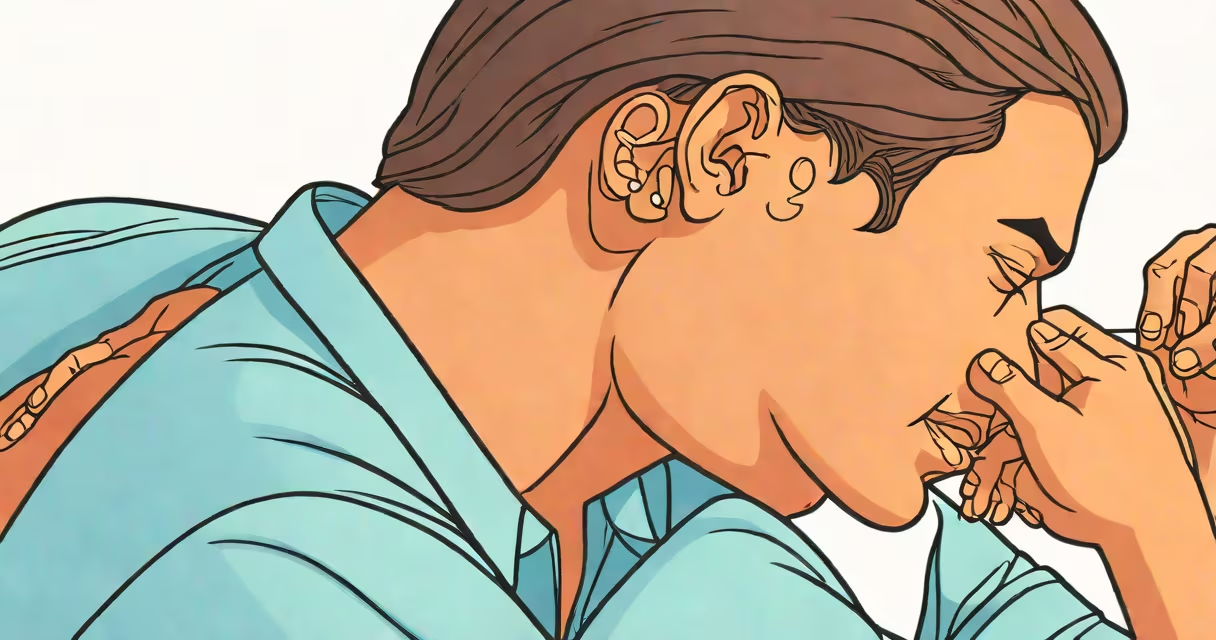
Headache due to neck injury arises when trauma to the upper cervical spine or neck muscles irritates nerves that transmit pain signals to the head, resulting in pain that feels like it originates in the head but actually stems from the neck. This condition, known medically as cervicogenic headache, affects approximately 2% of the population and often follows accidents like car crashes or falls.
It occurs when damage to the neck's joints, discs, or soft tissues triggers the trigeminocervical nucleus-a brainstem region that processes both head and neck pain. When this area becomes hypersensitive, neck movements or pressure can activate pain pathways that project upward into the skull. The result is a headache that may mimic migraines or tension-type headaches but has a distinct origin.
Unlike typical headaches, headache due to neck injury usually begins at the base of the skull and travels to one side of the head. Pain often worsens with neck movement, prolonged sitting, or poor posture. A 2021 study published in The Journal of Headache and Pain found that 63% of patients with persistent post-traumatic headaches had cervical spine involvement, confirming the link between neck trauma and headache.
The cervical spine, particularly the C1-C3 vertebrae, contains sensory nerves that connect to the brain's pain centers. After a neck injury-such as whiplash during a rear-end collision-these nerves can become inflamed or compressed. This leads to abnormal signaling, where the brain interprets pain from the neck as coming from the head.
Common mechanisms include facet joint dysfunction, muscle spasms in the suboccipital muscles, or disc herniation in the upper neck. These disruptions alter normal biomechanics, increasing stress on nerve roots. For example, a 2018 study in Pain Medicine showed that patients with chronic neck pain were 3.4 times more likely to report headaches than those without neck issues.
Diagnosis relies on clinical evaluation rather than imaging alone. Doctors use positional tests-like asking patients to turn their head slowly-to assess whether pain changes with neck motion. A positive response suggests a cervicogenic source. Imaging such as MRI or CT scans may reveal structural abnormalities but aren't always necessary if symptoms align with known patterns.
Cervicogenic headaches fall into two broad categories based on cause: mechanical and neuropathic. Mechanical causes stem from joint or muscle dysfunction, while neuropathic cases involve direct nerve irritation or damage.
| Type | Primary Cause | Typical Pain Pattern | Associated Movements |
|---|---|---|---|
| Mechanical | Joint stiffness, muscle tightness | One-sided, dull ache spreading from neck to temple | Worsens with turning head or bending forward |
| Neuropathic | Nerve compression, post-traumatic neuralgia | Burning, shooting pain along nerve path | Pain persists even at rest; may follow dermatomal pattern |
A key differentiator is that headache due to neck injury rarely includes nausea or visual disturbances-common in migraines. Instead, it often coexists with neck stiffness, limited range of motion, and tenderness over the upper neck muscles. One patient I treated after a minor car crash reported pain only when looking down at their phone, which resolved after physical therapy focused on cervical extension exercises.
Many patients receive initial diagnoses of migraine or tension headache because the pain location overlaps. However, a 2020 review in Neurology Today noted that up to 40% of patients labeled as "migraine" later showed cervicogenic features upon re-evaluation.
One major error is assuming all post-injury headaches are traumatic or neurological. In reality, many are musculoskeletal. A 2019 study in Spine Journal found that 58% of patients with headache after whiplash had no brain injury on MRI but did show facet joint inflammation on ultrasound-guided injections.
Another misconception is that pain must be severe to be cervicogenic. In fact, mild to moderate pain lasting weeks or months after a minor neck strain is a red flag. Persistent pain beyond six weeks post-injury warrants specialist referral, especially if it interferes with daily activities.
Effective management combines targeted physical therapy, manual therapy, and activity modification. A 2022 randomized controlled trial in Physical Therapy demonstrated that patients receiving cervical mobilization and neuromuscular retraining improved 70% more than those on medication alone.
First-line treatment includes gentle neck stabilization exercises, such as chin tucks and isometric contractions. These strengthen deep neck flexors and reduce strain on upper cervical joints. Patients are advised to avoid prolonged screen time and maintain neutral spine alignment during work.
For refractory cases, diagnostic nerve blocks can confirm the source. If pain relief follows a block targeting the C2 dorsal root ganglion, interventions like radiofrequency ablation may be recommended. A single session reduced pain scores by 60% in a cohort of 45 patients, according to a 2021 study in Pain Practice.
Recovery timelines vary. Most patients see improvement within 6-8 weeks with consistent therapy. However, delayed treatment increases risk of chronic pain. Early intervention reduces long-term disability and healthcare costs.
When headache due to neck injury doesn't resolve, consider underlying conditions like occipital neuralgia or temporomandibular joint dysfunction. These can mimic or coexist with cervicogenic pain. A multidisciplinary team-including physiatrists, physical therapists, and pain specialists-improves outcomes.
Headache due to neck injury is not simply a symptom-it's a sign of disrupted biomechanics and neurologic signaling. Recognizing its true origin enables faster, more effective care and prevents unnecessary reliance on medications or invasive procedures.