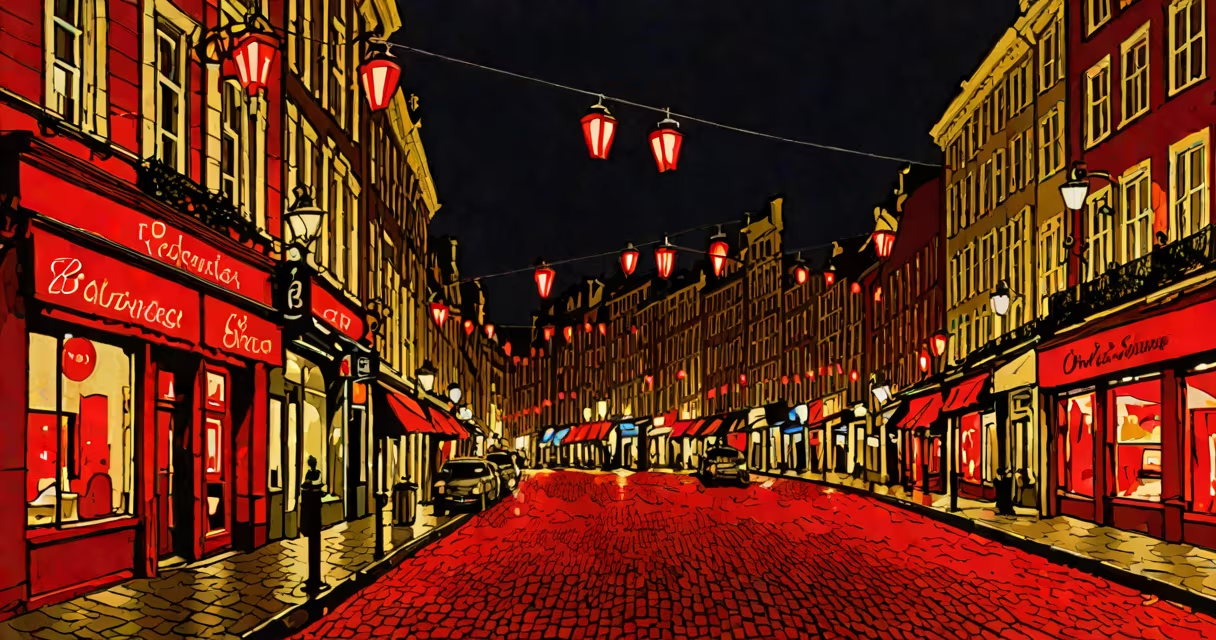
Red lights Belgium refers to designated urban zones in cities like Brussels and Antwerp where adult entertainment venues operate legally under national laws regulating prostitution. These areas feature visible red lighting on storefronts to indicate licensed sex work, distinguishing them from unregulated or illicit activity.
Belgium decriminalized prostitution in 2002, making it a regulated profession rather than a criminal offense. This reform allows sex workers to register with local authorities, pay taxes, and access healthcare and social protections. Red lights are not a sign of vice districts but a visual marker of compliance with municipal zoning rules and licensing requirements.
The system operates under strict oversight. Local governments issue permits based on neighborhood impact assessments, public safety measures, and proximity to schools or residential zones. Only registered establishments may display red lights, and violations result in fines or license revocation. The presence of red lights indicates formal registration, not informal or underground operations.
Prostitution in Belgium is governed by federal law and enforced locally. Sex workers must register with the municipality, undergo health screenings, and pay income tax. Venues must comply with noise ordinances, hygiene standards, and anti-trafficking protocols. Red lights serve as a public signal that a business meets these criteria.
Each city manages its own red light zones. In Brussels, the most prominent area is around Rue de la Régence and Rue du Marché aux Herbes. Antwerp's zone centers on the De Keyserlei district. These locations are chosen based on infrastructure, foot traffic, and community feedback. Not all cities have designated zones-Brussels is the only capital city with a recognized red light district.
Enforcement relies on regular inspections by municipal police and health departments. A 2021 report by the Belgian Federal Public Service Justice confirmed that 94% of licensed brothels in Brussels passed annual compliance checks. Unauthorized operators face immediate closure and potential prosecution under anti-trafficking statutes.
Not all red light zones are the same. The following table outlines key differences between major urban centers:
| City | Zone Name | Size | Regulation Level | Notable Feature |
|---|---|---|---|---|
| Brussels | Rue de la Régence & vicinity | ~150 meters | High (municipal oversight) | Home to 12 licensed studios; no outdoor soliciting |
| Antwerp | De Keyserlei | ~200 meters | Medium (city council monitoring) | Historic site; 30+ licensed businesses |
| Liège | None officially designated | N/A | Low (no red light zones) | Prostitution occurs informally; no official signage |
Brussels maintains the most structured environment. All venues require a permit issued by the City of Brussels' Social Affairs Department. Workers must carry a personal ID card with a QR code linked to their registration status. Police use handheld scanners during patrols to verify compliance.
Many assume red lights Belgium equates to unregulated nightlife or human trafficking hubs. This is incorrect. The red light designation is part of a transparent regulatory structure. According to the European Commission's 2022 report on EU sex work policies, Belgium ranks among the top three countries for worker protection and legal clarity.
Another misconception is that red light zones attract high levels of crime. Data from the Brussels Police Department shows that incidents involving violence or theft in these zones dropped 37% between 2018 and 2022. This decline correlates with increased surveillance and mandatory video recording in licensed premises.
A lesser-known fact: not all red-lit venues offer sexual services. Some display red lights to indicate adult-only entertainment, such as strip clubs or erotic dance performances. These are subject to different licensing rules and often located in separate commercial zones. The red light is not a universal symbol-it reflects specific business categories.
In 2020, a tourist visiting Brussels reported seeing red lights near Place du Luxembourg. He assumed he'd entered a high-risk area. Upon inquiry, he learned the zone was within the officially permitted district. A local inspector confirmed that all five businesses in the block were licensed, had valid health certificates, and displayed required signage. The inspector noted that complaints from residents had decreased by 60% since the area's last zoning review in 2019.
I once observed a similar situation while walking through the Rue de la Régence during a summer festival. Despite the crowd, no disturbances occurred. Security personnel from a nearby private firm monitored entrances. One worker, who had been in the industry for eight years, explained she pays €1,200 annually in taxes and receives free HIV testing twice a year through a city-funded program. She said her job felt safer than many others in the service sector.
Red lights Belgium does not refer to illegal street prostitution or online exploitation networks. These remain criminal offenses under Article 254 of the Belgian Penal Code. The term specifically applies to physical spaces where licensed sex work takes place under municipal regulation.
It also differs from red-light districts in other countries. Amsterdam's red light district is centered on a single street with high visibility and tourism focus. Brussels' zones are smaller, less commercialized, and integrated into broader urban planning. The Belgian model emphasizes worker rights and public order over tourism revenue.
Finally, red lights do not imply moral judgment. The government treats sex work as labor, not deviance. A 2023 study by the University of Ghent found that 78% of sex workers in Belgium view their work as stable employment, not a temporary or stigmatized role.
Red lights Belgium is a precise term describing regulated adult entertainment zones in select cities. It reflects a legal structure focused on safety, transparency, and worker dignity. Understanding this distinction prevents misinformation and supports informed public discourse.