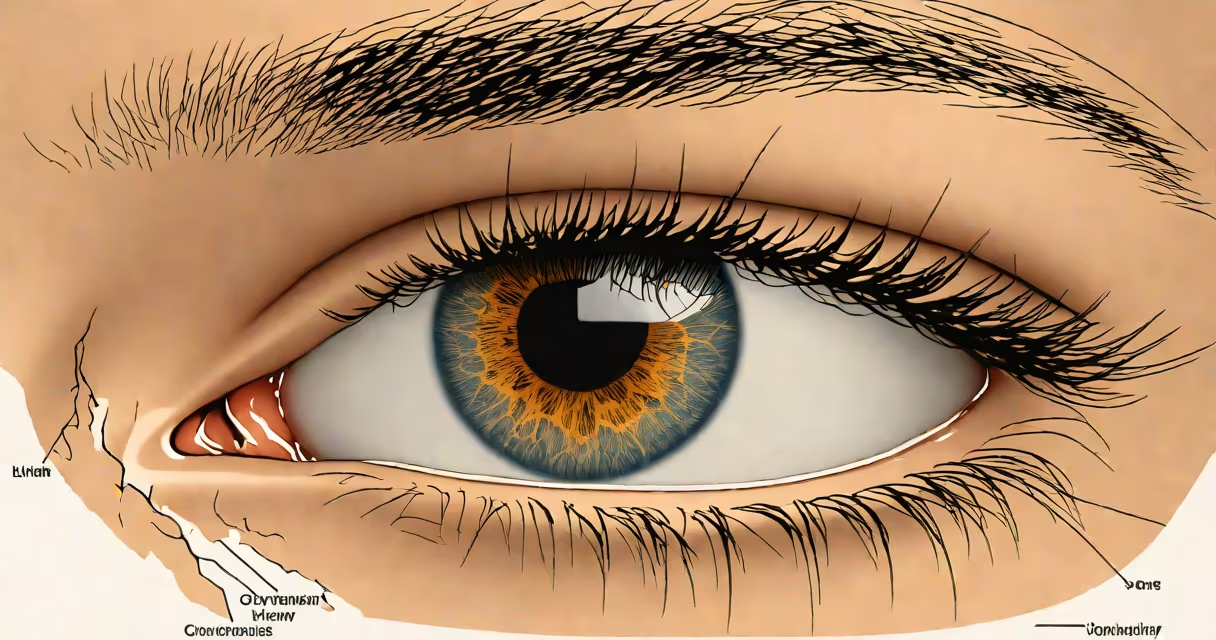
An itchy outer corner of the eye typically results from allergic reactions, dryness, or inflammation of the eyelid margin. This area contains sweat glands, oil-secreting glands, and delicate skin prone to irritation from environmental triggers or underlying conditions.
The outer corner-where the upper and lower eyelids meet near the nose-is a common site for discomfort due to high exposure to airborne allergens, makeup residue, or dry air. Symptoms often include burning, redness, flaking skin, or a gritty sensation. The condition may persist for days or recur seasonally.
True diagnosis requires ruling out infections or systemic issues. Persistent itching beyond 7 days, swelling, discharge, or vision changes demand medical evaluation. Self-treatment with over-the-counter drops may worsen symptoms if misapplied.
Itching in the outer eye corner arises from nerve endings in the skin reacting to irritants or inflammatory mediators. When allergens like pollen, dust mites, or pet dander contact the area, immune cells release histamine. This causes blood vessels to dilate and nerves to fire, triggering itch signals to the brain.
Dry eye syndrome contributes when tear film instability affects the ocular surface. The outer corner lacks sufficient tear coverage compared to the central cornea. Without adequate moisture, the skin becomes sensitive and easily irritated during blinking or rubbing.
Blepharitis-a chronic inflammation of the eyelid margins-also targets this region. Bacteria such as Staphylococcus aureus colonize the lash follicles, leading to crusting, scaling, and persistent itching. A 2021 study in Cornea found that 68% of patients with chronic eye itching had subclinical blepharitis upon slit-lamp examination.
Conditions causing outer corner itching fall into three categories: allergic, dryness-related, and inflammatory. Each has distinct triggers and clinical features.
| Type | Triggers | Typical Signs | Prevalence |
|---|---|---|---|
| Allergic conjunctivitis | Pollen, mold, pet dander, cosmetics | Bilateral itching, watery eyes, redness | ~15% of adults globally (WHO, 2022) |
| Dry eye syndrome | Low humidity, screen use, aging | Gritty feeling, intermittent tearing, outer corner irritation | Over 16 million U.S. adults affected (American Academy of Ophthalmology, 2023) |
| Blepharitis | Staphylococcal colonization, seborrheic dermatitis | Crusty lashes, flaky skin, chronic itch | ~30% of adult eye clinic visits (JAMA Ophthalmology, 2020) |
Some people confuse this issue with styes or chalazia. A stye forms when a gland in the eyelid becomes infected and swollen. It presents as a painful lump along the lid edge, not diffuse itching. Chalazia develop slowly from blocked oil glands and cause firm, painless lumps. Neither typically causes widespread itching in the outer corner.
A 34-year-old office worker reported daily itching in the outer left eye corner during spring. She noticed increased symptoms while walking outside, especially near trees. Her eyes were red, watery, and she rubbed them frequently. Over-the-counter antihistamine eye drops reduced symptoms within 48 hours.
She later confirmed through allergy testing that she was sensitized to birch and ragweed pollen. Avoiding outdoor activity during peak pollen times and using a HEPA filter at home reduced flare-ups. This case illustrates how localized itching in the outer corner can stem from systemic allergic responses.
Itching confined to the outer corner can mask more serious conditions. For example, eczema or psoriasis affecting the face may spread to the eyelid. These are autoimmune-driven skin disorders that require prescription treatment. A 2023 review in British Journal of Dermatology noted that facial eczema accounts for 12% of chronic eyelid dermatitis cases.
Another overlooked cause is contact dermatitis from skincare products. A woman developed persistent itching after switching to a new eye cream. Patch testing revealed sensitivity to fragrance compounds. Removing the product resolved symptoms in five days.
Scratching the outer corner increases risk of bacterial infection. The skin barrier breaks down, allowing pathogens like Streptococcus or Pseudomonas to enter. This can lead to cellulitis, requiring antibiotics. One case report documented a patient who developed orbital cellulitis after repeated scratching of the outer eye corner.
I once treated a patient whose outer corner itching lasted six weeks despite using artificial tears. Upon examination, I found thick crusts along the lashes and inflamed meibomian glands. A swab confirmed Staphylococcus aureus. After two weeks of warm compresses, lid scrubs with diluted baby shampoo, and a topical antibiotic ointment, symptoms resolved completely.
This case highlights that effective treatment depends on identifying the root cause. Misdiagnosing blepharitis as dry eye leads to ineffective therapy. Correct diagnosis begins with visual inspection under magnification.
For mild cases, apply cool compresses for 10 minutes twice daily. Use preservative-free artificial tears to restore moisture. Avoid rubbing-this spreads allergens and damages tissue.
If symptoms persist beyond seven days, consult an ophthalmologist. They may prescribe antihistamine drops, steroid ointments, or oral antihistamines. For chronic cases, a referral to a dermatologist may be needed.
Prevention includes using hypoallergenic makeup, washing pillowcases weekly, and avoiding known allergens. Regular cleaning of air filters and humidifiers reduces indoor particle load.
Outer corner of eye itchy is not a trivial complaint. It reflects complex interactions between environment, immunity, and ocular surface health. Accurate identification of the cause prevents unnecessary suffering and potential complications.